[Stay on top of transportation news: Get TTNews in your inbox.]
Q&A: Mack sees cautious optimism among fleets
Quote activity remains robust as customers plan replacement orders for the 2027 calendar year
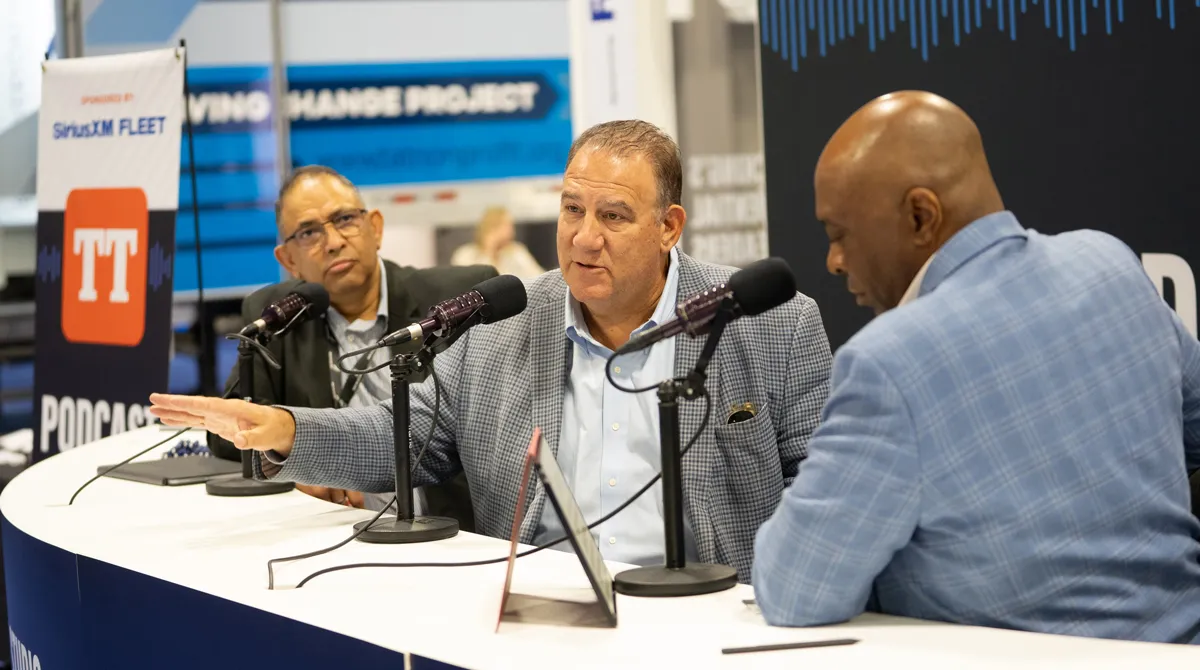 From left: Sadhu, Randall and Transport Topics’ Michael Freeze sit for a conversation at MCE 2026. (Karen Foote/American Trucking Associations)
Key Takeaways:
- Mack President Jonathan Randall said fleets are planning 2027 replacements amid robust quote activity, while final EPA requirements remain pending.
- Mack invested more than $1 billion in renewing its conventional lineup, aiming to strengthen its on-highway position despite a prolonged freight downturn.
- Mack is expanding connected services and adaptive maintenance to improve uptime, with a truck availability goal of at least 99%.
CHARLOTTE, N.C. — At American Trucking Associations’ Management Conference and Exhibition, Transport Topics spoke with Mack Trucks President Jonathan Randall and Service Director Ashish Sadhu about the market outlook, Mack’s product investments, connected services and preparations for 2027.
Transport Topics: How would you describe the mood among fleets as they plan for 2027?
Jonathan Randall: Cautiously optimistic. We haven’t seen orders fully unleash yet, but quote activity is very robust. Fleets are starting to plan replacement orders for the 2027 calendar year. We also have more clarity around tariffs and the expected EPA 2027 requirements than we did over the past couple of years, although the final rule is still pending.
TT: Mack has continued investing in new products despite a prolonged freight downturn. What is behind that strategy?
Randall: Product development takes years. We made the decision to invest more than $1 billion in renewing our conventional lineup well before today’s market conditions. That investment includes the Pioneer, Anthem, Keystone and Granite.
We have a strong history in vocational and construction markets, and we wanted to strengthen our position in the on-highway segment as well. With the new Anthem and Pioneer, we believe we have highly competitive products. We also have the dealers, service capabilities and network to support them.
TT: Ashish, how do these products and services reflect what fleets are asking for?
Ashish Sadhu: Fleets want to know how a truck will improve their cost of operation. We have hundreds of thousands of connected trucks generating information that we can analyze and use to help customers. Connectivity can support decisions around safety, driver coaching, fuel economy and vehicle performance.
We have also introduced over-the-air updates, which let customers keep truck systems current without a complicated process for the driver. Our Premium Plus contracts are based on adaptive maintenance: using information about how a truck is operated to help tailor its maintenance needs.
TT: How does connectivity help close the communication gap between drivers and fleet offices?
Sadhu: The goal is to give drivers confidence and peace of mind. If a warning light comes on, connected systems can help the fleet understand what is happening and whether it needs immediate attention. The driver can focus on driving while the fleet and service team determine the next step.
Connectivity also gives customers a more complete view of their operation. They want an OEM to be a partner … helping them understand the information and use it to run their business.
Image
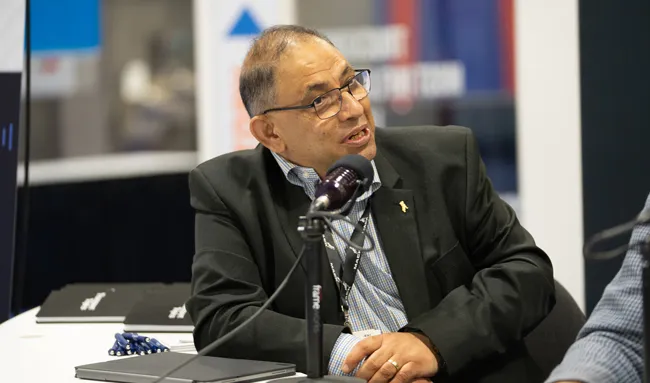
Sadhu. (Karen Foote/American Trucking Associations)
TT: How did drivers’ needs influence the development of Mack’s new trucks?
Randall: We began with the driver’s seat and worked outward. Fleets face real challenges recruiting and retaining drivers, so the truck needs to be comfortable and easy to operate. Of course, durability and reliability are essential. The next step is using data and services to give fleets information that is relevant and actionable for their particular operation.
TT: Mack is expanding beyond the truck itself. What does that look like for customers?
Sadhu: We are integrating truck information with equipment from body builders and other partners. For example, on Granite trucks, we have worked with a mixer manufacturer so a customer can see information about both the truck and the body. We are also working with Allison Transmission to help customers understand fault information and what action may be needed.
The aim is to make it easier for customers to get the information they need without having to check multiple systems or contact multiple providers.
TT: How is Mack working toward the goal of maximizing uptime?
Randall: Mack’s Uptime Center has focused on customer uptime for many years. Ultimately, we want customers to be more efficient and profitable, and to have the tools to serve their own customers. Connected services and over-the-air updates can help keep trucks operating effectively.
PCS Software CEO Mark Hill discusses the advance of AI in the trucking industry. Tune in above or by going to RoadSigns.ttnews.com.
Sadhu: Uptime is an end-to-end effort. It includes the product, technical support and keeping people informed as technology changes. We focus on truck availability — whether a truck can go to work when it is needed — and our goal is 99% or higher.
TT: How are these tools intended to improve driver satisfaction and retention?
Sadhu: When a driver sees a warning, it helps to know the fleet or service team can assess the issue and explain whether the truck can keep working or needs attention. That reassurance lets the driver focus on the trip. If a problem does occur, Mack’s support network is there to help.
TT: What might fleets misunderstand about the truck market heading into 2027?
Randall: They should know that the industry is preparing solutions for the upcoming standards and that Mack is working to provide products customers can have confidence in. The final requirements are still to come, but we believe customers should expect us to stand behind the products and support them if issues arise.
TT: When this period of uncertainty has passed, what do you hope customers will say about Mack?
Randall: I hope customers say Mack understands their business and its pain points. We want to provide great trucks and services, but most importantly, solutions that help customers succeed.