[Stay on top of transportation news: Get TTNews in your inbox.]
U.S.-Asia crude shipments face freight shock
Tanker rates more than triple after the U.S.-Iran conflict disrupts vessel availability
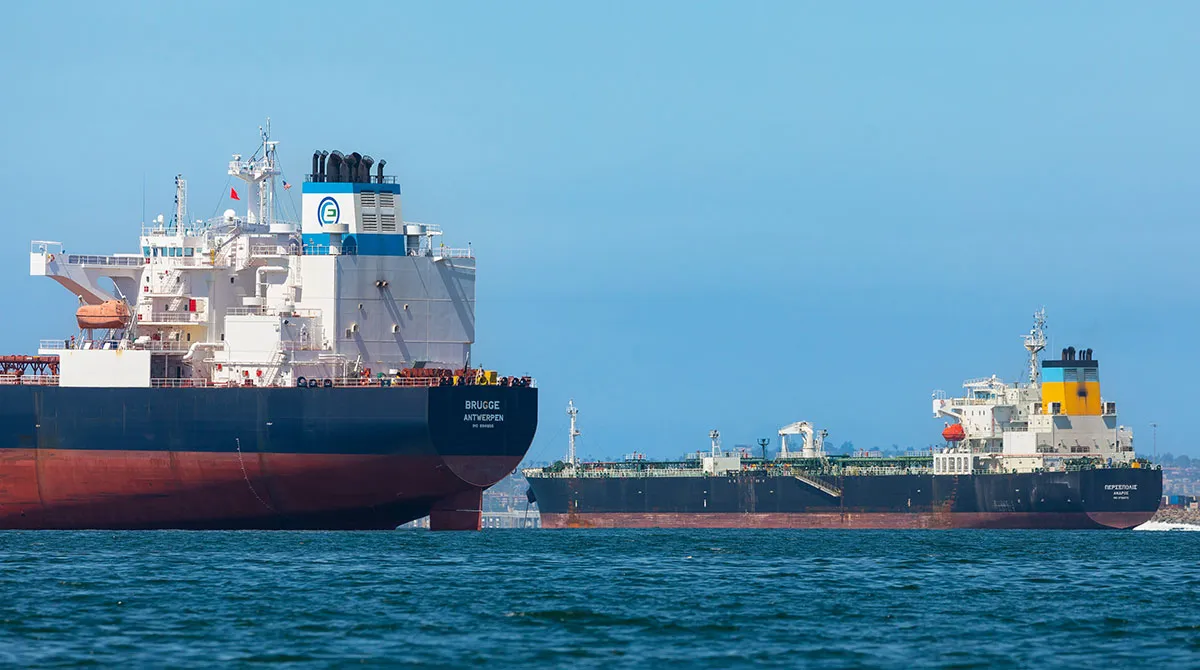 Oil tankers near the Port of Long Beach in Long Beach, Calif. (Tim Rue/Bloomberg)
Key Takeaways:
- Asian orders for U.S. crude fell roughly 50% to 24 million to 26 million barrels for November delivery, potentially reaching a seven-year low.
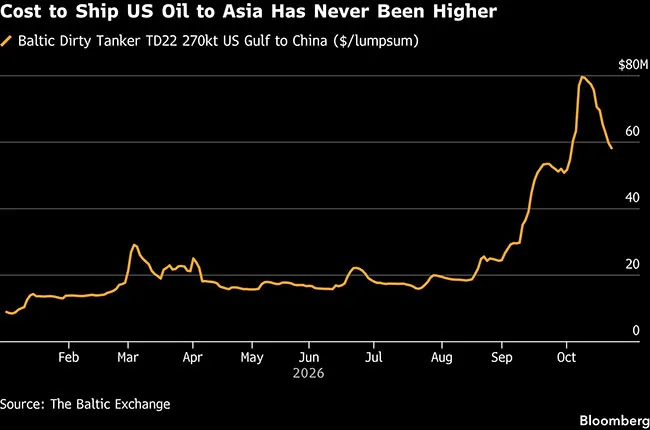
- U.S.-China tanker rates reached a record of nearly $80 million after the Iran war disrupted shipping, squeezing longhaul trade economics.
- November volumes could recover through late purchases, but Vortexa said it sees no evidence of an imminent surge.
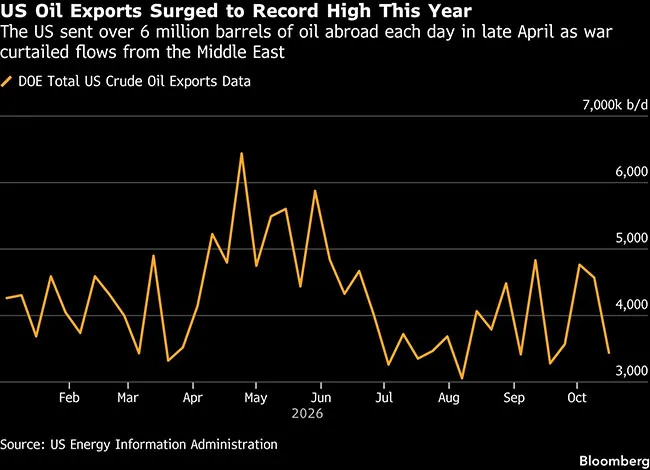
U.S. crude oil exports to Asia are set to hit multiyear lows after the Iran war disrupted global shipping and pushed the cost to lease a tanker for the Pacific journey to a record of almost $80 million.
Asian refinery orders for U.S. crude for delivery in November tumbled roughly 50% to 24 million to 26 million barrels this month sequentially, according to traders who asked for anonymity because they weren’t authorized to publicly comment. If that pace of orders holds through the end of this month, it would mark a seven-year low, based on ship-tracking data from Kpler and Vortexa.
The tanker rate along the U.S. Gulf Coast-to-China route has more than tripled since the U.S.-Iran conflict erupted in late February to almost $60 million as of Oct. 22, according to Baltic Exchange figures. Earlier in the month, it touched $79.6 million, an unprecedented ruction in a market where rates averaged less than $8 million in the half decade before the conflict.
As it stands, leasing the largest class of crude carriers for the 30-day voyage is equivalent to half the cost of building a new vessel. Those eye-watering rates don't include the cost of the oil itself, which is trading around $100 a barrel.
Image
“The main story right now in the market is freight rates,” Randy Hawkins, Valero Energy's head of oil trading, said during as conference call with analysts.
Tanker rates are so inflated that refiners are effectively spending $30 to $35 to haul each barrel of crude from the Gulf Coast to Asia, or as much as seven times what they shelled out last year, Hawkins said.
To be sure, the end of the November trading cycle isn’t a hard deadline, which leaves some leeway for traders to snap up last-minute cargoes. At least one market participant who asked to remain anonymous said Asia-bound U.S. cargoes for November may recover to as much as 40 million barrels in post-cycle trades.
Vortexa, however, is skeptical that such a turnaround is imminent.
“We don’t currently see evidence of a near-term surge that would push those volumes significantly higher,” said Rohit Rathod, a senior Vortexa analyst.
The drop in Asian demand appears to be rippling across U.S. crude pricing.
Export-bound Permian Basin oil was trading for 25 cents above the benchmark futures contract at the Magellan East Houston hub as of Oct. 21, down from more than $3 six weeks earlier, according to Link Data Services.
Medium sour export grade Mars, which is pumped from deepwater wells in the Gulf of Mexico and is similar to Middle Eastern crude, has seen its premium to futures plunge to $6 from $17.50 in late March.
Image
Valero’s Hawkins said one factor hindering global tanker availability has been the increased use of smaller vessels to pick up crude in the Persian Gulf that are less likely to be hit by Iranian fire in the Strait of Hormuz. Once they’ve traversed the waterway, their cargoes are transferred to larger vessels waiting in the Gulf of Oman.
“The inefficient process of this ship-to-ship transferring that they’re doing of crude oil in the Gulf of Oman is really tying up global shipping and to require more tankers to move the same amount of oil,” Hawkins said. Insurance rates and high fuel costs also are driving up freight costs, he added.
“The primary factor remains high freight costs, which continue to squeeze arbitrage economics for longhaul routes,” Vortexa’s Rathod said. “The incentive for Asian buyers to source from the U.S. Gulf Coast has diminished.”