
[Stay on top of transportation news: Get TTNews in your inbox.]
Saudi Arabia seeks access to overseas oil storage for Aramco
Kingdom seeks to make its supplies to customers more resilient during disruptions
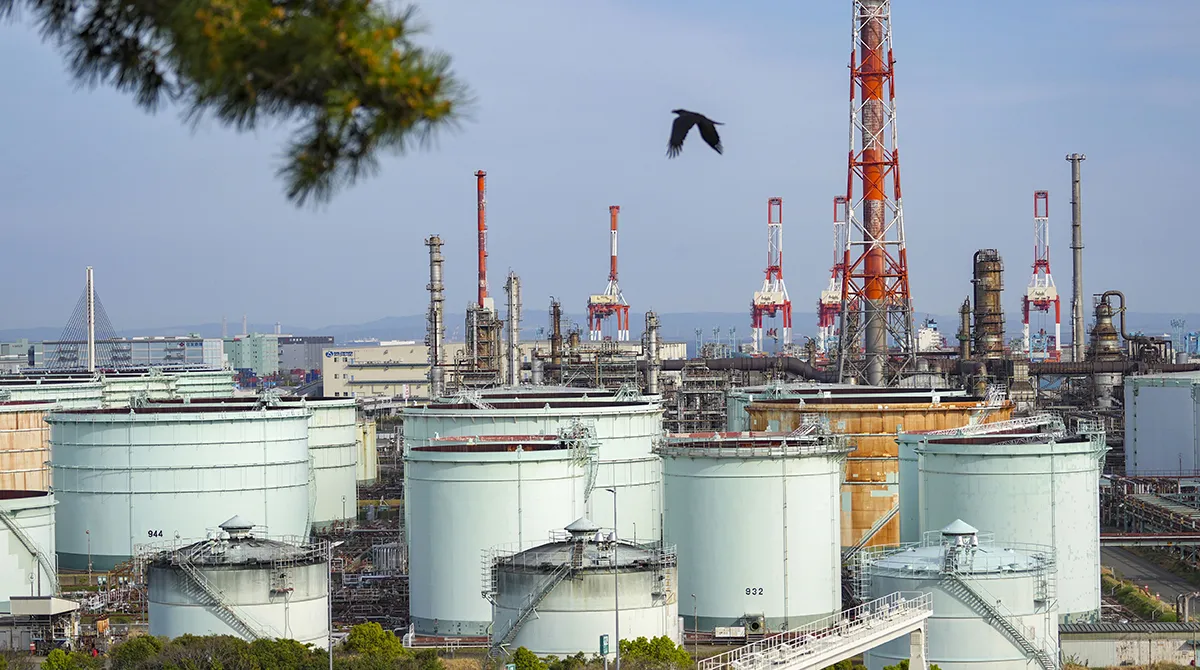 Aramco oil storage tanks. (Toru Hanai/Bloomberg)
Key Takeaways:
- Aramco is seeking access to foreign governments’ strategic oil storage to make Saudi supplies more resilient during disruptions.
- The effort follows attacks on Saudi infrastructure, while Brent crude rose above $112 a barrel Thursday amid concerns about further supply disruptions.
- Aramco plans to double overseas storage capacity and is studying an increase in east-to-west crude capacity from 7 million to 10 million barrels daily.
Saudi Arabia is in talks with foreign governments to give state-owned Aramco access to their strategic oil storage, as the kingdom seeks to make its supplies to customers more resilient during disruptions, CEO Amin Nasser said.
The move follows a flurry of attacks by Yemen’s Houthis on key Saudi infrastructure, including drone strikes that shut down its most important pipeline for several days in September. On Oct. 21, attacks on Aramco’s Shaybah oil field and Dammam airport each killed two people, according to Saudi authorities.
Brent crude climbed above $112 a barrel on Oct. 22 as the violence heightened concerns about further disruptions to Saudi supplies.
“Commercial storage available through partners is limited. The larger capacity lies in what we call strategic storage owned by governments,” Nasser said in an interview with Al Arabiya on Oct. 22. “The Ministry of Energy is working with its counterparts in other countries to make strategic storage available for Aramco.”
The company already holds commercial oil storage in South Korea, Japan, the Netherlands and Egypt’s Mediterranean export hub of Sidi Kerir. “We have maintained these overseas inventories for many years, but we are working to expand them, particularly in Asia,” Nasser said.
Aramco wants to double its overseas capacity, Nasser said, without giving a timetable for the expansion or disclosing current capacity.
Image
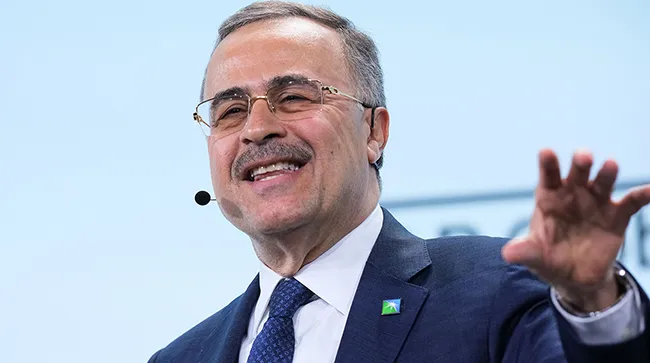
Amin Nasser in 2025. (F. Carter Smith/Bloomberg)
The push forms part of a broader effort to reinforce Saudi Arabia’s infrastructure and export options during the regional crisis. Aramco currently has three main export corridors — the Strait of Hormuz, the Red Sea and Bab el-Mandeb, and Sidi Kerir on the Mediterranean.
The conflict prompted the company to begin engineering studies to increase its capacity to move crude from the Persian Gulf in the east to the Red Sea in the west to 10 million barrels a day from 7 million, alongside work on other routes, Nasser said.
“We did not wait for the crisis to end,” Nasser said. Building resilience requires “decades of investment and preparation.”


