[Stay on top of transportation news: Get TTNews in your inbox.]
Rolling returns: Fleets exploring benefits of LRR tires
High diesel prices keep fleets focused on low-rolling-resistance tires
 Total cost of ownership has been the key factor for fleets debating the adoption of low-rolling-resistance tires. (Krista Bussey/Transport Topics)
Key Takeaways:
- Fleets continue adopting low-rolling-resistance tires in search of fuel savings despite the Trump administration’s rollback of heavy-duty greenhouse gas regulations.
- MVT Solutions said LRR tires can save $3,000 to $5,000 in fuel over a set’s life, strengthening their total-cost case.
- Fleets and tire makers are increasingly tailoring LRR choices by application, balancing fuel economy, tread life, durability, traction and acquisition cost.
For fleet operators, decisions about low-rolling-resistance tires increasingly come down to total cost per mile: whether fuel savings offset the purchase price, how long the tread lasts and how well the tires meet the demands of a particular application.
The Trump administration’s rollback of heavy-duty greenhouse gas emissions regulations earlier this year may have removed one incentive for the industry to adopt LRR tires but left that basic business calculation unchanged.
Those regulations applied not to fleets but to equipment manufacturers, which increasingly used LRR tires as one means of improving fuel efficiency and meeting the now-repealed federal emissions standards.
Robert Braswell, executive director of American Trucking Associations’ Technology & Maintenance Council, said elevated diesel prices are driving adoption of LRR tires.
“With $6- to $7-a-gallon diesel, I don’t think a whole lot of people are thinking about changing their specs away from LRR tires because of any changes in greenhouse gas rules,” he said.
Braswell said fuel savings will more than cover the higher costs associated with LRR tires if a fleet has a good maintenance program.
The service-life gap between LRR tires and other tires is narrowing because of improved compounds and designs. While adoption has increased over the long term, he hasn’t heard whether short-term interest is rising.
A fleet can save between $3,000 and $5,000 in fuel over the life of a set of LRR tires, said Daryl Bear, chief operating officer of MVT Solutions, a fuel economy testing subsidiary of Mesilla Valley Transportation.
“If you’re not running tires that qualify as LRR, then you’re throwing money down the drain, without question,” he said.
Bear said LRR tires also can provide excellent tread life and traction.
Fleets traveling on rougher terrain should place a premium on long-lasting tires, but LRR tires can work well in other applications, he said.
Management should ultimately make tire purchasing decisions because shop leaders will typically choose tires requiring the least maintenance, he added.
Image
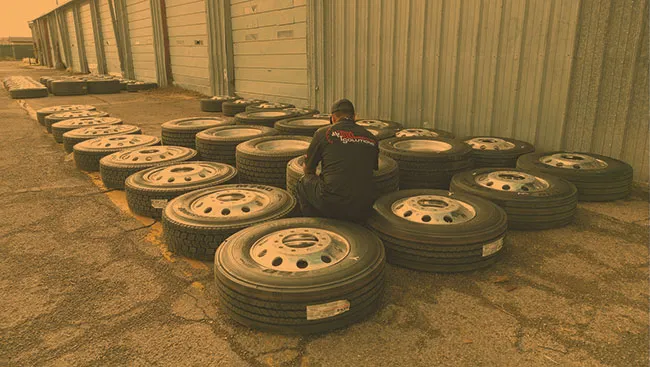
Mesilla Valley Transportation is just one of many fleets weighing the pros and cons of low-rolling-resistance tires. (Mesilla Valley Transportation)
Bear said MVT Solutions has completed more than 1,300 tests with trucks outfitted with sensors and data acquisition tools inspired by motorsports. The company has tested trucks for 15 fleets on the Transport Topics Top 100 For-Hire Carriers list.
LRR tires are a big part of parent company Mesilla Valley Transportation’s fuel strategy. CEO Royal Jones said his over-the-road company drivers average 9.28 miles per gallon.
He noted that the tires’ thinner tread creates less drag and requires less horsepower. Jones estimated the tires could improve fuel economy by half a mile per gallon. A tenth-of-a-mile-per-gallon improvement translates to savings of 26,000-28,000 gallons per month for his fleet.
“It’s only more expensive to purchase,” he said of the tires. “It’s not more expensive to run. That’s where people really get lost on.”
In addition to running LRR tires, Mesilla Valley Transportation also retreads tires five times, and it ensures its dual tires exactly match. A slightly bigger tire covers more distance with each rotation and drags its mate. Different brands of the same size will mismatch. To ensure matches, technicians carefully measure tire size.
Fuel mileage involves numerous factors, including rolling resistance, parasitic drag and, most importantly, the performance of the person behind the wheel, Jones said.
Apart from fuel savings, LRR tires also reduce maintenance costs by putting less stress on trucks, Jones added. An engineer told him an engine would last long enough to consume 150,000 gallons of fuel, measuring its life by fuel consumption rather than mileage. At higher fuel economy, the engine would travel more miles before reaching that total.
MVT ranks No. 61 on the TT100 list of for-hire carriers.
Image

Grier
Other fleets also use LRR tires to improve fuel economy.
Nussbaum averages 9.2 miles per gallon. James Grier, director of fleet services, said Nussbaum began using LRR wide-base single tires about 15 years ago. In testing, the company found a fuel-economy difference of three- to four-tenths of a mile per gallon between singles and duals.
Nussbaum weighs tread depth against tire life. It buys tires with 26/32nds of an inch of tread and removes them at 6/32nds. The company has considered tires with tread depths of 22/32nds and 24/32nds, but its drive tires average about 18,000 miles per 32nd of an inch of tread wear, making even small differences in depth significant.
“The low-rolling-resistant, Smartway-certified, wide-base tires that have 26/32nds have just been our go-to tire for the last decade or so,” Grier said.
ABF Freight considers factors such as life expectancy, tread wear, tread life, acquisition cost and fuel economy, said President Matt Godfrey. Regulatory changes, however, aren’t affecting its tire specifications.
“Total cost of ownership drives our decision-making across any equipment or component purchases, which for tires also includes a level of driver acceptance and confidence level in that TCO consideration,” he said.
ABF is part of ArcBest, which ranks No. 14 on the TT100 list of for-hire carriers.

Bob Toews, CEO of TruckDown, discusses winter readiness in the connected fleet era. Tune in above or by going to RoadSigns.ttnews.com.
Charles Musgrove, NFI’s vice president of fleet services, said fuel efficiency drives his fleet’s use of LRR tires. Diesel price fluctuations don’t change the fleet’s strategic focus on lowering costs per mile and increasing miles per gallon.
“However, sharp increases in diesel prices heighten urgency and bring fuel-efficiency initiatives to the forefront of executive leadership priorities, accelerating the adoption of high-efficiency tire technologies,” he said.
NFI ranks No. 17 on the TT100 for-hire carriers list.
LRR tires improve fuel efficiency, but they have less tread and are generally more expensive because of the additional engineering required to prevent blowouts and other issues.
Mike Roeth, executive director of the North American Council for Freight Efficiency, said fleets are looking at total cost of ownership, which includes downtime.
“The TCO will rule over anything else,” he said.
Application drives selection
Drew Wall, developmental engineer with Yokohama Tire, said tire manufacturers have been anticipating shifts in fleet priorities while monitoring changing regulations. He said fleets and manufacturers have been adopting LRR tires for several years. There’s a strong business case for them even as the long-term future of greenhouse gas regulations remains unknown.
Tire manufacturers are expanding their offerings with optimized tread designs and shallower tread depths.
“Their proven fuel-saving benefits continue to drive demand regardless of regulatory requirements,” Wall said. “Large fleets have recognized these advantages for years, and smaller fleets and independent operators are increasingly following suit.”
Image

Wall
A major factor for fleets is the application, Wall noted. For longhaul fleets, the priorities can be fuel efficiency and tread life. For regional, urban and on/off-road applications, traction and durability are often more important.
“Upfront price remains a factor, but fleets are increasingly evaluating tires based on total cost of ownership rather than purchase price alone,” he said.
Yong Jin, Hankook Tire’s corporate sales senior manager for truck and bus marketing, agreed that fleet priorities depend on the application. While longhaul operations might value fuel efficiency most, regional and high-scrub fleets may emphasize tread life and consistent wear. Fleets that retread will focus on durable, reusable casings. Traction and reliability must meet the demands of the fleet’s operating environment.
Jin said manufacturers are trying to reduce rolling resistance without sacrificing performance or casing durability. They are refining compounds, tread designs and casing construction for specific applications and wheel positions.
“Ultimately, the key measure is a lower total cost per mile, as a larger fuel-economy gain does not necessarily mean a better return,” he said.