
[Stay on top of transportation news: Get TTNews in your inbox.]
NHTSA says major tire safety standard overhaul is coming
Many of the current tire safety standards are ‘vestigial,’ TMC’s Braswell says
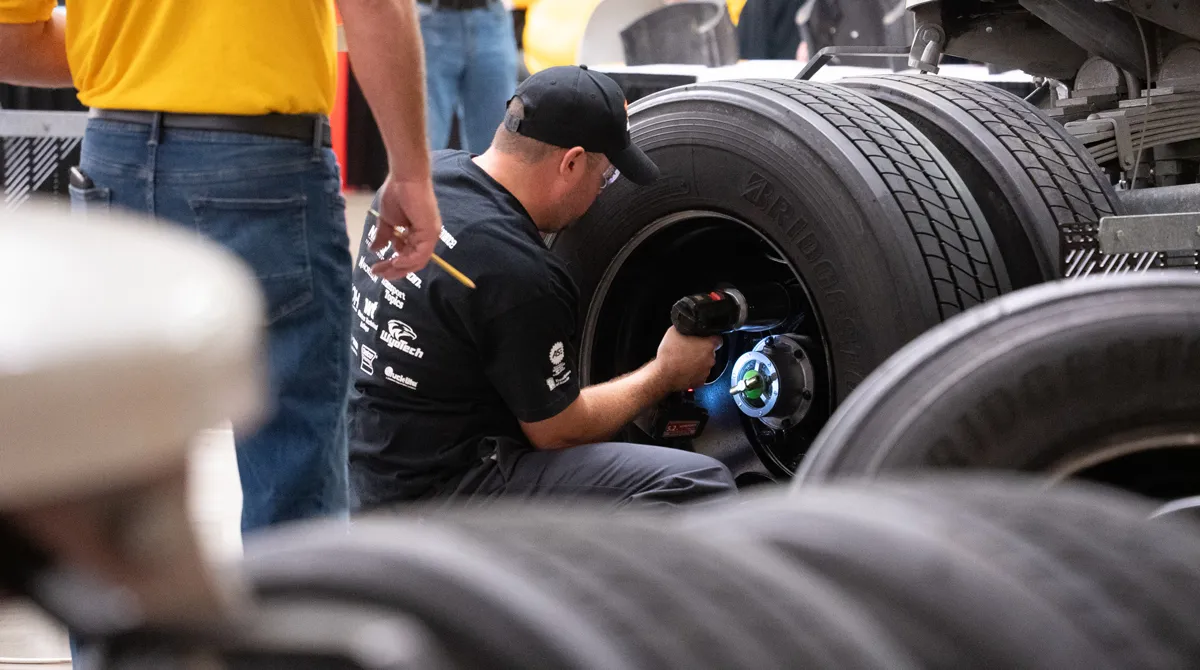 According to the announcement, this would be the first major overhaul of tire safety standards in more than 20 years. (Karen Foote/American Trucking Associations)
Key Takeaways:
- The National Highway Traffic Safety Administration began a negotiated rulemaking process to modernize tire safety standards, including outdated testing methods and new tire technologies.
- Experts said eliminating legacy bead unseating and plunger energy tests could be particularly relevant to commercial trucking because modern radial tires use different construction.
- Transportation Secretary Sean Duffy will appoint an 18-member advisory committee whose members will serve up to two years while developing updated standards.
The National Highway Traffic Safety Administration announced Oct. 26 that it is seeking to modernize tire safety standards through the negotiated rulemaking process. The agency said it would update outdated testing methods on tire strength, rim resistance and endurance and examine how to set safety rules for new technologies, such as puncture-proof tires.
Department of Transportation Secretary Sean Duffy will appoint 18 experts and stakeholders to advise him on crafting the standards. A tentative list of the committee includes people representing tire manufacturers or retailers; vehicle or vehicle equipment manufacturing associations; national vehicle manufacturers; national motor vehicle or motor vehicle equipment safety organizations; educational groups; research groups or testing organizations; and professional engineering or standard-setting associations.
According to the announcement, this would be the first major overhaul of tire safety standards in more than 20 years. The notice of proposed rulemaking published Oct. 27 explained that committee discussions on tire testing would focus on “the continued necessity and effectiveness of the tire strength test (plunger energy), the bead unseating resistance test and the tire endurance test (chunking).” The committee would also evaluate the use of non-pneumatic tires and modernization of tire markings.
Robert Braswell, executive director of American Trucking Associations’ Technology & Maintenance Council, said that possibly removing the bead unseat and plunger energy tests for tires may be the most relevant to commercial trucking of all of the issues the committee will examine. He said these tests were developed many decades ago when bias tires were popularly used.
“Bias tires are a different kind of tire construction. They’re a fabric construction as opposed to a steel fabric construction, which is what radials are,” Braswell said. “Some of these tests are really kind of a legacy. They’re vestigial, and they’re not really necessary with respect to how a radial tire is constructed.”
Image
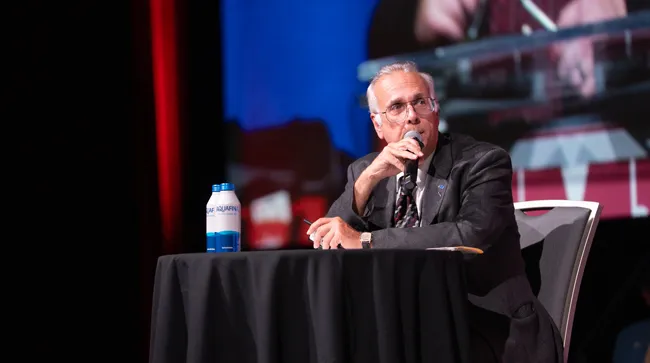
Braswell. (Karen Foote/American Trucking Associations)
The evaluation of non-pneumatic tires and extra-load passenger tires wouldn’t play as much of a role in commercial trucking’s tire safety, experts on truck technology told Transport Topics. Kevin Grove, ATA director of safety and technology policy, said he hasn’t seen non-pneumatic tires used on commercial trucks but has seen examples of forklifts using them.
“I think there would need to be a lot more data on non-pneumatic performance and reliability before [commercial motor vehicles] would consider adopting them,” Grove said. “There would probably also need to be some work with law enforcement on inspection of those types of tires.”
It’s still too early in the rulemaking process to know many details about how tire safety standards will impact commercial trucking specifically, Braswell and Grove noted, but they said the updates will likely simplify the standards and make them more relevant to modern vehicles.
Bob Toews, CEO of TruckDown, discusses winter readiness in the connected fleet era. Tune in above or by going to RoadSigns.ttnews.com.
“My sense is that there’s an opportunity to streamline the regulations, align them with modern technology, and raise the bars for safety and innovation by bringing a broad range of stakeholders together for a negotiated rulemaking advisory committee,” Grove stated.
Braswell added that there is a good chance commercial trucking will be represented on the committee since standard-setting associations and major tire manufacturers will likely cover the concerns of the industry.
The rulemaking process likely will not be swift. There is ample time for stakeholders to bring relevant commercial trucking tire safety issues to the committee. The process can take years.
Under the notice of proposed rulemaking, committee members will serve “a single term of two years or until the completion of committee activities, whichever is sooner.”


