
[Stay on top of transportation news: Get TTNews in your inbox.]
Oil prices head lower as mediators work on U.S.-Iran deal
Brent crude falls 1.8% to $96.10 a barrel
| Updated:
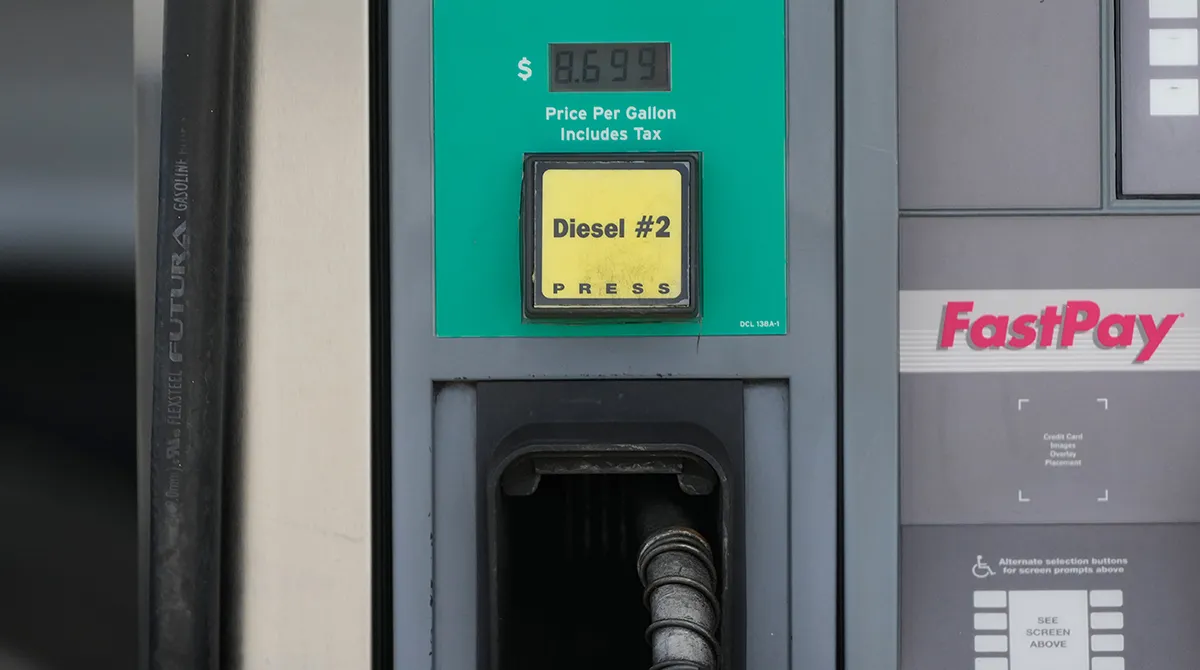 The cost of diesel is displayed at a gas station Sept. 10 in Mill Valley, Calif. (Jeff Chiu/AP)
Key Takeaways:
- Oil prices remain elevated as mediators continued to work with the United States and Iran on reaching a deal to end the fighting and open the Strait of Hormuz.
- This week brings a bevy of government economic data, including job openings, consumer spending, inflation and the September jobs report.
- Stocks have been pressured lately by rising U.S. Treasury yields as investors demand higher returns amid growing concerns about inflation and rising government debt.
NEW YORK — Stocks held steady in morning trading on Wall Street on Sept. 19 as Treasury yields remained relatively stable and oil prices fell.
The S&P 500 was mostly unchanged. The Dow Jones Industrial Average fell 81 points, or 0.2%, as of 9:51 a.m. Eastern time. The Nasdaq composite was mostly unchanged.
The majority of stocks within the S&P 500 index lost ground, but several big technology companies helped offset those losses. Nvidia rose 0.7% and Broadcom rose 2.7%. They are among the most valuable companies on Wall Street and those hefty market values give them greater influence over the broader market’s direction.
Stocks have been under pressure as oil prices swing sharply amid the U.S. war with Iran, helping to push Treasury yields to their highest levels in two decades.
The price of Brent crude oil in the most actively traded part of the oil market fell 1.8% to $96.10 a barrel. It briefly climbed above $100 on Sept. 27 before prices eased a bit, but they are still well above the roughly $72 it cost before the U.S. and Israel attacked Iran in late February.
Mediators continued to work with the United States and Iran on reaching a deal to end the fighting and open the Strait of Hormuz. U.S. President Donald Trump over the weekend rejected an offer from Tehran to reopen the key waterway.
Trump: "I'm rejecting their deal. They want to make a deal where they open the strait immediately ... we're winning tremendously. We have total control of the Hormuz Strait ... that deal would not be acceptable. They want to immediately open the Hormuz Strait." pic.twitter.com/iqlz69Wsz2
— Aaron Rupar (@atrupar) September 26, 2026
Overall, rising oil prices have been fueling a jump in Treasury yields. Higher yields threaten to slow economic growth by making borrowing more expensive for individuals and businesses. They can also hurt prices for stocks, especially those seen as expensive, including many technology companies that have soared because of the frenzy around AI technology.
The yield on the 10-year Treasury rose to 5.25% from 5.24% late Sept. 28, near its highest level since 2007, before the financial crisis and Great Recession sent yields toward zero.
Shares of CarMax jumped 7.5% after the used car dealership chain reported soaring second-quarter revenue and delivered profits that easily beat Wall Street expectations. The company also announced changes to its executive leadership.
Oura, the maker of wearable digital health accessories and jewelry, said Sept. 29 that it was postponing its initial public offering, despite strong demand, due to uncertainty in the IPO market.
Markets in Europe were mixed and markets in Asia closed mostly lower.
Associated Press business writers Chan Ho-Him and Matt Ott contributed to this report.


