
[Stay on top of transportation news: Get TTNews in your inbox.]
Oman to boost oil storage as Gulf nations seek Hormuz bypass
Oil storage sites outside Hormuz have become key as the vital energy chokepoint is disrupted
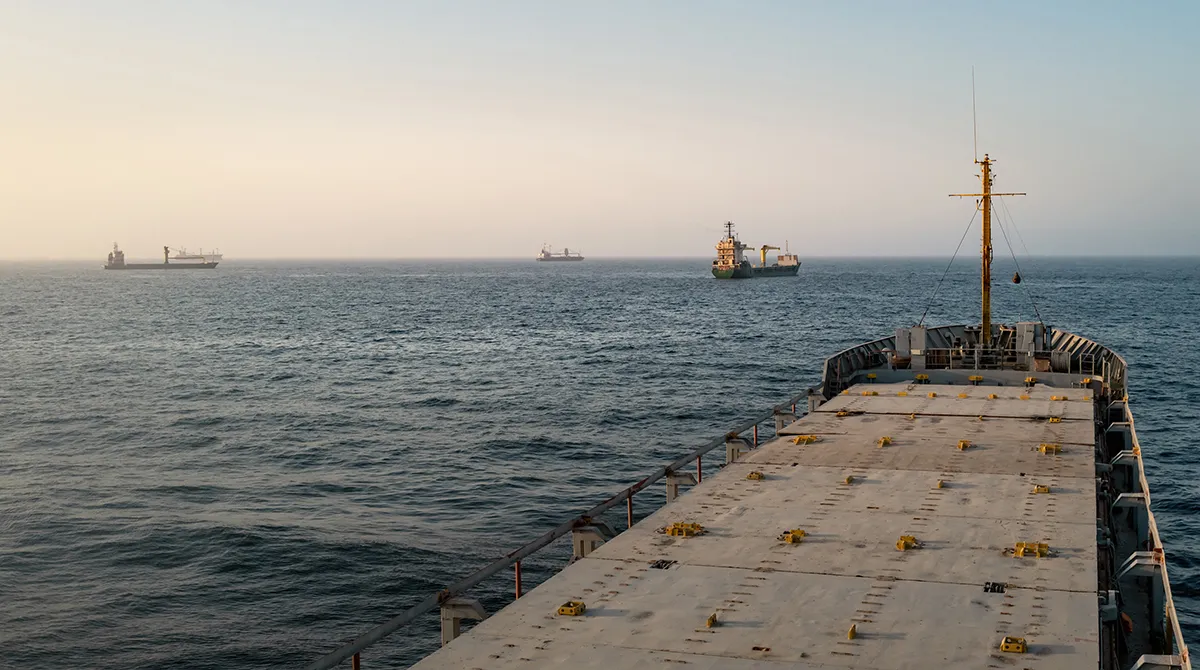 Oil tankers and cargo vessels are anchored off the coast of Oman. (Elke Scholiers/Getty Images/Bloomberg)
Key Takeaways:
- Oman’s OQ is evaluating two supertankers for floating storage and plans to expand Duqm’s onshore crude capacity to 10 million barrels within three years.
- The expansion reflects growing demand for oil storage outside the Strait of Hormuz as regional conflict raises shipping risks and disrupts key energy routes.
- OQ expects a decision on the supertankers later this year and is exploring African energy projects while considering a refining business share sale in 2027.
Oman plans to more than double oil storage capacity at a port outside the Strait of Hormuz, seeking to take advantage of its strategic position as energy producers in the region look for workarounds to the highly contested waterway.
State energy firm OQ SAOC is evaluating acquiring two supertankers and leasing them out for floating storage at the port of Duqm, CEO Ashraf Al Mamari said in an interview. It’s also planning to increase onshore crude-tank capacity to 10 million barrels within three years, from about 5 million currently.
Oil storage sites outside Hormuz have become key as the vital energy chokepoint is disrupted by the conflict in the Middle East. Producers like the United Arab Emirates and Saudi Arabia have been pushing tankers through the strait with their transponders turned off, while also looking for alternative pipeline routes.
Storage at Duqm, on the Arabian Sea, gives customers easier access to their crude, as opposed to being reliant on risky ship transits through Hormuz. Installing the supertankers as storage once purchased would take about six months, Al Mamari said.
Duqm has long been considered a potential end point for a pipeline across the Arabian Peninsula to export crude from fields in countries like Saudi Arabia or Kuwait, though no project has ever gone ahead. The hub also has a refinery in a joint venture with Kuwait’s state oil producer.
After the blockage of Hormuz, both the Saudis and Kuwaitis have said they’re exploring pipeline alternatives, without mentioning specific plans. Saudi Aramco CEO Amin Nasser said the company was looking for alternatives to its traditional Red Sea and Persian Gulf export routes. The UAE is planning additional pipelines to its oil hub at Fujairah outside Hormuz.
“In terms of the pipelines, the message from Oman is, we are open of course, but they are very much early stage discussions,” Al Mamari said. He said talks are at government-to-government level and he didn’t have details.
A decision on adding two supertankers as floating storage at Duqm, each with 2 million barrels of capacity, is set for later this year, after OQ weighs the high cost of the vessels against potential gains from storing crude, Al Mamari said.

Arpan Podduturi of Samsara examines how AI, telematics and onboard cameras are converging to protect drivers and reduce risk. Tune in above or by going to RoadSigns.ttnews.com.
Freight rates have skyrocketed as the war in the Middle East heightens risks and forces ships to reroute to avoid flashpoints. The cost of hiring the largest oil tankers, known as very large crude carriers, on the key Persian Gulf-to-China route skyrocketed above $1 million a day.
Oman has a longer-term goal to expand the onshore tank farm at Duqm to eventually store about 40 million barrels of crude.
Al Mamari also said:
- OQ is Seeking rights to explore for and potentially produce oil and gas in African countries like Angola. Algeria and Libya. In Angola, OQ is negotiating a gas exploration agreement in the offshore Block 24, which it hopes to finalize next year and will then look at other areas.
- It’s participating in bid rounds for exploration rights in Algeria and is in talks for similar projects in Libya; wants to expand its position in Africa across upstream, downstream, trading and renewables.
- The company is evaluating plans to sell shares in its refining and petrochemicals business and could go to market in 2027. The company isn’t planning any initial public offerings next year.


