
[Stay on top of transportation news: Get TTNews in your inbox.]
Former Albertsons CEO blames Kroger for failed deal
In trial that began Oct. 19, Vivek Sankaran says Kroger fell short of obligations under the $24.6B merger pact
| Updated:
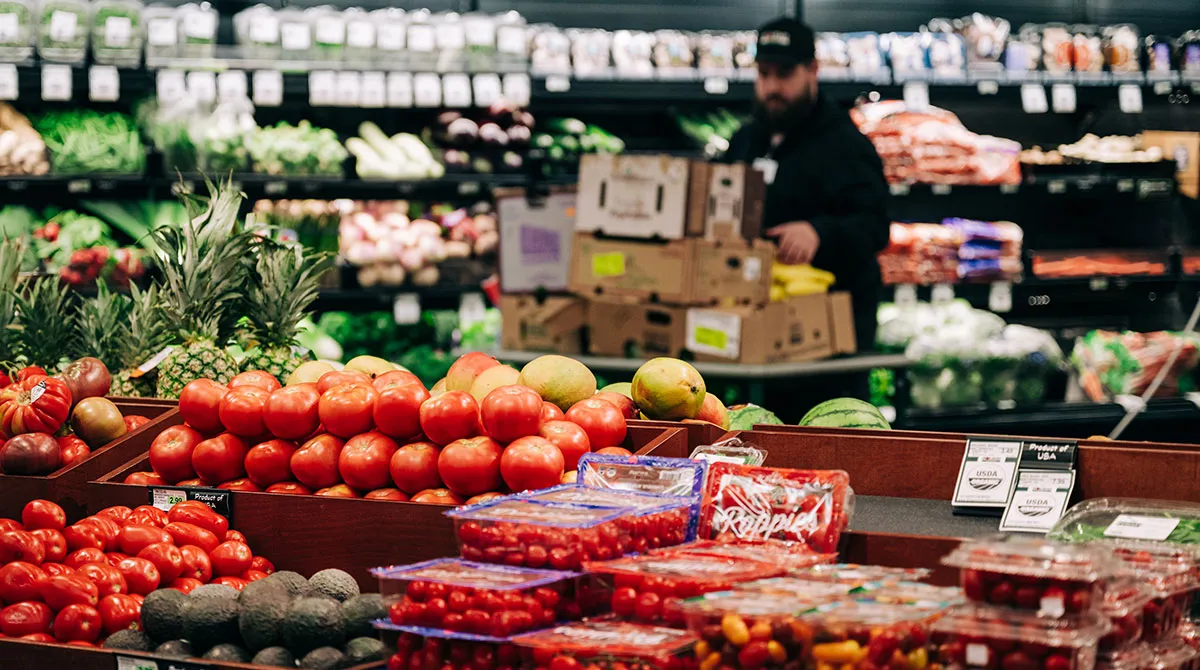 A grocery store in Klamath Falls, Ore. (Chona Kasinger/Bloomberg)
Key Takeaways:
- Former Albertsons CEO Vivek Sankaran testified Oct. 19 that Kroger failed to make required efforts to secure approval for their $24.6 billion merger.
- Albertsons seeks more than $9.3 billion, alleging Kroger prioritized profit targets and inadequate divestitures over winning regulatory approval.
- Delaware Chancery Judge Lori Will will decide whether Kroger knowingly breached the agreement after the two-week trial.
The former CEO of Albertsons Co. told a judge that rival Kroger Co. was to blame for the failure of a planned $24.6 billion merger of the two largest U.S. grocery store chains.
During the first day of testimony Oct. 19 at a trial to determine whether Albertsons is entitled to damages, Vivek Sankaran said Kroger executives didn’t do “everything they could” as required by their merger agreement. He also expressed frustration with what he described as a lack of responsiveness by former Kroger CEO Rodney McMullen as regulatory hurdles to the deal became more challenging.
The merger was scrapped after a federal court blocked it in December 2024 and sided with Federal Trade Commission officials, who said that combining more than 4,000 stores would leave the grocery giants with too much market power. Sankaran was the first witness at the two-week trial in Delaware Chancery Court. McMullen, who resigned in March 2025 after a board investigation into his personal conduct, also is expected to testify.
Albertsons claims Kroger was unwilling to sell an adequate package of stores and assets to secure regulatory approval and instead focused on achieving internal profit targets. Kroger argued it did everything it could, spending more than $1 billion pursuing the deal and defending it in litigation but that there was no way the merger would have ever been approved under then-FTC Chairwoman Lina Khan.
A key feature of the trial will be “what Kroger executives were saying internally, in emails and otherwise, with respect to what they knew, what they were being advised, and why they made the decisions they made, because that’s going to tell the judge a great deal about whether this was a failed strategy or it was a knowing breach of bad faith,” said Monte Mann, a partner at law firm Armstrong Teasdale who isn’t involved in the litigation.
Kroger ranks No. 32 and Albertsons ranks No. 48 on the Transport Topics Top 100 list of the largest private carriers in North America. Kroger ranks No. 3 and Albertsons ranks No. 6 on the TT list of top grocery carriers.
$9.3 billion at stake
The two sides will present their cases to Chancery Judge Lori Will, who must decide whether Kroger knowingly breached the merger agreement. Albertsons wants Kroger to pay more than $9.3 billion. That includes a $600 million termination fee plus interest and costs, and more than $8 billion for what Albertsons claims is the lost premium stockholders would have earned from the deal and taxes on those gains.
Image
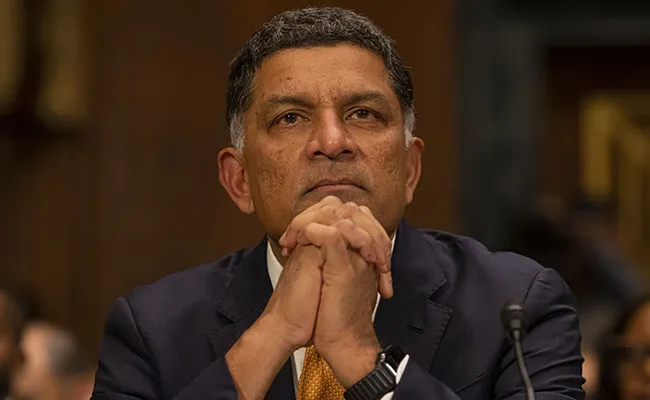
Former Albertsons CEO Vivek Sankaran. (Nathan Howard/Bloomberg)
Albertsons, which counts private equity firm Cerberus Capital Management as its largest shareholder, also will question Tom Moriarty, who is general counsel and head of mergers and acquisitions.
Another key witness to testify this week will be Michael Bernstein, an attorney at Arnold & Porter who provided antitrust advice to Kroger.
Following Sankaran on Oct. 19, the judge heard testimony from Ted Hassi, an outside lawyer who gave Albertsons antitrust advice over the merger. He described how cracks started to emerge early on when Kroger proposed selling just 238 stores, which “seemed like a borderline, insulting place to start.” He said the offer fell flat with the FTC.
An attorney for Kroger, while questioning Sankaran, noted that the former Albertsons CEO had known about the plan to propose the sale of 238 stores even before the merger agreement was signed.
But Sankaran said he became aware of the 238-store proposal when Albertsons and Kroger were still negotiating the maximum number of stores that would have to be sold, which eventually became 650 in the final agreement. During the court fight with the FTC, Sankaran said he’d testified to the merits of what ended up being a 579-store divestiture package, but that he didn’t vouch for its sufficiency.
Image
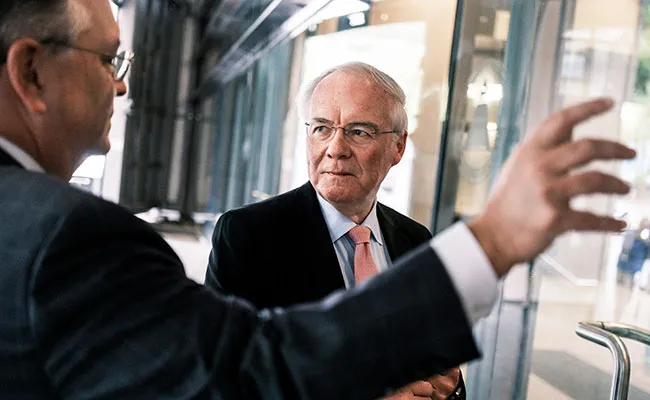
Former Kroger CEO Rodney McMullen. (Jordan Gale/Bloomberg)
Kroger, the largest U.S. grocery chain, and No. 2 Albertsons announced plans to merge in 2022, saying the deal was necessary to compete better against Amazon.com Inc., Walmart Inc. and others. Discounters including Aldi Inc. have also enjoyed popularity with their no-frills approach, while dollar chains and drugstores expanded food offerings to attract more shoppers. At the same time, grocery demand has held steady due to families prioritizing essentials as they look to save money.
Amazon and Walmart rank Nos. 17 and 1, respectively, on the private TT100.
Divestiture plan
To get regulatory approval for their proposed merger, Kroger and Albertsons agreed to sell hundreds of stores to C&S Wholesale Grocers, which ranks No. 39 on the private TT100. But it was blocked after a federal judge sided with the FTC, saying the divestiture plan was insufficient. Albertsons then terminated the deal and sued Kroger.
To win damages, Albertsons must demonstrate Kroger was in breach of the merger agreement by failing to take necessary steps to win regulatory approval and that it knew it was in violation.
At trial, Albertsons will try to show that Kroger ignored the advice of its own antitrust counsel and regulators by sticking to a “failing lowball strategy” where it sought to hold on to its more valuable stores to hit targeted returns rather than doing what was necessary to secure antitrust approval even if it went against its financial interests. It will also try to demonstrate that Kroger’s alleged breaches made closing the deal less likely.
Kroger, in turn, will seek to show that it relied on the advice of antitrust counsel in coming up with the divestiture proposals, and that it had no motive to cause the deal’s failure.
Termination fee
Litigation analysts at Bloomberg Intelligence predict Kroger won’t be on the hook to pay damages because the judge is unlikely to conclude the grocery chain knew it was breaching the merger agreement. But there’s a 70% chance Kroger will have to pay the $600 million termination fee for a “non-willful breach,” BI said.

►Private Fleets Balance Service, Costs
►Every Mile Costs More
►Power-Only Offers Flexibility
►Fleet Growth Mixed Across Sectors
Sector Rankings
Food Service | Grocery | Beverage
Petroleum/Chemical | Industrial Gases
Agriculture/Food Processing
Wholesale/Retail | Manufacturing
Equipment Rental | Building Materials
Waste Management | Paper/Office Products
Construction | Healthcare
Uniform Rental | Media & Entertainment
Kroger has said it doesn’t owe the termination fee because Albertsons breached the merger agreement by undermining its efforts with the regulators through secret communications with C&S.
The decision of the judge in the Albertsons-Kroger trial could have implications for future deals, said Barry Nigro, global co-chair of antitrust at law firm Fried Frank. Companies could rethink how they draft merger agreements depending on how the court interprets what “commercially reasonable efforts” means for deals that require divestment across multiple geographies, Nigro said.
Kroger has argued it abided by the merger agreement by taking “reasonable” efforts, while Albertsons said Kroger had to do more than what was reasonable.
The last big public fight over a deal that collapsed for antitrust reasons occurred more than six years ago with the failed $48 billion merger of Cigna Corp. and Anthem Inc. In that case, Delaware Chancery Judge J. Travis Laster concluded Cigna had breached the merger agreement but refused to award billions of dollars in damages because the deal was likely to have been blocked for antitrust reasons anyway.
That reasoning also fits into Kroger’s defense. The FTC took a narrower view of the competitive landscape than Kroger and Albertsons by looking only at retailers focused solely on the grocery industry. That would have required Kroger to sell far more stores than the 650 limit in the merger agreement, counsel for Kroger argued.
Since calling off the deal, Kroger and Albertsons have named new CEOs. They’ve said they plan to invest more to help reduce prices for customers, while acknowledging that food inflation is likely to pick up later this year. Kroger also is aiming to improve store service, expand e-commerce and accelerate new store openings, while Albertsons launched a comprehensive business review.
The case is Albertsons v. Kroger, 2024-1276, Court of Chancery, State of Delaware.


