
[Stay on top of transportation news: Get TTNews in your inbox.]
EV sales are booming in Europe with gasoline at $10 a gallon
'Getting an EV no longer is a technology choice, it becomes an economic one'
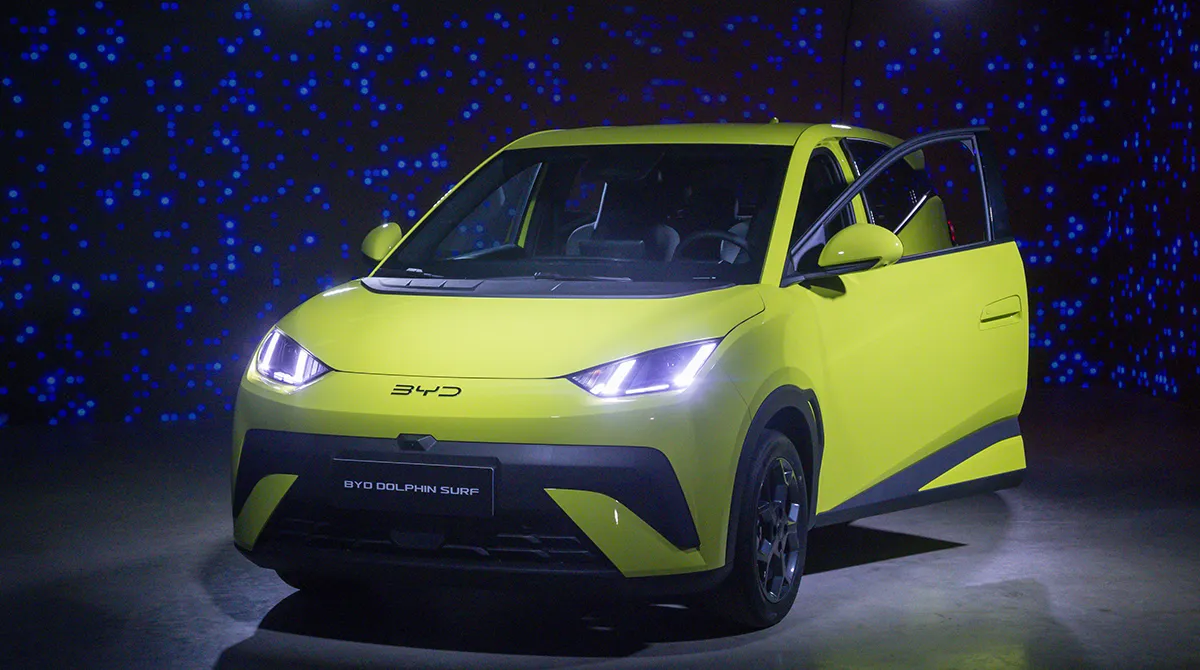 BYD’s budget city EV Dolphin Surf starts at 22,990 euros. ( Cyril Marcilhacy/Bloomberg)
Key Takeaways:
- European EV registrations jumped 52% in August, led by Germany and France, as record fuel prices accelerated the shift from combustion vehicles.
- Higher gasoline and diesel costs made EV ownership more economical, helping plug-in vehicles exceed one-third of regional sales through August.
- Automakers face pressure from restructuring and Chinese competition while governments expand relief measures as fuel costs reshape political priorities.
After years of broadly unsuccessful efforts to wean drivers off combustion engines, sales of electric vehicles are surging in Europe thanks to the jump in fuel prices stoked by geopolitical upheaval.
Registrations of fully-electric cars soared 52% across the region in August compared with a year earlier, according to data published Sept. 24 by the European Automobile Manufacturers’ Association. Germany, the biggest market, led the gains with a three-quarter jump while sales in France more than doubled.
“When fuel prices rise, the issue of running costs becomes super concrete for customers,” Xavier Chardon, head of Stellantis NV’s Citroën brand, said in an interview. “Getting an EV no longer is a technology choice, it becomes an economic one.”
A major reason for the leap in EV demand is the increasing cost of running traditional engines powered by fossil fuels, which has shot higher with the rising price of oil.
The U.S.-Israeli war on Iran is disrupting tanker traffic through the Strait of Hormuz, pushing the average price of a liter of gasoline in Germany to a record 2.31 euros a liter (equivalent to $10 per gallon). Diesel is even more expensive in the birthplace of the modern car, as Ukrainian attacks on Russian refineries crimp global supplies.
Prices for the fuel, which powers roughly 30% of cars in Europe, are likely to extend gains on speculation the U.S. could curb exports. President Donald Trump’s administration is weighing restrictions to ease pressure on domestic prices that have also hit records, driving up expenses for freight and farmers.
Image
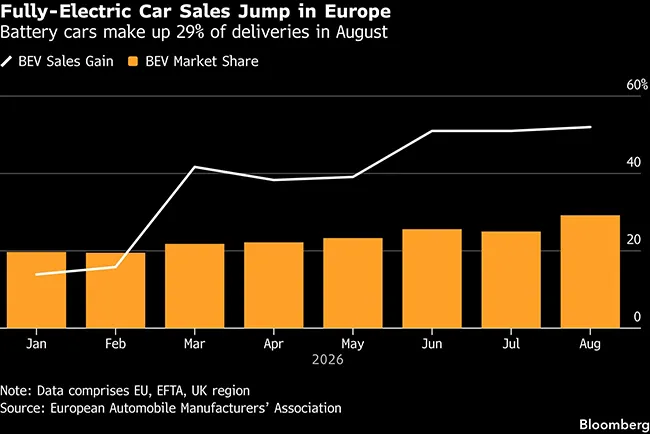
European buyers shifting to EVs means that through August, more than one in three vehicles sold had a plug, up from just over one in four.
The picture is similar across the region, where the jump in fuel prices is hitting cash-strapped households already straining to make ends meet. Prices are up by more than a quarter across key markets.
It’s also hurting transport-dependent firms. For Charles Rivière, 54, a fisherman from Luc-sur-Mer on France’s north coast, the mounting cost of fueling his van and boat means he needs a lot more Parisians to buy his seafood to make the round trip to the capital worthwhile.
“I used to make a profit with only 12 or 13 clients in Paris,” Rivière said while preparing oysters during an outdoor community event in the French capital’s 14th arrondissement.
“Now I no longer come if I don’t have orders from at least 20 clients and increasingly there are fewer of them,” he added. “When I don’t come, I have zero income.”
For an expanding share of drivers, switching to battery power is the answer. In Germany, charging a mid-range or luxury EV at home currently costs about 70% less than fueling a gasoline-powered car, according to analysis by comparison website Verivox.
Electric cars were already gaining momentum in Europe earlier this year as carmakers rolled out more affordable models like Renault SA’s Twingo E-Tech city car that starts at 19,490 euros ($22,353) and Volkswagen AG’s 37,890-euro Skoda Elroq compact SUV.
Image
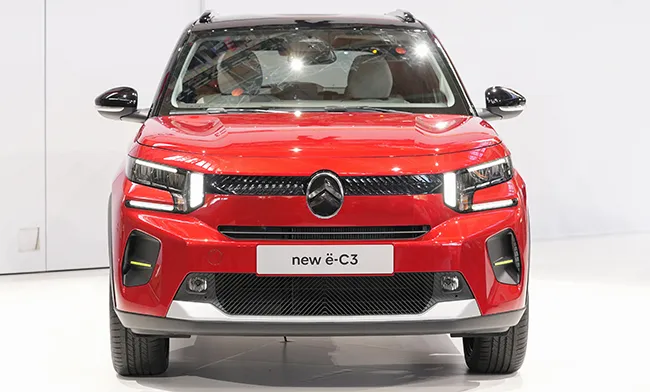
A Citroen e-C3 electric vehicle. (Nathan Laine/Bloomberg)
Throughout this year, the sharp increase in EV demand helped offset deep declines for vehicles running on fuel only. Overall deliveries in August rose 5.3%, the lobby group said.
Governments are also providing financial support, especially for less affluent households. German drivers below a certain income threshold can get as much as 6,000 euros off the purchase price for an EV. In France, a program can reduce monthly car payments to below 100 euros for some models such as the Citroën ë-C3 city car.
Concern about insufficient battery range is also fading. Ford Motor Co.’s Capri long-range EV crossover can travel more than 600 kilometers on a single charge, on a par with Volvo Car AB’s mid-range EX60.
Yet for Europe’s storied manufacturers, the long-awaited EV boom comes with a sting in the tail. The industry has seen tens of billions evaporate when hiccups in demand and abrupt regulation changes in the U.S. forced them to resize sales expectations.
Opel-maker Stellantis led the writedowns with an unprecedented charge of 25.4 billion euros for last year. The Jeep and Ram maker faced additional pain after the U.S. reversal on EV policy under President Donald Trump.
Manufacturers reacted by deepening cost-cutting measures already in place. VW, the region’s biggest manufacturer, is pushing through plans to double global job cuts to 100,000. On Sept. 18, it slashed its profit forecast for this year due to a sharp contraction in China.
Europe’s struggles are opening up more inroads for Chinese manufacturers offering solid technology at affordable prices. BYD Co.’s budget city EV Dolphin Surf starts at 22,990 euros and it’s also offering customers in Italy discounts of as much as 11,600 euros. Chinese bands made up a record share of nearly 12% of total new-car sales in Europe in August, according to figures from Dataforce published Sept. 23.
The impact of record fuel prices on voters is also reshaping European political agendas.
With Chancellor Friedrich Merz’s ruling coalition hemorrhaging voter support, Germany’s federal and state governments last week agreed to a 2.5 billion-euro relief package for motorists and businesses. In Italy, Prime Minister Giorgia Meloni’s government this month introduced a vehicle ownership tax cut, ahead of a national election next year.

Arpan Podduturi of Samsara examines how AI, telematics and onboard cameras are converging to protect drivers and reduce risk. Tune in above or by going to RoadSigns.ttnews.com.
In France, concerns are mounting that the latest French cost-of-living crisis may trigger fresh unrest similar to the “yellow vest” protests in 2018. During the past week, fishermen blockaded several ports and a fuel depot along the Mediterranean coast and some gas stations in the northern part of the country were vandalized.
“Drivers are no longer filling up their tank completely,” according to Jacques Vaysse, owner of an independent gas station in Salles-Curan, a village in the Aveyron region in southeastern France. “There will be a social fallout unless the government cuts fuel taxes.”


