[Stay on top of transportation news: Get TTNews in your inbox.]
Southern California ports see continued surge of imports
Combined imports at L.A., Long Beach ports came in at 1,000,500 TEUs in October
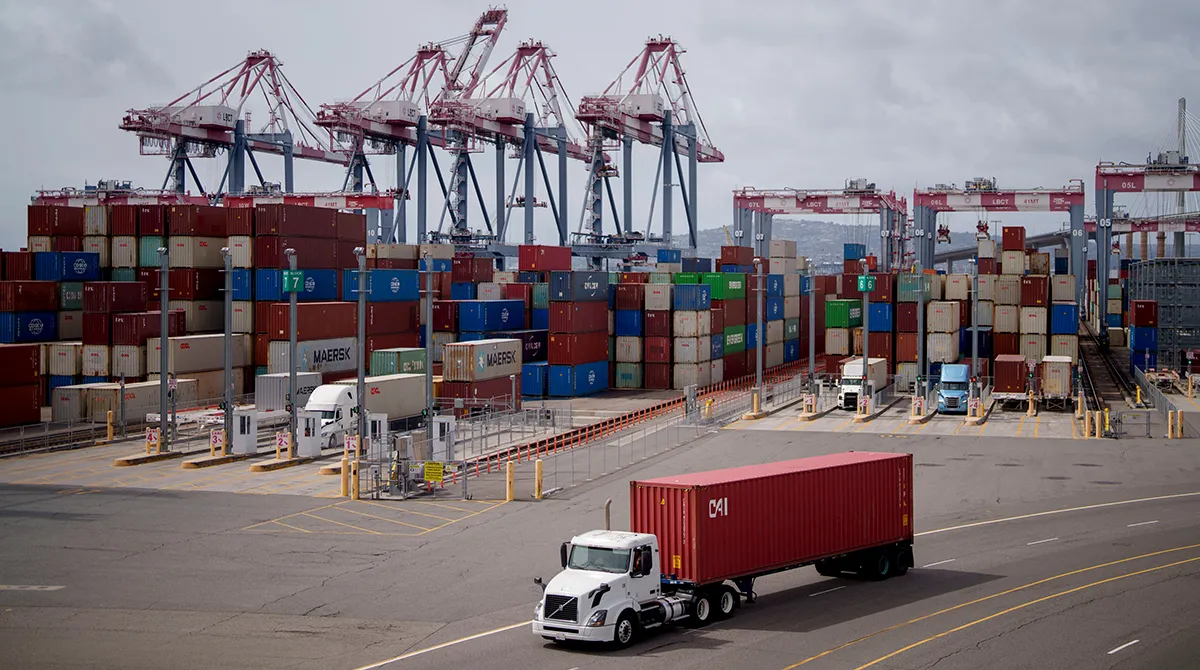 Shipping containers at the Port of Long Beach. (Eric Thayer/Bloomberg)
Key Takeaways:
- Last month, combined imports at the Port of Los Angeles and the Port of Long Beach came in at 1,000,500 TEUs, just off September’s all-time high.
- Meanwhile, exports fell 7% in L.A. and 6% in Long Beach compared to last year.
- Port of L.A. Executive Director Gene Seroka attributed the surge to changing trade policy and uncertainty along other global shipping routes, consumer spending and retailers restocking inventory.
Import containers moving through the busiest U.S. trade hub passed the 1 million mark for the second time in October, as some firms bring in goods related to the AI buildout and others grapple with extended tariff uncertainty.
Last month, combined imports at the Port of Los Angeles and the Port of Long Beach came in at 1,000,500 TEUs, or 20-foot equivalent units, just off September’s all-time high.
READ MORE: Port of Los Angeles strike threat deferred to Nov. 20
Compared to October last year, loaded import, export, and empty container volumes were up more than 20% at the Port of L.A. and more than 11% at the Port of Long Beach, according to data provided by the ports.
Port of L.A. Executive Director Gene Seroka on Nov. 12 attributed the sustained surge to changing trade policy and uncertainty along other global shipping routes, U.S. consumer spending and retailers restocking inventory.
Port of Long Beach CEO Noel Hacegaba said he expected elevated container volumes to continue through at least the beginning of next year as importers frontload goods before a U.S.-China trade truce expires again in January.
“We expect to be busy at least through the first month of the new year and possibly through the first quarter,” Hacegaba told Bloomberg last week, adding that cargo needed to supply the AI boom is among the growth drivers.
Meanwhile, exports fell 7% in L.A. and 6% in Long Beach compared to last year. Empty containers moving through both ports were 26% and 13% higher, a sign that ocean carriers were repositioning equipment for more shipments coming from Asia.

Bob Toews, CEO of TruckDown, discusses winter readiness in the connected fleet era. Tune in above or by going to RoadSigns.ttnews.com.
The import surge across several of the busiest U.S. ports is expected to taper off through the end of the year before falling 3% in January compared to the year before, according to the National Retail Federation.
“Numbers are still strong even as the season winds down,” said Jonathan Gold, NRF’s VP for supply chain and customs policy. Gold noted in a statement earlier this week that the high volumes have led to backups, especially for rail-bound cargo at the major West Coast ports.
Gold also warned of potential disruption to operations at the Ports of L.A. and Long Beach if a union of security workers and their employers don’t come to an agreement before a Nov. 20 deadline.