
[Stay on top of transportation news: Get TTNews in your inbox.]
Volvo Trucks unveils redesigned VNX vocational model
Launch follows redesigns of VNL, VNR on shared Class 8 platform
 The next-generation Volvo VNX lineup, which is aimed at the vocational market. Production is scheduled to begin in mid-2027, and the order book is expected to open by the end of this year. (Mike Senatore/Transport Topics)
Key Takeaways:
- Volvo Trucks North America unveiled the next-generation VNX for broader vocational applications, its third heavy-duty model launch in three years.
- The shared VNL/VNR platform supports construction, agriculture, logging and concrete hauling as Volvo pursues 25% North American Class 8 market share by 2030.
- VTNA expects orders to open by the end of this year, with production beginning in mid-2027 at its Dublin, Va., plant.
Volvo Trucks North America has unveiled the next-generation Volvo VNX, its third new heavy-duty model launch in as many years and a move toward expanding its presence in the vocational market.
“From the strength [of the VNL and VNR’s shared platform], we can deliver an incredibly durable truck that’s really designed and built for some of the toughest job sites in North America,” said John Moore, VTNA’s product marketing director, referencing the company’s longhaul and regional models. The company redesigned the VNL in 2024 and VNR in 2025.
Like those trucks, the new VNX is built on a common platform, but it is designed for vocational applications including construction, agriculture, logging and concrete hauling.
The VNX tractor will be available in three models: the VNX 640 sleeper, VNX 440 sleeper and VNX 300 day cab. The 440 and 300 also will be offered in straight-truck configurations. The new VNX builds on VTNA’s vocational lineup, which has been anchored by the VHD in North America. The VNX debuted in 2013 and was revamped in 2019.
The redesigned VNX was unveiled to media members during a Sept. 22 preview event at the company’s customer service center in Shippensburg, Pa. Production is scheduled to begin in mid-2027, and the order book is expected to open by the end of this year.
“What we have done now with the VNX is [provide] a much broader application range, so we will be able to hit far more segments than we have done before,” VTNA President Peter Voorhoeve told Transport Topics.
Image
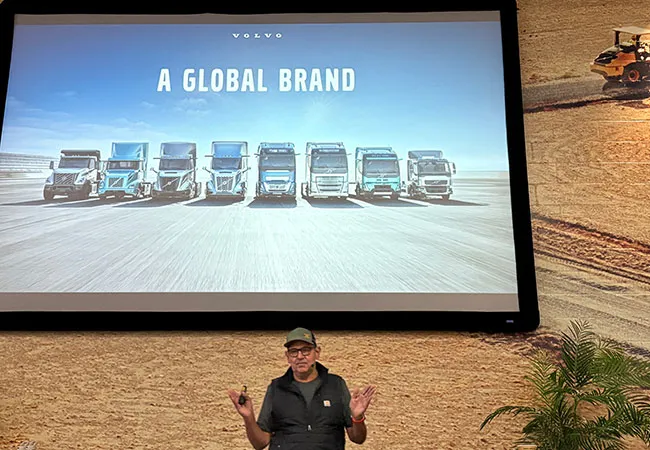
“We believe that there is space for two brands with two different brand promises and brand propositions," VTNA President Peter Voorhoeve said, referencing the North American market presence of Volvo's VTNA and Mack Trucks brands. (Mike Senatore/Transport Topics)
VTNA’s push into the vocational segment comes as demand remains relatively strong, supported by infrastructure projects funded through continued data center construction as well as projects funded by the Infrastructure Investment and Jobs Act.
“I think the vocational market is fairly recession-proof and fairly stable. ... It’s a relatively steady, strong segment that we think we could play an important role in,” Voorhoeve said.
RELATED: Class 8 sales continue year-over-year gains in August
The VNX, together with the redesigned VNL and VNR, also reflects Volvo’s broader effort to increase its share of the North American Class 8 truck market. Company leadership in November 2024 set a goal of capturing a 25% market share by 2030.
Although Volvo has established a strong presence in vocational and construction markets outside North America, particularly in Northern Europe and Latin America, VTNA’s Volvo Group stablemate Mack Trucks historically has held the stronger position in North America. Voorhoeve said VTNA’s products offer a distinct value proposition.
“North America is a very, very big market,” he said. “We believe that there is space for two brands with two different brand promises and brand propositions.”
Image
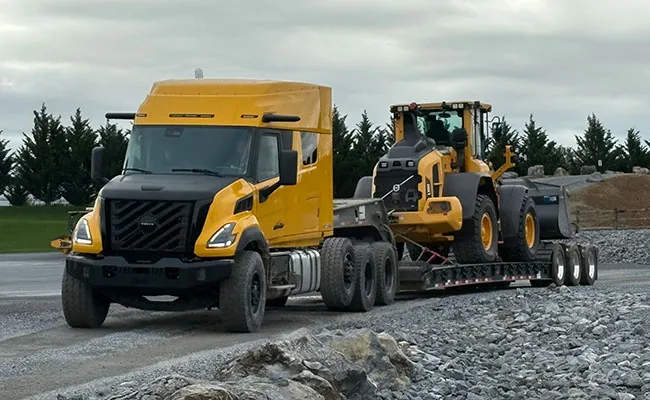
VTNA said it used feedback from its vocational customers, its experience in overseas markets, as well as collaboration with sister company Volvo Construction Equipment to inform the VNX redesign. (Mike Senatore/Transport Topics)
Voorhoeve also pointed to manufacturing investments that he said position the company to expand VNX production.
“We have invested $500 million into our manufacturing plant in Dublin, Va., so we have more than enough capacity to handle [production of the VNX], and it’s on the same platform as the VNL and VNR, so we can build it in the same factory,” he said.
The VNX will be powered by Volvo’s D13 engine, rated at up to 540 horsepower and 1,950 pound-feet of torque and capable of delivering up to 630 braking horsepower. All VNX models will be equipped with engines compliant with the EPA’s 2027 nitrogen oxide emissions standards, which take effect Jan. 1, 2027, though certain revisions regarding rollbacks on warranty requirements and compliance standards aren't finalized.
RELATED: DTNA urges clarity from EPA on NOx 2027 standards
The company said it utilized feedback from its North American vocational customers, its experience in overseas markets, as well as collaboration with sister company Volvo Construction Equipment to inform the VNX redesign.
Image
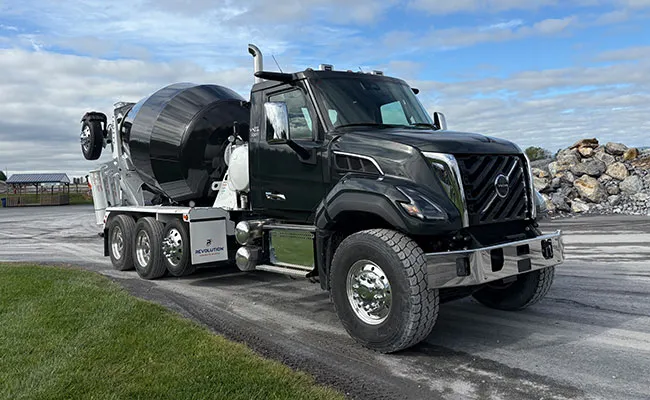
The new VNX is built on a common platform, but it is designed for vocational applications including construction, agriculture, logging and concrete hauling. (Mike Senatore/Transport Topics)
Safety was described as a top priority. The truck features increased use of high-strength exterior steel, pedestrian and blind spot detection, optional side curtain air bags and the company’s Tough Shield windshield, which is designed to withstand two to three times more impact than regular tempered glass and offer heightened scratch resistance. The truck also offers expanded connectivity features to enhance diagnostics and maintenance.
VTNA also highlighted its new Remote Steer feature, which permits drivers to control the vehicle from outside the cab for precision movements and mobility in tight spaces. With the system, the truck can be operated by a large remote control at speeds up to 5 miles per hour.
Image
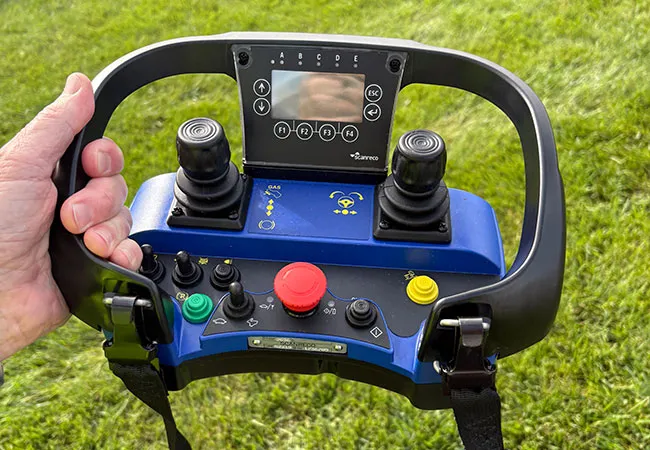
VTNA highlighted its Remote Steer feature, which allows operators to remotely control a truck at speeds up to 5 miles per hour. (Mike Senatore/Transport Topics)
The VNX will also be equipped with a new feature called Terrain Brake that, when activated, applies brakes when the driver lifts off of the accelerator pedal. It also holds the truck’s position on inclines or uneven surfaces, VTNA said.


