
[Stay on top of transportation news: Get TTNews in your inbox.]
U.S. plans 2-month extension to shipping-fee truce with China
Extension follows a broader trade truce between Washington and Beijing announced in September
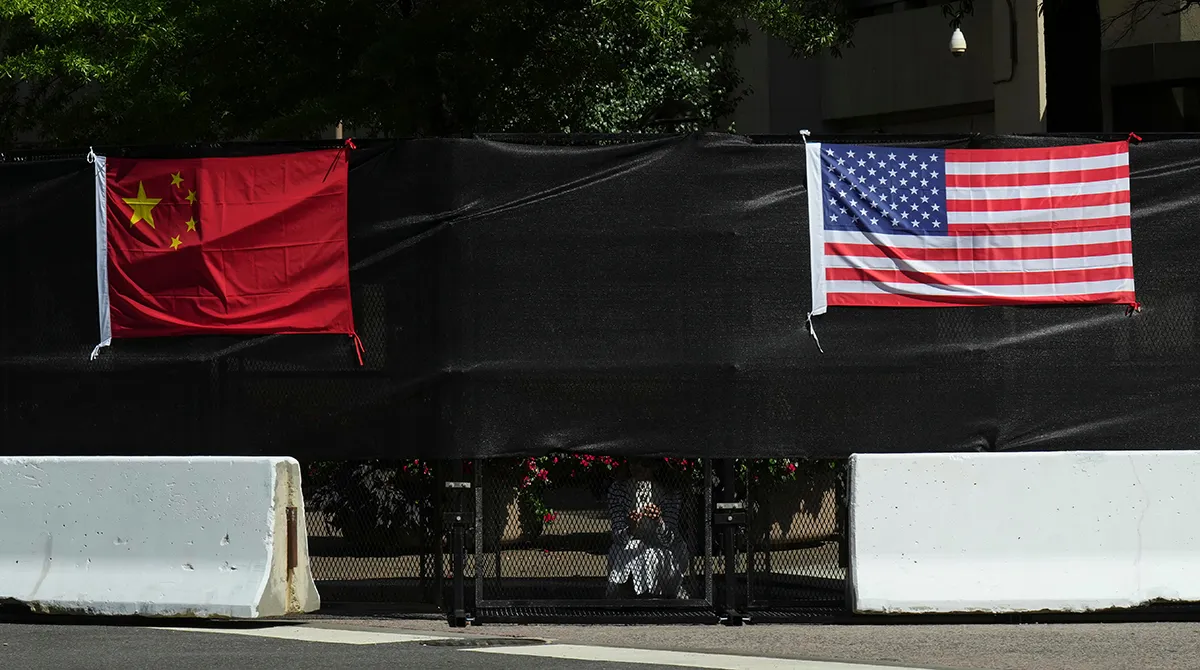 A person takes a photo between Chinese and American flags as the motorcade of President Donald Trump and China's President Xi Jinping heads to the National Archives on Sept. 25 in Washington. (Jacquelyn Martin/AP)
Key Takeaways:
- The U.S. may extend its pause on port charges for Chinese-linked ships by two months, through Jan. 9.
- The reciprocal fees had cost Chinese- or U.S.-linked ships millions of dollars, disrupted global operations and increased freight costs.
- USTR said the U.S. continues engaging China as it seeks elimination of the practices at issue in its investigation.
The U.S. may extend a pause on charges for Chinese-linked ships for calling at American ports by two months, following efforts to iron out broader trade issues between the two economies.
If approved, the Office of the United States Trade Representative’s proposal will prolong a bilateral truce that was set to expire in early November until Jan. 9, according to a USTR notice issued on Oct. 26. That agreement suspended tit-for-tat port charges that Washington and Beijing had imposed on each other earlier in 2025.
“The United States is continuing to engage with China with the goal of obtaining the elimination of the acts, policies, and practices at issue in the investigation,” Jennifer Thornton, general counsel for the USTR, said in the notice.
The two-month extension follows a broader trade truce between Washington and Beijing that was announced last month as Chinese President Xi Jinping landed in the U.S. for his first visit in 11 years.
The reciprocal fees imposed last year meant that Chinese- or U.S.-linked ships faced millions of dollars of charges for calling at each others’ ports. The penalties forced shipping companies to rejig global operations, and pushed up freight costs. A major South Korean shipbuilder also came under fire, with Beijing sanctioning the company’s U.S. units in retaliation for Washington’s moves.


