[Stay on top of transportation news: Get TTNews in your inbox.]
UAE oil production surged to records in September, IEA says
Abu Dhabi raised total oil production by 400,000 barrels a day to 5.3 million
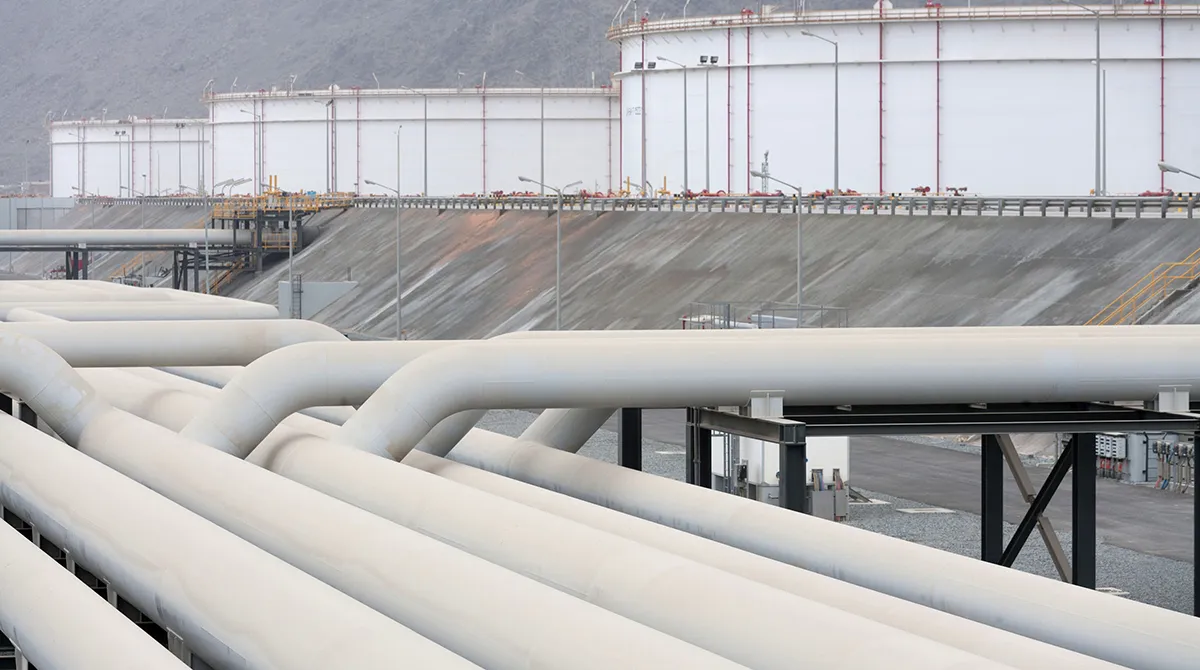 Oil transfer pipes and storage silos, part of the Abu Dhabi Crude Oil Pipeline, in Fujairah, United Arab Emirates. (Duncan Chard/Bloomberg)
Key Takeaways:
- Oil output from the United Arab Emirates climbed to record levels last month, the International Energy Agency said, underscoring its resilience during the Iran war and liberation from OPEC+ limits. Abu Dhabi raised total oil production, including condens
- Gulf producer flows reached more than 75% of prewar levels in September as the UAE restored shipments and exited OPEC+ limits.
- The IEA said renewed Iranian attacks cloud the regional recovery as UAE inventories fell by a record 270,000 barrels a day in September.
Oil output from the United Arab Emirates climbed to record levels last month, the International Energy Agency said, underscoring its resilience during the Iran war and liberation from OPEC+ limits.
Abu Dhabi raised total oil production, including condensates, by 400,000 barrels a day to 5.3 million, the IEA said in a monthly report. It bolstered crude output to more than 4.4 million barrels a day, nearing its maximum capacity, according to the agency. That exceeds the previous highs for total oil in August, and crude oil in June.
READ MORE: Energy agency lowers world oil demand forecast for the year
The UAE has been one of the most successful among regional producers in restoring flows through the Strait of Hormuz, by drawing on a fleet of tankers to discreetly shuttle cargoes through the chokepoint and then transfer them onto other vessels. In addition, the country’s decision to leave the Organization of the Petroleum Exporting Countries as of May has freed it from the group’s output caps, a source of frustration for years.
Its gains contributed to a wider recovery in flows from gulf producers, which reached more than 75% of pre-war levels in September, led by Saudi Arabia, according to the Paris-based IEA.
Still, it’s unclear how far the regional rebound has withstood a new wave of Iranian attacks on tankers transiting Hormuz, and escalating hostilities carried out by the Houthi rebel faction in Yemen.
The UAE depleted its observable above-ground inventories at a record pace of more than 270,000 barrels a day in September, drawing them to an all-time low, according to the IEA.