[Stay on top of transportation news: Get TTNews in your inbox.]
Trucking groups seek congressional support before midterms
District visits put lawsuit abuse, truck parking and accident fraud before lawmakers
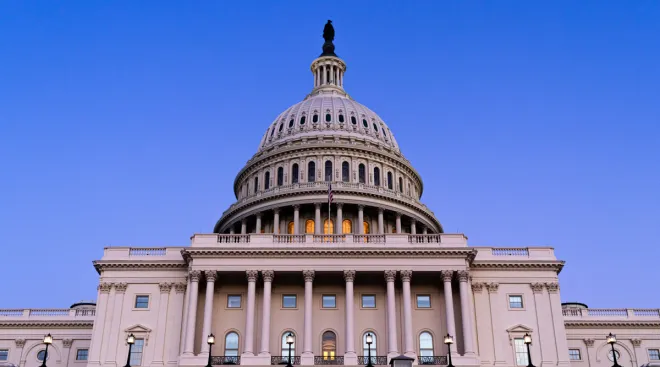
 The North Carolina Trucking Association and the Ohio Trucking Association met with representatives to discuss trucking businesses’ concerns. (photovs/Getty Images)
Key Takeaways:
- Trucking associations met with lawmakers in Ohio and North Carolina before the midterms to seek support on lawsuit abuse, truck parking and accident fraud.
- Industry representatives said large lawsuit awards, high insurance costs and insufficient urban truck parking create challenges for trucking businesses.
- Rep. Dave Taylor plans additional trucking legislation in the coming months, while Rep. Mark Harris supports federal criminal penalties for staged commercial vehicle accidents.
Trucking groups are pressing members of Congress on lawsuit abuse, truck parking and accident fraud during the final weeks in their districts before the midterms. At events in Ohio and North Carolina, industry representatives sought support for legislation addressing those concerns.
The North Carolina Trucking Association met with Rep. Mark Harris (R-N.C.), and the Ohio Trucking Association met with Rep. Dave Taylor (R-Ohio) last week to discuss trucking businesses’ concerns. The lawmakers shared with Transport Topics their plans for the lame-duck session and support for trucking legislation.
Taylor, who has a ready-mix concrete business called Sardinia Ready Mix that uses trucks, met with constituents at Kenworth Truck Co. manufacturing facility in Chillicothe, Ohio.
“He understands better than most the impact that the trucking industry has and the challenges that we run through,” said Tom Balzer, president and CEO of the Ohio Trucking Association, about the Oct. 6 meeting.
Balzer said they discussed how trucking businesses face the possibility of lawsuits with large awards after accidents that may not have been the truck driver’s fault.
“It’s just a no-win situation for the trucking industry, and I think that that’s probably the biggest thing that came across, was that the industry feels helpless,” he said.
Taylor’s office told TT that he plans to be active in the bipartisan Congressional Trucking Caucus he helped launch last year and to introduce additional trucking legislation in the coming months.
Taylor has introduced several trucking bills over the past two years, including the bipartisan REVOKE Act, introduced in September to improve oversight of chameleon carriers, which are carriers that shut down because of safety violations and reopen under new names. He also introduced legislation last year requiring drivers to maintain basic proficiency in English to be licensed. Neither bill has been taken up for a full House vote yet.
Balzer said they also discussed the federal excise tax on heavy trucks, which has been around for more than a century.
“It makes it very cost prohibitive for fleets, especially in today’s market, to be able to purchase these vehicles because you’re talking about upwards of $25,000 to $30,000 in additional costs,” he said.
Image

(Alex Potemkin/Getty Images)
Truck parking was another major issue discussed. Balzer said Ohio’s $150 million investment in commercial truck parking in its transportation budget, signed by Ohio Gov. Mike DeWine in 2025, shows there is a political appetite to address the issue.
“There’s still a problem because the issue is the truck parking need is in our urban areas, it’s not in our rural areas, and so that’s the fallacy that we run into is, ‘Yes there is truck parking available, it’s just in the wrong spot,’” he said. “We need as a country to decide because of the way we buy, because of the population concentration centers, that we need to focus our efforts on more urban development of truck parking so that our trucks can stage themselves properly.”
On Oct. 5, the North Carolina Trucking Association met with Harris, who serves on the House Judiciary Committee, at the Edwards Wood Products headquarters in Marshville to discuss lawsuit abuse and high insurance rates.
North Carolina Trucking Association President and CEO Ben Greenberg said the group supports the FAIR Trucking Act, Uniform Vehicle Safety Standards Act and Staged Accident Fraud Prevention Act, which address lawsuit abuse issues, such as staging accidents and “forum shopping,” which means filing in jurisdictions that may give plaintiffs better outcomes.
“He certainly seemed open and amenable and was well informed on the issues. You could tell he’s done his homework and was briefed on the challenges and took the threat to the supply chain seriously,” Greenberg said.
Image
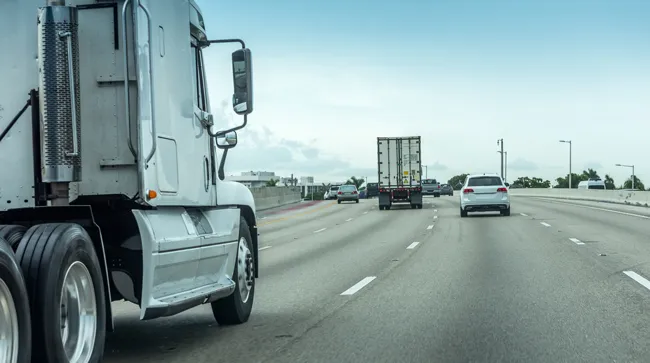
(CHUYN/Getty Images)
“As we approach the end of this Congress, it is important that we address these concerns,” Harris said. “I support my colleague Congressman Mike Collins’ Staged Accident Fraud Prevention Act (H.R. 2662), which would establish federal criminal penalties for individuals who intentionally stage accidents involving commercial vehicles to pursue fraudulent claims against trucking companies. These reckless actions put drivers and other motorists at risk, undermine roadway safety and drive up insurance costs.”
Harris added, “North Carolina’s trucking industry plays a critical role in keeping our economy moving, and I will continue fighting for our hardworking men and women behind it.”
Greenberg said he understands that progress takes time in Congress but hopes these meetings will help members of all political parties understand the issues facing the industry.
“We know it’s going to be an incremental, potentially slow process that might span multiple sessions of Congress, but we’re active and interested in continuing to beat the drum and make sure that elected officials are aware of the pain points that are being experienced by the industry,” he said.
Greenberg added, “We’re not just looking to meet with members of one party either. We got similar outreach to Representative [Deborah] Ross who also serves on the judiciary [committee] as well. We don’t consider these partisan issues even though sometimes they get couched that way. They’re just transportation issues.”