
[Stay on top of transportation news: Get TTNews in your inbox.]
Premium on experience drives trucker recruitment costs
Driver cost per hire jumps 41% year over year in third quarter, according to report
 The report found competition for qualified drivers led 46% of carriers surveyed to increase driver pay within the past 90 days. (Ivan Pantic/Getty Images)
Key Takeaways:
- Driver cost per hire rose 41% year over year in the third quarter as carriers competed for experienced, qualified drivers.
- The report found 46% of surveyed carriers recently raised pay, while compensation remained drivers’ leading concern at 26.6%.
- Experts expect competition to persist, requiring carriers to refine recruiting, respond quickly and deliver promised earnings, home time and working conditions.
The cost to hire a professional truck driver is increasing amid market pressures that are putting a premium on experience and quality, according to experts.
The Q3 2026 Driver Recruiting & Retention Data Download Report found that trucking companies are having to rethink recruitment and retention strategies amid rising recruiting costs, regulatory pressures and growing competition for experienced drivers. The report found that driver cost per hire increased 41% year over year in Q3. The Conversion Interactive Agency published the report alongside People. Data. Analytics.
“Carriers can’t afford to hire the same way they did a year ago,” Conversion President Brian Johnston said. “The focus has to shift from simply generating leads to creating more efficiencies throughout the driver pipeline, with an emphasis on the retention strategy post-hire.”
The report found competition for qualified drivers led 46% of carriers surveyed to increase driver pay within the past 90 days. It listed compensation as the leading driver concern at 26.6%. This was followed by equipment at 24.9% and operations at 19.4%.
“More and more conversations with fleets have made it clear that drivers are aware of how in demand they are,” said Luke Wachtel, senior vice president of transportation and logistics at Platform Science. “You don’t just take into account, necessarily, profitability. There are a lot of them, now, that are taking into account how is this going to help or hurt my retention.”
Wachtel noted that many fleets have focused on network optimization as a means to retain and attract drivers. Much of that has centered on technology such as transportation management systems and route planning.
“Drivers aren’t necessarily just looking at money or the quality of the equipment,” Wachtel said. “They’re also looking, obviously, at home time. They’re looking at what the lanes look like, do they like who they’re delivering to. When they have detention time, how good is detention time?”
Wachtel added that the fleets he works with have long sought data on detention times at customer facilities. But recently the more sophisticated fleets have asked to go deeper to get better clarity about what their drivers are experiencing, and basing decisions around that. This includes assessing customers on what they provide drivers when it comes to amenities.
Image
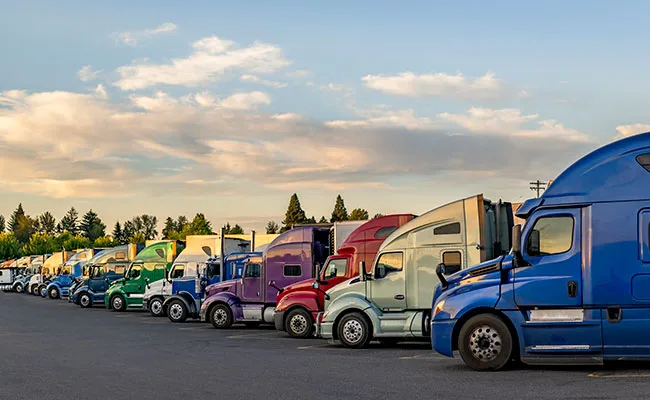
Trucks at a truck stop. Quality equipment was the No. 2 driver concern in the Q3 survey. (vitpho/Getty Images)
“A soft freight market generally reduces hiring pressure, but it does not automatically make recruiting easy,” said Darin Williams, president of online driver job application and advertising company CDLjobs.com. “Carriers may have fewer seats to fill and still struggle to find experienced drivers who meet their qualifications, live in their hiring areas and want the work.”
Williams added that the challenges around matching carriers with qualified drivers remained significant during the third quarter, even with subdued freight demand. He noted experience requirements, driving history, route preferences and engagement all affect the outcome.

►Freight Upturn Bodes Well
►The Market Has Finally Turned
►Business Optimism Growing
►Fleets Investing in AI, Efficiency
►Carriers See Diesel Enduring
►Interactive Map
►2025 Yielded Mixed Results
Sector Rankings
LTL | TL/Dedicated
Intermodal/Drayage
Package/Courier | Air/Expedited
Refrigerated | Flatbed/Heavy
Tank/Bulk | Household/Commercial
“More applications do not automatically solve a mismatch between the opportunity and the drivers responding,” Williams said. “That fits a longer-term trend toward more specific recruiting. Advertising needs to explain what the job actually offers.”
Williams added that includes realistic earnings, home time, operating areas, equipment and minimum qualifications. He warned that a broad statement about “driving experience” can attract applicants whose backgrounds do not meet the actual requirements of the position.
“I expect competition for experienced, qualified drivers to remain persistent,” Williams said. “If freight demand strengthens and carriers expand hiring, that competition will intensify. Carriers that maintain recruiting visibility, respond promptly to interested drivers and deliver on the expectations established during hiring should be better positioned.”
The BLS Producer Price Index showed that long-distance truckload freight reached a coronavirus-era peak of 232.53 points in May 2022. But it eventually fell to 174.98 by June 2023. The index hovered around there until earlier this year and had climbed to 226.64 by September.

Bob Toews, CEO of TruckDown, discusses winter readiness in the connected fleet era. Tune in above or by going to RoadSigns.ttnews.com.
“Supply went up, both employer firms and owner-operators,” said Stephen Burks, professor of economics and management at University of Minnesota Morris. “And so we have a period from about fourth quarter of 2022 up through probably the first quarter of this year in which there was too much capacity, too many trucks, too many drivers.”
Burks estimated that the PPI represents about a 28% increase in rates this year for contract and spot, but he stressed that not all the data is available yet to form a complete picture for this year. He noted that the midsize and larger truckload firms were still hiring during the downcycle, something he views as being driven by high turnover rates, not a driver shortage.
“When the market starts to shift toward it being a seller’s market on the side of drivers, we would expect there to be wage increases, signing bonuses [and] a modest increase, probably, in drivers switching who have experience and clean records,” Burks said.


