
[Stay on top of transportation news: Get TTNews in your inbox.]
U.S. trailer orders surge 311% in September
ACT Research says volume reached 42,700 units as the delayed order cycle accelerated
| Updated:
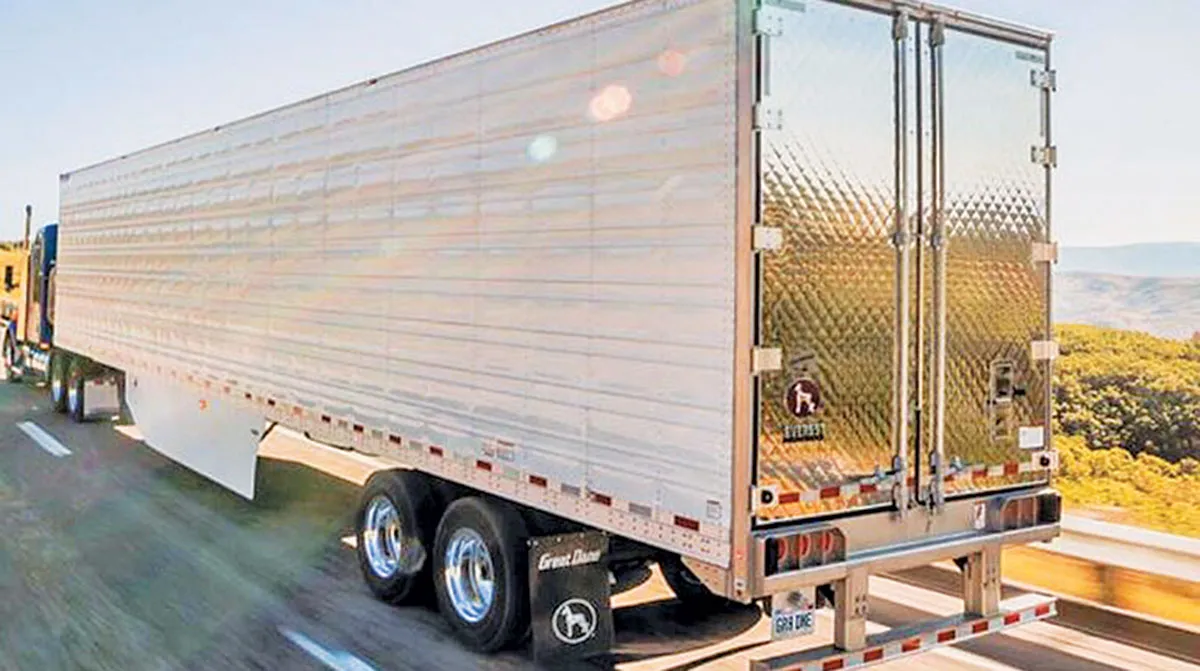 September’s 42,700 trailer orders marked a 75% improvement over August's volume. (Great Dane)
Key Takeaways:
- U.S. trailer orders surged in September, with ACT reporting 42,700 units and FTR reporting 43,059, both triple-digit year-over-year increases.
- ACT and FTR attributed outsize gains partly to weak comparisons, delayed ordering, replacement demand and improved carrier finances.
- Manufacturers expect stronger demand into 2027, though tariffs, equipment costs, trade uncertainty and supply chain constraints could temper recovery.
U.S. trailer orders were boosted to triple-digit percentage growth amid seasonal factors and a delayed order cycle in September.
ACT Research preliminary data showed orders surged 311% from the previous year to 42,700 units. The report also stressed that the rise is against a low volume last year. September’s level, too, marked a 75% improvement over August. The results were still strong, with the seasonally adjusted number at 36,700 units being the third best in the past 55 months.
“Seasonally speaking, September net orders should have improved sequentially, so the uptick from August was no surprise,” said Jennifer McNealy, director of commercial vehicle market research for ACT. “The degree of improvement, however, by historical standards was atypical, continuing the unusual pattern of the 2025-2026 order cycle.”
McNealy added that orders that should have been placed in September 2025, for the new cycle, weren’t placed until December and January. This was followed by a gradual uptick in order placement as the season continued. She noted that while seasonal comparisons were outsized, the latest month built on seasonally strong orders since May.
“ACT Research continues to hear that the dramatic spike in U.S. trailer orders is a four-fold event,” McNealy said. “Customers ordering ahead of tariff-related price increases, healthier long-term profitability conditions for carriers, pent-up replacement demand and a sharply tighter driver supply.”
Image

ACT Research's Jennifer McNealy called September's 311% volume spike atypical by historical standards. (ACT Research)
McNealy added that carriers now have the willingness and the ability to purchase equipment, and are inspired to do so sooner rather than later. She pointed out that this is because “they also face rising prices and an untested domestic supply chain” that could cause build constraints, lengthier production queues and delayed deliveries.
“We often make the case that there is a profitability-related component that makes demand somewhat binary,” McNealy said. “It would appear that the switch has been flipped. Coming in well above current build levels, industry backlogs are expected to rise by around 18,000 when full industry data are reported.”
FTR Transportation Intelligence preliminary results showed trailer orders increased 385% year over year to 43,059 units in September, the highest tally since December 2022. They were also up 78% from the prior month. The report pointed out that although weak prior-year comparisons magnify the increase, solid orders in both of the past two months point to substantial pent-up replacement demand and the possibility of some limited fleet expansion.
“Industry feedback reinforces the improving outlook,” said Dan Moyer, senior analyst of commercial vehicles at FTR. “Rising quote activity and more requests for proposals indicate that fleets are becoming increasingly active in equipment planning.”
Moyer added that trailer leasing utilization remains high, while availability has tightened in certain markets. He noted that this suggests growing pressure on existing equipment capacity. He views the outlook overall as pointing to stronger trailer demand in 2027. But he is also following some potential headwinds that could disrupt that.
“September’s exceptional order pace may not be sustained,” Moyer said. “Elevated equipment costs, trade uncertainty, potential supply chain constraints and competing fleet capital needs could temper the pace of recovery.”
Utility Trailer Manufacturing Co. announced during the month that it had updated its Utility TrailerConnect telematics platform. The new capabilities were focused on improving uptime, simplifying maintenance and gaining deeper visibility into trailer operations. The system is supported by a joint venture between Utility Trailer and Schmitz Cargobull.
“September orders were robust and in line with the percentages reported by FTR and ACT,” said Steve Bennett, chief operating officer at Utility. “However, the 25% reciprocal tariffs imposed by Canada have had a significant impact. The Canadian market, where Utility maintains the leading dealer network and market share, typically accounts for over 15% of our sales.”

PCS Software CEO Mark Hill discusses the advance of AI in the trucking industry. Tune in above or by going to RoadSigns.ttnews.com.
President Donald Trump has leaned heavily on tariffs to enact his trade agenda, and this has created significant trade tensions with partner countries like Canada. Bennett noted that his team is working toward a resolution and remains hopeful that a trade agreement will be reached.
“Demand for both refrigerated trailers and dry vans has improved, and we are modestly increasing build rates across all plants,” Bennett said. “We are fully committed through Q1 2027, and with Q2 now open for quoting, demand continues to strengthen as production slots fill.”
The American Trailer Manufacturers Coalition won a major trade enforcement case against imported trailers Sept. 25. The U.S. International Trade Commission issued an injury determination in the case that found dumped and subsidized semitrailers from China, Canada and Mexico have materially harmed the domestic industry. Utility Trailer is among the opponents of the coalition that have warned that the resulting tariffs drive up equipment costs for truckers.
“I am hopeful that when the final determination is made this December, our preliminary duties will be reduced or eliminated,” Bennett said. “Should either occur, we will receive a credit from [Customs and Border Protection] and pass those refunds directly to our customers. I maintain that the coalition’s claim that refrigerated trailers and dry vans are interchangeable is unfounded.”


