[Stay on top of transportation news: Get TTNews in your inbox.]
Shale executives say Iran war is sowing chaos in oil markets
Energy executives called out the wide swings in oil prices as the main source of their unease
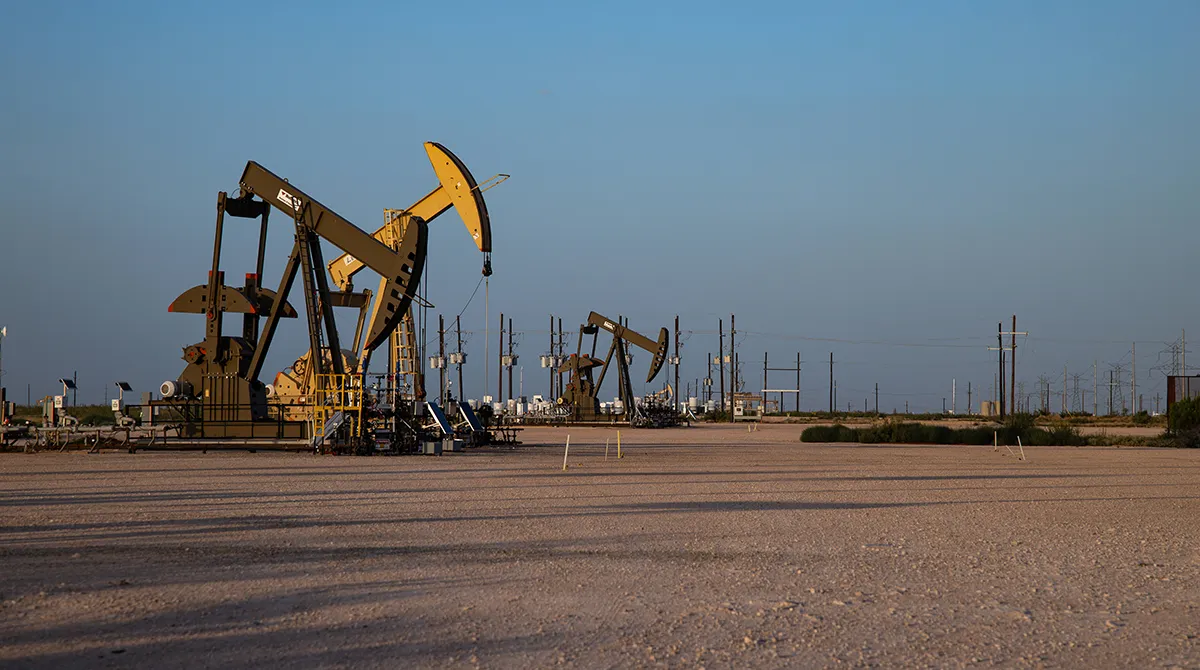 Pump jacks in Midland, Texas. (Kaylee Greenlee/Bloomberg)
Key Takeaways:
- Oil bosses in the U.S. are expressing frustration with their inability to plan for the future amid chaos and instability in global crude prices due to the war in Iran. In a series of anonymous comments published Sept. 30 from a report released by the Fed
- West Texas Intermediate crude has risen about 36% since late February and executives now expect U.S. oil prices to average $82 within a year.
- Survey respondents said Middle East instability continues to drive uncertainty while the Dallas Fed noted higher costs may be limiting further activity growth.
Oil bosses in the U.S. are expressing frustration with their inability to plan for the future amid chaos and instability in global crude prices due to the war in Iran.
In a series of anonymous comments published Sept. 30 from a report released by the Federal Reserve Bank of Dallas, energy executives called out the wide swings in oil prices as the main source of their unease. Some of the people, who responded to a survey carried out by the bank, pointed fingers at the Trump administration.
READ MORE: U.S. taps more oil from emergency reserve
“My oil price crystal ball broke when the administration first hit Iran,” one respondent said.
“Decisions by the executive branch of our federal government seem to be driven primarily by concerns over midterm election results,” another respondent added.
The quarterly publication is widely read within the energy industry and features unfiltered comments from respondents working at drilling and fracking companies. West Texas Intermediate, the U.S. benchmark for oil, has climbed about 36% since the Iran conflict began in late February.
Executives in the latest survey now expect U.S. crude to average $82 within a year’s time, up 5% from year-out projections in the report three months earlier.
“There is still too much chaos, but it is leading to a bullish oil price sentiment because of all of the ramifications of what has taken place in the Middle East,” one respondent said.
The Dallas Fed, which typically conducts a questionnaire of energy companies in Texas, northern Louisiana and southern New Mexico, compiled its latest survey Sept. 16-24.
While oil activity is up in the region, it’s not at levels reached in the second quarter, and there are some indications that output is being capped by higher costs, Kunal Patel, a senior business economist at the bank, said in a call with reporters after the survey was released.
“It could be that what is somewhat limiting the increase in activity is just the constraints of trying to get more and more goods to the oil field, getting more and more labor, getting more and more rigs,” Patel said.

Arpan Podduturi of Samsara examines how AI, telematics and onboard cameras are converging to protect drivers and reduce risk. Tune in above or by going to RoadSigns.ttnews.com.
While shale executives have railed on the impact of instability in the oil market in past surveys, the latest report featured one executive wondering if past extreme volatility will repeat itself.
“Instability will be the word for energy markets with no end in sight until the oil delivery stabilizes in the Middle East,” a respondent said. “Remember the oil markets from 2012-2020? One hundred dollars per barrel to extreme lows of -$30 per barrel. What an economic turmoil that was. Is 2026 a repeat?”