
[Stay on top of transportation news: Get TTNews in your inbox.]
NYC lawmakers weigh overhaul of Amazon delivery worker bill
Amazon has threatened to move out over legislation
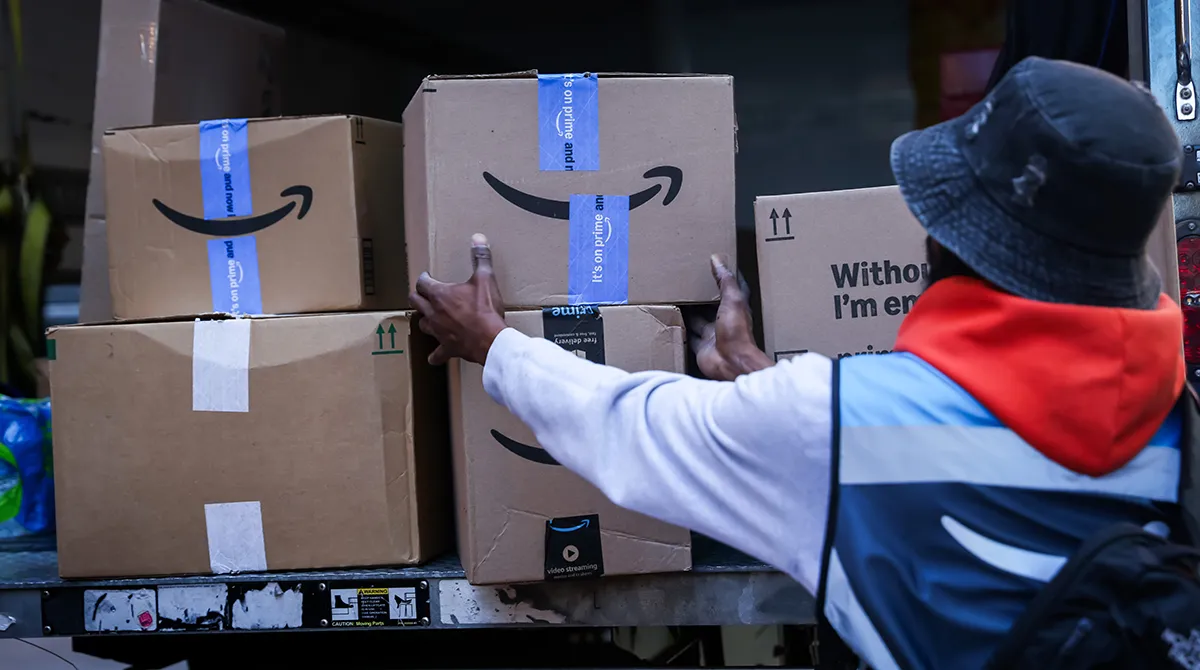 A worker unloads Amazon packages from a Prime delivery truck in New York. (Michael Nagle/Bloomberg)
Key Takeaways:
- New York City lawmakers are considering easing the Delivery Protection Act by replacing Amazon’s direct-hire mandate with several delivery options.
- The compromise could preserve about 40 Amazon delivery partners while requiring greater independence from Amazon and city licensing and oversight.
- If lawmakers reach an agreement, the legislation could come up for a City Council vote within a few weeks.
New York City lawmakers are considering reworking a bill that would force Amazon.com Inc. to directly hire thousands of delivery workers, which has pitted the company against Mayor Zohran Mamdani.
The lawmakers are discussing replacing the direct hire mandate with a menu of options, allowing Amazon to either directly employ the workers, use carriers like UPS Inc. or the U.S. Postal Service, or contract with fully independent third-party operators, according to people with knowledge of the matter.
For the delivery companies, it would require a complete change from their current operating model, one of the people said. Amazon would have to give up oversight of the contracted companies, including control of their routes, daily delivery quotas, hiring, firing and disciplining employees, the people said.
The proposed revisions would represent a compromise on legislation that sought to reshape the delivery industry by requiring companies such as Amazon to bring workers employed by subcontractors onto their own payrolls. Under the changes being considered, Amazon could continue using its network of delivery companies but would have to grant them autonomy and come under greater city oversight of those relationships.
If an agreement is reached, the legislation could come up for a vote within a few weeks, according to the people.
“We’ve made clear we’re willing to work with anyone who wants to make progress on this matter,” said Amazon spokesperson Steve Kelly. “We appreciate that Speaker Julie Menin has met with numerous stakeholders on this bill, including us, and we’ll remain engaged with her and her team as work on the bill continues to try and reach the best outcome for New Yorkers.”
In a statement, a Menin spokesperson, Jack Lobel, said her office is “working around the clock with the bill sponsor and stakeholders to achieve legislation that protects workers, jobs, and street safety. A range of options are still on the table.”
Menin told reporters Nov. 19 that she wanted to ensure the local delivery companies would be able to continue operating. Many of the delivery service partners, or DSPs, are minority-owned businesses. “I am confident we can chart a path forward with a bill that does not cause job loss and does not cause the DSPs to go out of business,” she said.
The bill, called the Delivery Protection Act, has gained the backing of an overwhelming majority of City Council members and Mamdani.
Initially, Amazon and the small business owners presented a united front against the bill. Amazon bankrolled a lobbying group that included many of its delivery partners, which also opposed the legislation.
That alliance began to fracture when some business owners started meeting independently with city officials, according to a person familiar with the negotiations who asked not to be identified discussing private talks. The owners sought greater transparency into how Amazon sets delivery routes and determines how many packages drivers are expected to handle during a shift.
The meetings marked a breakthrough in the negotiations, the person said. The business owners began pressing City Council members for protections from requirements imposed by Amazon, arguing that their dependence on the company left them with little leverage. They ultimately persuaded the bill’s sponsors that the small businesses, not just their drivers, also needed protections from Amazon, the person said.
Amazon has threatened to pull its logistics operations out of the city if it is required to directly employ all of its delivery workers, as the bill currently proposes. Its backers say outsourced workers endure unsafe conditions while Amazon reaps the benefit of lower cost labor.
There are about 40 Amazon delivery service partners, small businesses that hire couriers to handle Amazon packages, operating in the city. Many of the small business owners opposed the bill, saying it would put them out of business.
LOGISTICS 100 SIDEBAR BOX (STOCK TICKER SAFE) (Updated 5/6/26)

TT Top 100 Logistics Companies
The largest 3PLs in North America continued to face volatile business conditions last year, from compressed margins to tariff-driven supply chain upheaval. Read more
While the changes would remove a key provision of the bill, it would still require Amazon and other companies operating last-mile delivery facilities to be licensed by the city’s Department of Consumer and Worker Protection, which would investigate complaints and ensure safety standards are met.
Amazon ranks No. 1 on the Transport Topics Top 100 list of the largest logistics companies in North America and No. 1 on the TT Top 50 list of the largest global freight companies. It also ranks No. 17 on the TT Top 100 private carriers list.


