[Stay on top of transportation news: Get TTNews in your inbox.]
Mexican cartel fuel trafficking sparks new bills in Texas
Bills target overweight tankers, permits and smuggling to deprive cartels of revenue
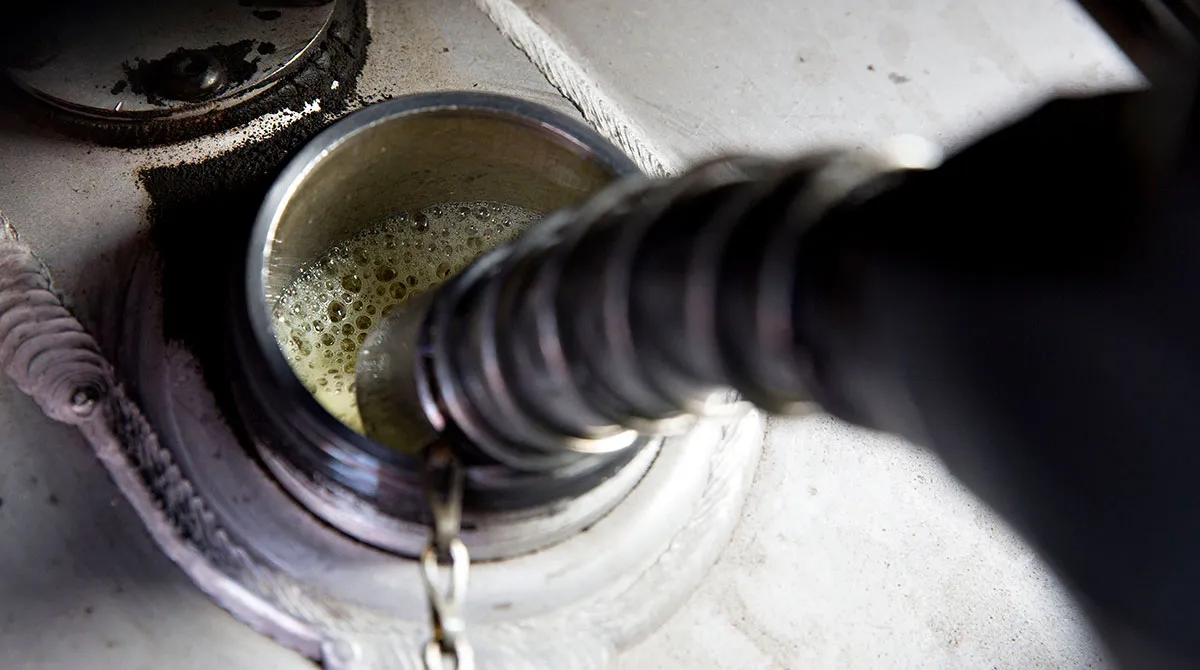 Mexican motorists pay as much as three times more for diesel than Americans, creating an incentive for the crime of fuel smuggling. (Daniel Acker/Bloomberg)
Key Takeaways:
- Texas lawmakers proposed two 2027 bills targeting overweight fuel tankers and hazardous materials shipments linked to cartel fuel trafficking.
- Texas officials said fuel trafficking generates cartels $12 billion to $21 billion annually while creating safety risks on roads and in neighborhoods.
- The Texas Legislature convenes Jan. 12 as state lawmakers consider new measures and federal lawmakers seek a report on anti-smuggling efforts.
Texas and federal lawmakers are proposing new measures to combat cartel fuel trafficking that authorities say involves overloaded tankers, hazardous shipments diverted through neighborhoods and fuel smuggled into Mexico.
So far, two state bills proposed for the 2027 legislative session could affect organized criminal fuel trafficking. Bill prefiling opened Nov. 9 ahead of the 90th Texas Legislature, which convenes Jan. 12.
State Rep. Ryan Guillen (R) is backing House Bill 245 to enable the city of Roma to issue an optional permit for moving oversize or overweight vehicles on several roads in Starr County, where the Rio Grande divides it from Mexico.
State Sen. Brent Hagenbuch (R), who owns and is chairman of Titus Transport, a dedicated freight carrier for food retailers, has introduced Senate Bill 167. It would make it a felony for a three-axle vehicle to exceed authorized vehicle weight limits while hauling fuel or other hazardous materials in cargo tanks.
Fuel trafficking risks
Texas state senators heard nearly four hours of testimony from state police and transportation experts about the illicit activities and public safety dangers associated with fuel trafficking. The Senate Select Committee on Homeland and Border Security convened Aug. 13 to explore legislative solutions to border issues, particularly fuel trafficking.
Committee Chair Sen. Phil King opened the hearing by saying he intended to illustrate through testimony the often unknown, illicit fuel trafficking in Texas that Mexican cartels are exploiting for money laundering and to fund their human trafficking and narcotics trade.
RELATED: Authorities crack down on multiple diesel fuel theft rings
“Fuel trafficking can take many forms, including overloading fuel tankers beyond permitted weight limits, fabricating saddle tanks onto trucks to deceive law enforcement or transporting fuel in industrial water containers using cargo trucks,” King said.
The scheme often begins with a legitimate fuel purchase made with criminal proceeds before cartels exploit fuel-export tax rules and clandestine fuel depots to generate illicit profit.
The diversions create public safety concerns because trucks carrying hazardous materials that are supposed to remain on designated routes instead travel through residential areas near churches, schools and community centers.
Image
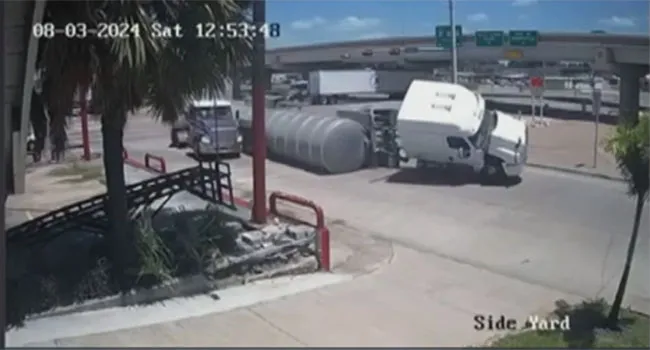
An overweight tanker truck carrying diesel begins to topple over. (Texas Senate Select Committee on Homeland and Border Security hearing)
“Often, fuel tankers add weight significantly exceeding the 125,000-pound authorized permit for overweight corridors, creating serious public risks on our roads. This illicit fuel is then smuggled into Mexico using falsified documentation intended to conceal the true contents of the shipment,” King noted.
How fuel trafficking works
1. According to the Texas Department of Public Safety, empty Mexican tanker trucks (three-axle vehicles able to carry up to 125,000 pounds) enter Texas. Because the fuel is designated for export, it is purchased tax free.
2. Operators obtain overweight permits to haul the fuel on designated overweight corridors to Mexico.
3. Trucks leave permitted routes for clandestine fuel sites. Sometimes, drivers use private roads and bridges to avoid law enforcement.
4. Fuel is transferred between vehicles or storage facilities and often blended with lower-grade products. Trucks often are then loaded beyond permitted weight limits and continue operating under the original overweight permit.
5. Trucks return toward the border on designated overweight corridors or other roads.
6. Paperwork and hazardous materials placards are often falsified to disguise the fuel as propane and avoid Mexican import taxes.
Cartel profit and enforcement
Because Mexico lacks refining capacity, its motorists pay higher fuel prices than Americans — as much as three times more for diesel — testified Col. Freeman Martin, director of the Texas DPS. “The price gap creates a huge financial incentive for [fuel traffickers],” he noted.
Martin described fuel trafficking as providing cartels $12 billion to $21 billion in annual revenue from smuggling, tax evasion, black-market sales and the sale of diluted products.
Image
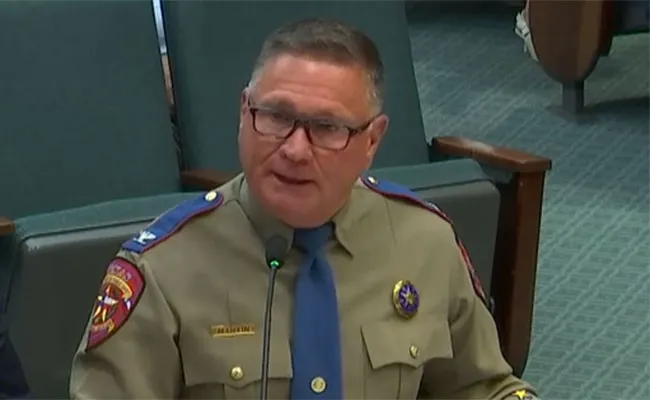
Col. Freeman Martin, director of the Texas Department of Public Safety. (Texas Senate Select Committee on Homeland and Border Security hearing)
U.S. trucks generally are limited to 80,000 pounds, but tankers involved in trafficking operations have been found weighing as much as 150,000 pounds, Martin said.
In the past, Texas law enforcement viewed fuel smuggling into Mexico as a traffic code violation, but different laws are needed, he added.
“These are outlaw companies. They’ll transition. They’ll start a new LLC, they’ll change the name on the truck. They’ll plug in another driver. And so we really have to look at this differently,” Martin said. “I think our shift in focus is that we really have got to focus on U.S. companies that are doing business with cartels.”
Trucking industry response
The Senate committee’s vice chair, Sen. Juan “Chuy” Hinojosa, and John Esparza, president and CEO of the Texas Trucking Association, also attended the hearing.
Bob Toews, CEO of TruckDown, discusses winter readiness in the connected fleet era. Tune in above or by going to RoadSigns.ttnews.com.
Esparza told Transport Topics on Nov. 16 that Hinojosa has been instrumental in advancing legislation to curtail cartel activities, especially unlawful fuel transportation.
“For the trucking industry and TXTA, safety must come first, so it is incredibly important for us as an association to work to do what’s right. TXTA supports expanding cross-border trade, but not at the expense of Texas’ safety standards,” Esparza said.
Esparza noted that Texas legislation to counter fuel trafficking failed last session. “We anticipate similar proposals in 2027 and will remain vigilant in protecting the integrity and safety of our roadways,” he said.
Federal legislation
In May, U.S. Sen. Jacky Rosen (D-Nev.) and Sen. John Cornyn (R-Texas) introduced the bipartisan Stop Fueling Cartel Violence Act, which would require the Department of Defense to report to Congress on its efforts to deter criminal groups in Mexico from fuel smuggling.
“Fuel theft in Mexico has become the most significant source of nondrug revenue for cartels, enabling them to sustain their illegal operations on both sides of the border, and we must take action to combat it,” Rosen said.
Image
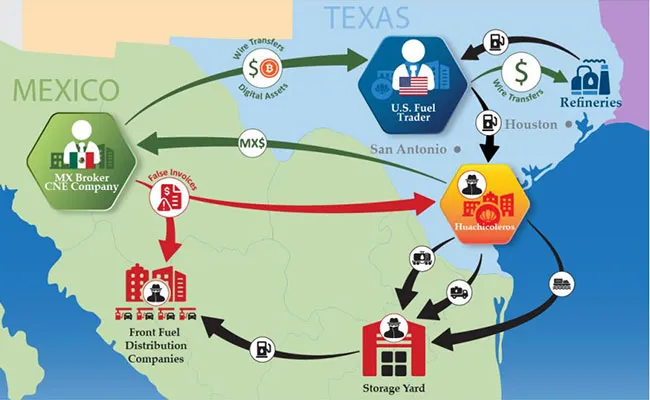
A general depiction of a fiscal fuel theft scheme. (Financial Crimes Enforcement Network)
The Treasury Department’s Financial Crimes Enforcement Network issued a June 30 alert on Mexican cartel fuel smuggling and tax evasion involving U.S. fuel exporters.
FinCEN noted that most of these complicit U.S. fuel traders operate in Texas and have legitimate businesses along with long-standing relationships with major U.S. refineries and fuel distributors.