
[Stay on top of transportation news: Get TTNews in your inbox.]
Iran ready for more intense war, won’t relent, official says
Strikes on both sides have pushed up energy prices, with Brent crude climbing above $100 a barrel
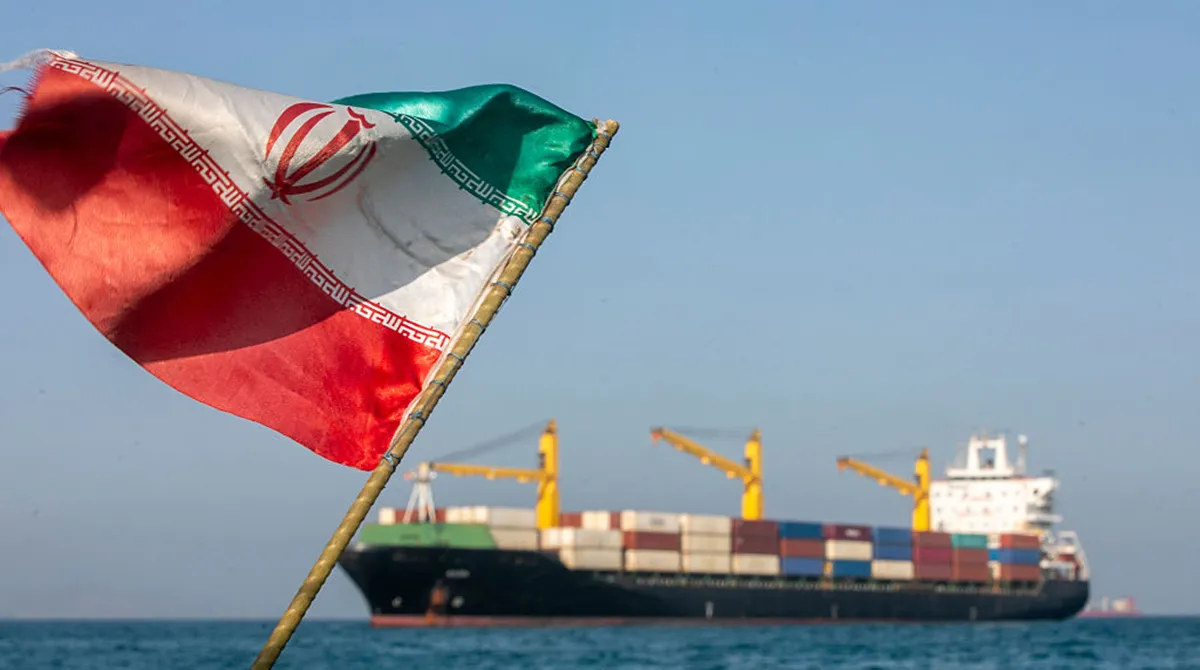 A ship in the Strait of Hormuz, near Larak Island, Iran. (Majid Saeedi/Getty Images Europe via Bloomberg)
Key Takeaways:
- A senior Iranian official said Tehran is prepared for a more intense conflict with the U.S., has replenished military capabilities since April, and believes continued resistance is necessary despite mounting economic damage.
- Recent exchanges included U.S. strikes on Iranian oil tankers and Iranian missile attacks on U.S.-linked targets and commercial vessels, increasing the chances of a broader regional escalation and prolonged conflict.
- Brent crude has climbed above $100 per barrel, U.S. diesel prices have reached record levels, and Iran is facing severe economic strain from the blockade, including inflation approaching 90% and a rapidly weakening currency.
Iran is ready for a more intense war and will escalate its counterstrikes if the U.S. continues attacking its territory and infrastructure, according to a senior official from the Islamic Republic.
Tehran has no intention of backing down in the face of an American naval blockade and attacks on its oil tankers, said the official, who asked not to be identified discussing sensitive matters. Economic pain may be increasing, they said, but the country’s leaders see the war with the U.S. as posing an existential threat that leaves them little choice but to keep fighting.
Iran has been rebuilding its military capabilities since the most intense period of the war ended in April and has enough missiles for a lengthy conflict, the official added.
The comments come as hostilities between the U.S. and Iran show little sign of easing, with the war now into its seventh month. Overnight, Washington said one of its warships had to evade an Iranian attack, and that it destroyed five of the Islamic Republic’s energy tankers in response. Tehran then fired around 20 missiles at a Jordanian airbase used by the U.S. and attacked more American navy ships, as well as several commercial vessels.
The tit-for-tat strikes have pushed up energy prices, with Brent crude climbing above $100 a barrel on Sept. 9 and extending its gain this year to around 65%. U.S. diesel pump prices hit a record last week, adding to pressure on President Donald Trump to end a conflict that’s unpopular with voters ahead of midterm elections on Nov. 3.
Many of Iran’s leaders “believe the Trump administration responds only to threats and escalation,” Dina Esfandiary of Bloomberg Economics wrote. “They also think the administration is more sensitive to an escalating war in the lead-up to the midterm elections.”
CENTCOM forces destroyed five Iranian crude oil carriers, Sept. 8, after the Islamic Revolutionary Guard Corps (IRGC) targeted a U.S. Navy warship with ballistic missiles twice over the past two days. The U.S. warship successfully evaded the attempted Iranian attacks and… pic.twitter.com/Gi8a2tloN1
— U.S. Central Command (@CENTCOM) September 8, 2026
This week, Iran’s new security chief, Mohsen Rezaee, said its military posture toward U.S. ships and bases had been “fundamentally recalibrated,” signaling a more aggressive stance.
Mohammad Bagher Ghalibaf, the speaker of parliament and lead negotiator with the U.S. in previous ceasefire talks, warned the era of “proportionate responses” was over.
The war, which erupted when the U.S. and Israel began strikes on Iran in late February, has entered a stalemate of sorts, with both sides jockeying for control over the Strait of Hormuz. No official peace talks have been held for months and there’s little sign of the sides returning to the negotiating table.
The U.S., wary of fuel prices going up even more, and having used up a significant portion of its interceptor missiles, is trying to avoid a return to the full-on fighting of March and early April. Instead, it’s trying to squeeze Iran’s economy via the blockade and threats to penalize governments and companies that don’t cut ties with Tehran.
Its aim is to force Iran to reopen Hormuz and restart negotiations to end the conflict.
Iran continues to insist it has the right to manage traffic through the vital waterway and is regularly targeting ships that pass through without its permission. That is forcing the U.S. to respond militarily and raising the risk of an escalatory spiral.
The blockade is hurting the Iranian economy. With Tehran hardly able to export petroleum and import many vital goods, inflation has accelerated to almost 90% and the rial is depreciating rapidly. Economic pressures led to mass protests late last year, triggering a crackdown by authorities that killed thousands of people.
The Iranian official acknowledged the worsening economic pain. Still, they said the country’s leaders believe they have little choice but to keep fighting until they’re confident Washington will be too wary to attack again in the future.

RoadSigns has reached its 200th episode since its origins in 2018. Hosts Seth Clevenger and Michael Freeze reflect on how trucking tech has evolved and share the trends that have surprised them. Tune in above or by going to RoadSigns.ttnews.com.
Some Iranian officials, including President Masoud Pezeshkian, have said their country should negotiate with the U.S. to ease the economic pressures. Yet even they say the White House must first lift the blockade and go back to the terms of the so-called memorandum of understanding, a ceasefire deal signed in June but which rapidly broke down.
“The political elites are locked in a debate over whether to escalate or just resist,” said Esfandiary. “Despite the debate, Iran is deciding how to retaliate faster and more efficiently, suggesting it has developed a menu of responses to U.S. escalation. It seeks to impose greater costs on the U.S.”


