
[Stay on top of transportation news: Get TTNews in your inbox.]
FMCSA seeks emergency review of chameleon CDL schools
Schools removed for fraud have returned to the registry with new names and basic information
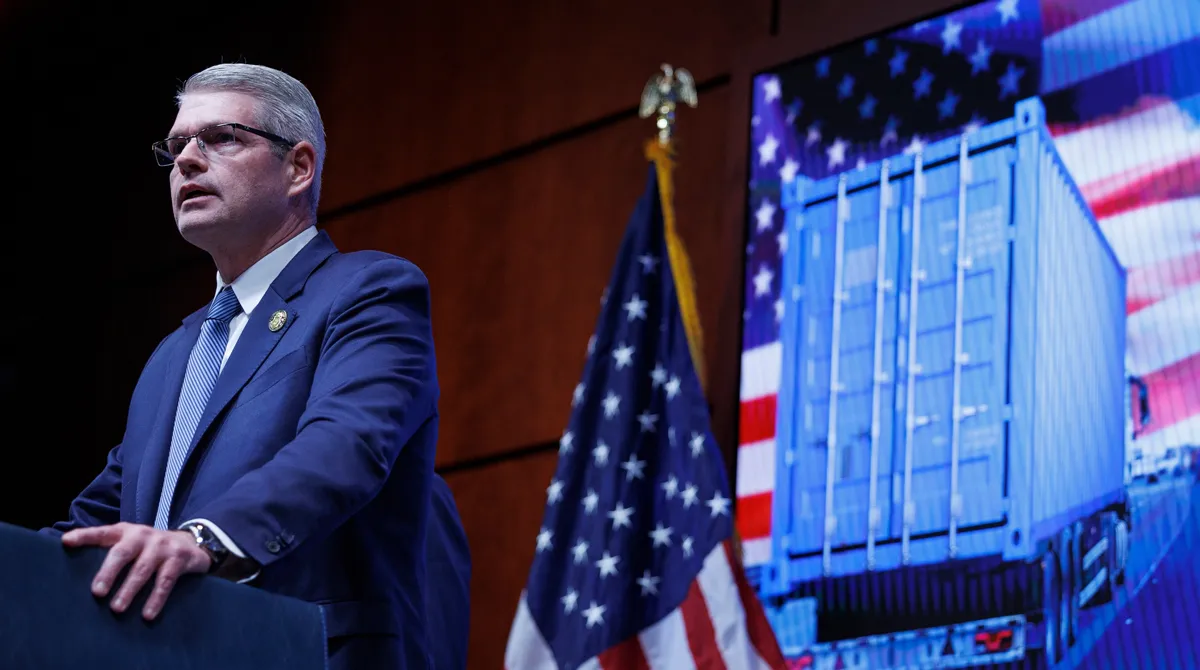 Closing noncompliant truck driver training schools that have provided credentials to unqualified drivers has been a hallmark of Barrs' leadership. (Tom Brenner/Associated Press)
Key Takeaways:
- FMCSA sought emergency OMB approval for additional vetting after fraudulently removed truck driver schools re-entered the Training Provider Registry using new information.
- FMCSA said nearly 10,000 school sites were shuttered while 800 schools remain under regulatory review amid a wider federal enforcement crackdown.
- FMCSA plans to review curricula, vehicles, instructor qualifications, state authorization and facilities before listing providers or approving new locations.
The Federal Motor Carrier Safety Administration is seeking emergency approval for additional vetting after discovering that truck driver schools removed for fraud have reapplied with new identifying information and returned to the Training Provider Registry.
Commercial driver license schools listed in the Training Provider Registry that receive a Notice of Emergency Removal “are able to log on to the TPR, self-certify with new training provider information and thus be listed again on the TPR and continue to perpetuate fraud,” FMCSA explained.
The agency has determined that if bad actors return to the registry under a new name and different basic information — such as a new email address — they can operate with “the same fraudulent, criminal or willful disregard as was discovered in their original business model until discovered through state noncompliance, operations or complaints.”
The trucking industry has coped with so-called chameleon motor carriers, brokers or freight forwarders that quickly reopen under new names and different identification after being shut down for safety violations and other federal regulatory noncompliance.
This request reveals that chameleon CDL mills are exploiting regulatory loopholes and returning to business despite heightened enforcement operations under FMCSA Administrator Derek Barrs.
FMCSA moves to close registry loophole
An emergency information collection request has been submitted to the Office of Management and Budget’s information and regulatory affairs division.
The agency justified its request by citing the need to impose better safeguards when a CDL school is first listed in its TPR.
FMCSA declared it cannot rely on the normal procedures before issuing a new rule “because public harm is reasonably likely to result. In this case, the public harm is having noncompliant training providers certifying drivers as meeting the training standards for operating a commercial motor vehicle when those drivers have not done so.”
PCS Software CEO Mark Hill discusses the advance of AI in the trucking industry. Tune in above or by going to RoadSigns.ttnews.com.
The agency said emergency approval to move forward is necessary to protect the public from unsafe drivers operating CMVs on roadways.
To close this loophole, FMCSA intends to launch a new rulemaking process to require additional information before companies can first be listed in the TPR but “cannot wait” for that process before vetting new applicants.
FMCSA noted that bad actors could exploit the traditional process for revising federal regulations before it concluded since a door would remain open “not only for new, noncompliant training programs, but also for previously removed training providers who are able to reincarnate and reapply.”
The agency is seeking OMB approval to require more stringent documentation for initial vetting and each time a training provider adds a new location.
Documents would be collected and reviewed for compliance before training providers are listed in the registry.
Stricter provider screening sought
Documentation would include:
Theory and behind-the-wheel lesson plans, including range and public-road curricula.
Proof of compliant training vehicles (including vehicles in the same group and types driver-trainees intend to use for CDL skills tests).
Instructor qualifications (driving or training experience and applicable CDLs and endorsements).
Proof a provider is authorized to train under applicable state laws and regulations.
Documentation that facilities used for applicable in-person training comply with federal regulations.
Wider crackdown on CDL training schools
FMCSA stated that 800 schools are under regulatory review, and more training sites may be closed because schools typically operate in multiple locations.
FMCSA is sending notices to training providers that operate at least one school and have not certified completion of driver training within the past year.
This request follows months of FMCSA crackdowns joined by other federal agencies to close noncompliant CDL schools. Nearly 10,000 school sites have been shuttered, while enforcement efforts to remove unqualified truckers from the roadways remain a multiagency federal priority.
Closing noncompliant truck driver training schools that have provided credentials to unqualified drivers — especially those involved in fatal accidents and cited for lacking English-language proficiency — has been a hallmark of Barrs’ leadership.
Barrs has repeatedly underscored his goal to “root out the bad” in entry-level driver training schools. During a September news conference, for example, he revealed that 110 schools were closed for alleged willful disregard of federal regulations.
He warned last year during his first news conference as administrator that he would close businesses that don’t follow the rules.


