[Stay on top of transportation news: Get TTNews in your inbox.]
What would a federal gas tax holiday mean for trucking?
A federal gas tax holiday was popular on the campaign trail — experts spoke to the downsides of the approach
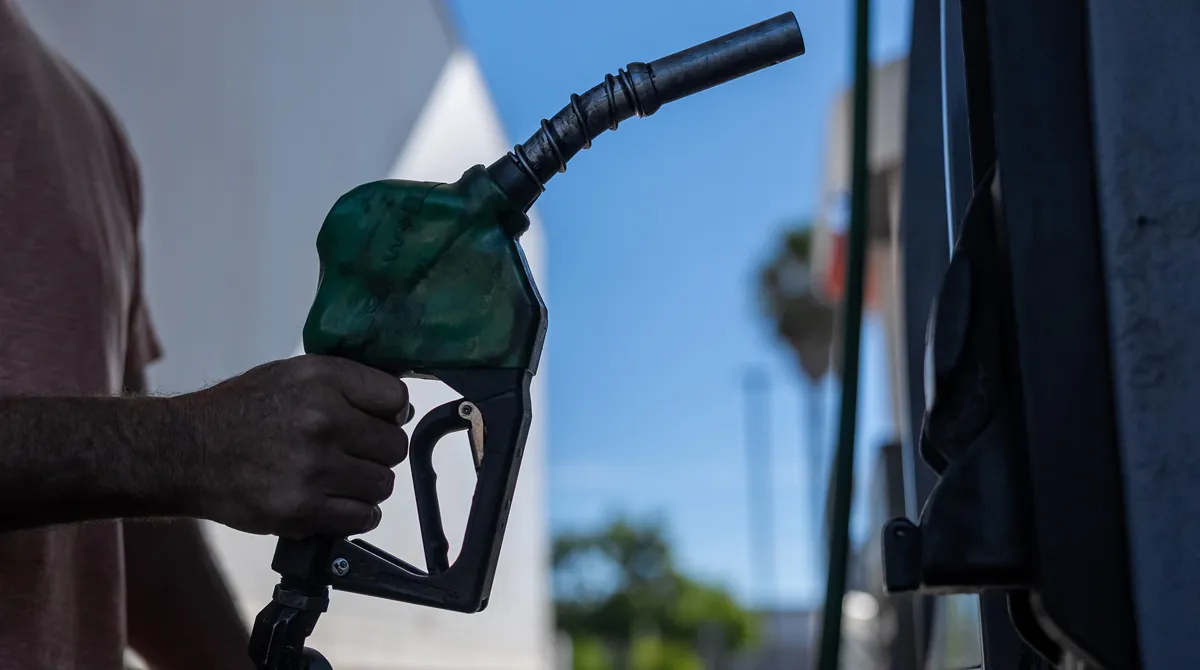 Congress has never suspended the federal gas tax. (David Paul Morris/Bloomberg)
Key Takeaways:
- Congressional candidates pushed federal gas and diesel tax holidays as affordability measures amid record-high Election Day fuel prices.
- Experts said limited pump savings would not outweigh lost Highway Trust Fund revenue, estimated at about $3.5 billion monthly.
- Experts said lasting fuel-price relief would require addressing global supply pressures rather than suspending federal fuel taxes.
As candidates for Congress made their case to the American people, they addressed a common theme: affordability.
With gas prices the highest they’ve ever been on an Election Day, the conversation was bound to turn to how candidates could bring prices down for consumers, and one of the policies candidates returned to time and time again was to suspend the federal gas and diesel taxes.
Randy Villegas, who won the seat for California’s 22nd Congressional District on Nov. 4 against incumbent Rep. David Valadao (R-Calif.), called for a temporary suspension of the taxes in October.
Scott Colom, the Democratic opponent of Sen. Cindy Hyde-Smith (R-Miss.), has also called for a federal gas tax holiday. Their race was still too close to call Nov. 6.
Some Republican candidates also argued for a suspension of the federal gas tax, including Rep. Ashley Hinson (R-Iowa), who ran to replace Sen. Joni Ernst (R-Iowa). Hinson lost her bid. President Donald Trump has entertained the idea, but he would need congressional approval to make it happen.
It’s unclear if there is political will to pass a federal gas tax suspension in the lame-duck session of Congress starting Nov. 9 or in the next Congress. Congress has never suspended the federal gas tax.
But given the amount of political attention brought to the issue, Transport Topics spoke to experts on supply chain economics and federal policy to understand what a federal gas and diesel tax holiday would mean for consumers and trucking companies. They said the potential savings of 18 cents per gallon for regular gasoline and 24.4 cents per gallon for diesel don’t seem worth the hit to the Highway Trust Fund, which supports national infrastructure projects. Those tax rates were last adjusted in 1993. A tax holiday also isn’t a long-term solution to the real issues pushing prices higher, they said.

Bob Toews, CEO of TruckDown, discusses winter readiness in the connected fleet era. Tune in above or by going to RoadSigns.ttnews.com.
Darrin Roth, vice president of highway policy at American Trucking Associations, said the Highway Trust Fund would lose about $3.5 billion a month if Congress suspended the federal gas and diesel taxes.
“We already have a pretty high debt that unless they found offsets, that would come out of the national debt or, if they don’t replace the revenue, there are significant implications for surface transportation projects all over the country and massive problems for the states,” he said. “If there was a holiday, they’d likely replace that revenue, but we can’t necessarily count on it, particularly if it goes on for a long time.”
RELATED: Dyed diesel relief leaves carriers with state-by-state rules
The impact on the trucking industry may include higher vehicle maintenance costs from potholes, he added, which damage tires and suspension systems. If bridges have to be closed, trucks have to take alternate routes, which adds miles and additional costs for those in trucking. A federal gas tax holiday could also speed up the insolvency of the Highway Trust Fund, with its balance approaching $0 by fiscal year 2028, Roth added.
Rajeev Dhawan, director of the Economic Forecasting Center at Georgia State University, said the approach would be like “putting a Band-Aid on a bleeding artery.”
“It will stanch the flow for a second or two, but the real problem is you need a different kind of surgery to stanch that flow,” he said.
Efforts to bring gasoline and diesel prices down should focus on global pressures, such as the U.S. war with Iran, Dhawan said.
Image
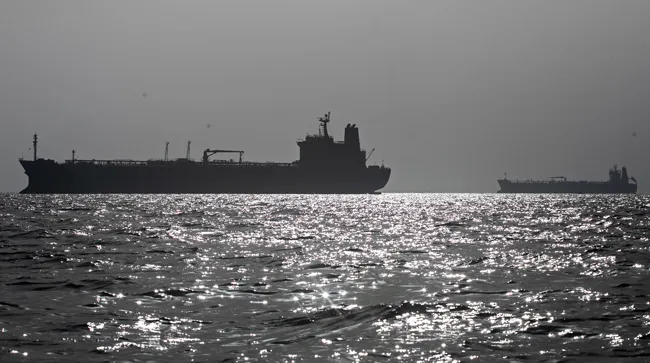
Tankers in the Strait of Hormuz in May. (Majid Saeedi/Getty Images)
“The only long-term solution is to have more supply of gasoline and diesel, and right now for the trucking companies the biggest problem is the diesel is in short supply — not because we don’t have the diesel here. We have plenty of diesel,” he said. “But the price of the diesel, the market for diesel is global, and there is a huge shortage of diesel in the global market, and that affects the price over here.”
Dhawan added that until the Strait of Hormuz is open and Ukraine stops strikes on Russian refineries, the price of gas and diesel will remain high for consumers.
“Russia is the biggest provider of diesel as a relief wall to Asia and Africa, and they don’t have much right now, so these … problems have to be tackled to bring down the price of diesel,” he said.
Several states have started their own gas tax holidays, including Georgia, Indiana and Ohio. State gas taxes can be much higher than the flat federal gas tax, making the savings more significant. Ohio has a rate of 38 cents per gallon for gasoline and 47 cents per gallon for diesel. Georgia has a rate of 34 cents per gallon for gasoline and 38 cents per gallon for diesel, and Indiana’s rate is 63 cents per gallon for gasoline and 64 cents per gallon for diesel. The suspension of Georgia’s tax may cost the state $200 million a month.
“That may turn out to be a little bit of a break to the consumers and the companies but again, the side effect would be that the states don’t have enough money to do the repairs on the state highways trucking companies use, so there’s always a cost,” Dhawan said.