
[Stay on top of transportation news: Get TTNews in your inbox.]
EPA grants Texas waiver for wider use of low-sulfur diesel
Agency warns against use in newer engines
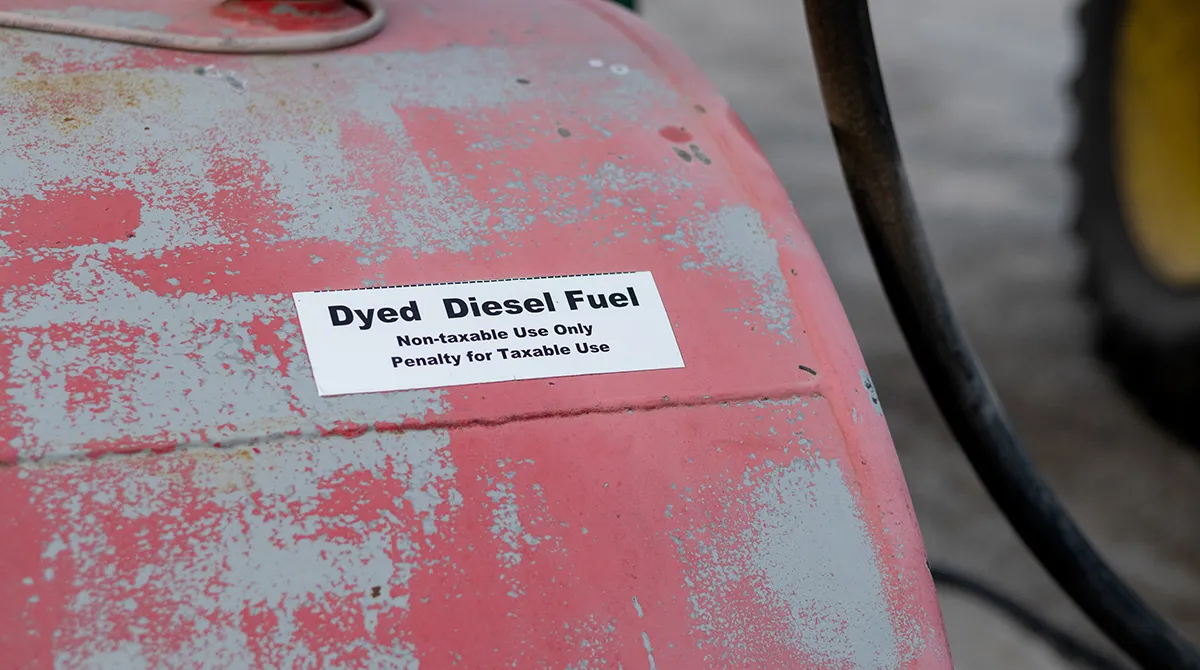 A tank of dyed diesel fuel near Clinton, Mo. (Clayton Steward/Bloomberg)
Key Takeaways:
- EPA temporarily waived Texas diesel sulfur rules through Oct. 24, allowing 500 ppm low-sulfur diesel in older highway and nonroad vehicles.
- The waiver followed fuel supply disruptions and record Texas diesel prices, but EPA warned the fuel can seriously damage newer emissions systems.
- Distributors must warn customers against misuse, while Cummins said damage from incorrect fuel in newer engines will be denied warranty coverage.
The Environmental Protection Agency has granted Texas a temporary waiver allowing broader use of low-sulfur diesel fuel instead of ultra-low-sulfur diesel in commercial trucks and other diesel-powered vehicles to help address fuel supply disruptions stemming from the U.S. war with Iran.
The waiver, however, applies only to older engines. EPA warned that the fuel can damage newer trucks equipped with modern emissions systems and directed fuel distributors to provide warnings to customers about the potential impact.
Texas Gov. Greg Abbott requested the waiver on Sept. 28. Citing a record diesel price in Texas of $5.97 a gallon that month — prices have since risen — Abbott in a letter to EPA Administrator Lee Zeldin said “timely action is critical to prevent further adverse impacts on Texans and the Texas economy as a whole.”
The waiver took effect Oct. 5 and remains in place through Oct. 24. It suspends diesel sulfur requirements for certain diesel-powered highway and nonroad vehicles and equipment and waives the low-emissions diesel requirement in the Texas State Implementation Plan, the state’s framework for meeting federal air quality standards.
EPA said the relief is limited to highway and nonroad vehicles certified to operate on 500-parts-per-million low-sulfur diesel fuel. The agency said the fuel must not be used in vehicles equipped with diesel particulate filters or selective catalytic reduction emissions-control technology because of the risk of damage to emissions systems. As a result, the waiver is effectively limited to trucks built before these diesel emissions aftertreatment systems became widely used, which was 2007 for DPFs and 2010 for SCR.
EPA instructed distributors to warn owners and operators of diesel-powered highway and off-road vehicles to help prevent misuse of the fuel. The all-caps warning cites the potential for “serious damage” to engines and states that “any party that uses any fuel allowed under this waiver assumes all responsibility for damage to the vehicle/engine.”
Engine manufacturer Cummins also warned customers about the risks of using the fuel in newer engines and the potential effect on warranty coverage.
“Cummins is aware of the temporary EPA waiver and continues to recommend that customers follow the fuel specifications outlined for their engines and equipment,” the company said in a statement provided to Transport Topics. “Failure to use the approved fuel (maximum 15 ppm sulfur diesel fuel for Tier 4 and 2007 and newer engines) can damage the engine and aftertreatment system. Failures attributable to the use of incorrect fuels will be denied warranty coverage. We will continue to provide guidance to customers as appropriate.”
The waiver adds another consideration for trucking companies already coping with high diesel prices and fuel supply concerns.
In a separate action, President Donald Trump on Oct. 5 announced an executive order related to off-road red-dye diesel — fuel that is dyed for fuel tax purposes — aimed at encouraging broader on-road use of the fuel through the possible deferral or elimination of tax obligations. Trucking groups and fuel experts said, however, that the measure would do little to resolve underlying diesel supply challenges.
Interstate use of the fuel could also prove challenging, since individual states would need to ease or waive penalties associated with on-road use of dyed diesel. While some states have done so, restrictions remain in place in many others.

PCS Software CEO Mark Hill discusses the advance of AI in the trucking industry. Tune in above or by going to RoadSigns.ttnews.com.
Separately, several states, including Ohio, Georgia and Indiana, have enacted fuel-tax holidays or other tax suspensions to lessen the impact of high fuel prices on consumers and businesses.
On Oct. 9, Trump said he had reached an agreement with Russian President Vladimir Putin to lift sanctions on Russian diesel imports. Under the arrangement, Russia would supply 300,000 tons of diesel immediately and 500,000 tons in November, with additional volumes to follow. Despite the announcement, industry observers do not expect any meaningful effect on diesel prices in the near term.


