
[Stay on top of transportation news: Get TTNews in your inbox.]
How long will consumers have to pay higher gas prices?
More expensive oil and gas begin to lift prices in other parts of the economy
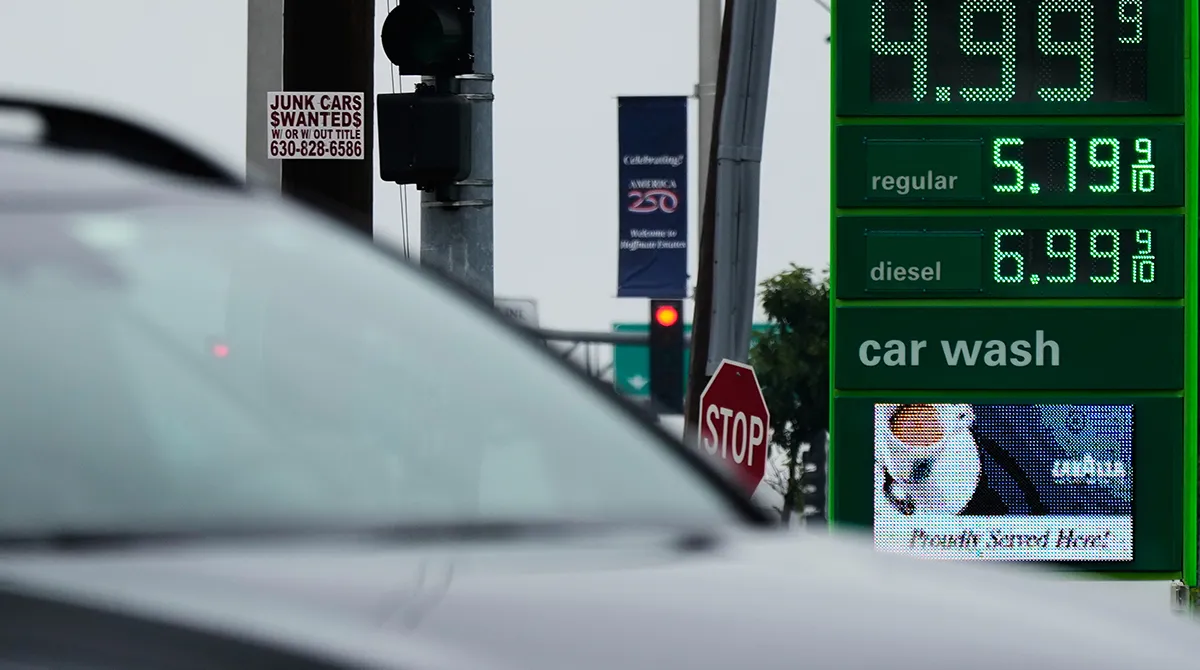 Consumers in September spent 6.4% more at gas stations. (Nam Y. Huh/AP)
Key Takeaways:
- Wholesale inflation jumped 6.3% in September from a year earlier as higher energy costs drove up producer prices.
- Gas prices rose 20% in September, contributing to higher transportation and food costs, while retail sales increased 0.8%.
- Most Federal Reserve officials expect another interest rate increase this year as elevated inflation persists despite slower hiring.
WASHINGTON — High gas prices are intensifying inflation and vacuuming up more of Americans' dollars, yet consumers are still digging deep to spend, powering the economy, at least for now.
A slew of economic data Oct. 15 showed that inflation accelerated last month as more expensive oil and gas began to lift prices in other parts of the economy, including shipping and warehousing, before the increases reach most Americans.
Wholesale food prices jumped, which could make groceries more expensive in the months ahead.
At the same time, consumers also ramped up their spending, according to data released Oct. 15. Though much of the increase reflected higher prices, consumer resilience is powering solid U.S. economic growth.
Workers are enjoying an unusual degree of job security despite scattered layoffs, which likely encourages spending despite surveys showing that many Americans have a gloomy economic outlook.
It all adds up to an economy in which people are spending money but don't feel good about it.
“Consumers may have gritted their teeth and looked through higher gas prices,” said Jim Baird, chief investment officer at Plante Moran Financial Advisers. “They're not happy, but they're still spending.”
Higher costs strain producers
A report Oct. 15 on wholesale prices helps explain the gloom: The government's producer price index, which measures costs before they reach the consumer, jumped 6.3% in September from a year earlier, the biggest increase in nearly four years. On a monthly basis, prices soared 1.3% from August to September, powered by a 20% rise in gas prices.
Another day, another hot inflation report. Business inflation surged in September to 6.3% (!). The expectation was 5.4%. Every category of business inflation was hot, even after stripping away energy costs. It's inevitable that companies will pass some of these costs along to consumers. It's yet another reason this fight against inflation is likely to be longer than anyone wants. Business (wholesale) inflation: 6.3% Consumer Inflation: 3.7%
— Heather Long (@byHeatherLong) October 15, 2026
Higher diesel prices have made shipping more expensive because longhaul trucks and freight trains rely on the fuel. Higher transportation costs may have helped push up food costs, which rose 1.2% from August to September, the biggest monthly gain since February. The wholesale price report followed the latest consumer price figures, released Oct. 14, which showed inflation rising to 3.7% in September, far above the Federal Reserve's 2% target.
“The jolt to transportation prices affects every good in the economy, since inputs to manufacturing move to factories and goods at all stages of production move from producer to wholesaler to retailer by truck, train or rail,” wrote Carl Weinberg, chief economist at High Frequency Economics. “This is how increases in energy prices ‘bleed through’ to prices of core goods.”
Farmers also rely on diesel to power most of their equipment, which could further push up food prices. Diesel prices averaged $6.32 a gallon nationwide Oct. 15, according to AAA, up from just $3.66 a year ago.
Despite those cost pressures, retail sales rose a solid 0.8% from August, more than economists had forecast. The increase was driven by a 6.4% jump in spending at gas stations, but consumers also spent elsewhere, including a healthy 1.1% rise at restaurants and bars.
Image

A shopper in the meat section of a grocery story in Fort Worth, Texas, on Oct. 7. (LM Otero/AP)
Excluding gas, retail sales rose just 0.2% last month, with much of that also reflecting higher prices.
Economists say that as long as unemployment stays low and Americans continue working, spending will likely stay resilient. Hiring has been sluggish, but layoffs are also unusually low.
Job market remains relatively strong
Another report Oct. 15 showed that the number of people seeking unemployment benefits stayed below 200,000 last week, a historically low figure. Applications for unemployment aid are a proxy for layoffs.
“If the unemployment rate remains low, meaning consumers have a job, they will continue to spend, even if more cautiously and leaning increasingly on savings and credit,” Kathy Bostjancic, chief economist at Nationwide, said in an email.
Many economists worry, however, that as inflation stays high, it will steadily erode Americans' spending power and start to weigh on the economy. Weekly paychecks, adjusted for inflation, actually declined in September compared with a year ago for the first time since May.
And September hiring slowed to a disappointing 29,000 jobs from a revised 133,000 in August, according to the Labor Department early this month. The unemployment rate ticked higher to 4.2% from the previous month, which is still low. Yet economists had expected September payrolls to come in around 90,000.
Inflation may soon boost the cost of credit
Stubbornly elevated inflation also means the Federal Reserve will likely raise its key interest rate in the coming months in an effort to slow spending and bring down inflation. When the Fed raises its rate, that can raise borrowing costs for mortgages, car loans and credit cards over time.
According to minutes released from the most recent meeting, most Fed officials expect that another interest rate increase will likely be needed this year to combat inflation.
PCS Software CEO Mark Hill discusses the advance of AI in the trucking industry. Tune in above or by going to RoadSigns.ttnews.com.
The Fed increased its key interest rate by a quarter-point to about 3.9% in September, its first increase in three years.
The increase defied President Donald Trump’s repeated calls for the Fed to cut rates and prompted the president to criticize the Fed’s rate-setting committee, though he still expressed support for Chairman Kevin Warsh, whom he appointed earlier this year.


