[Stay on top of transportation news: Get TTNews in your inbox.]
Oil prices head higher on fears of more strikes on Iran
Brent crude rises 0.7% to $92.63 a barrel
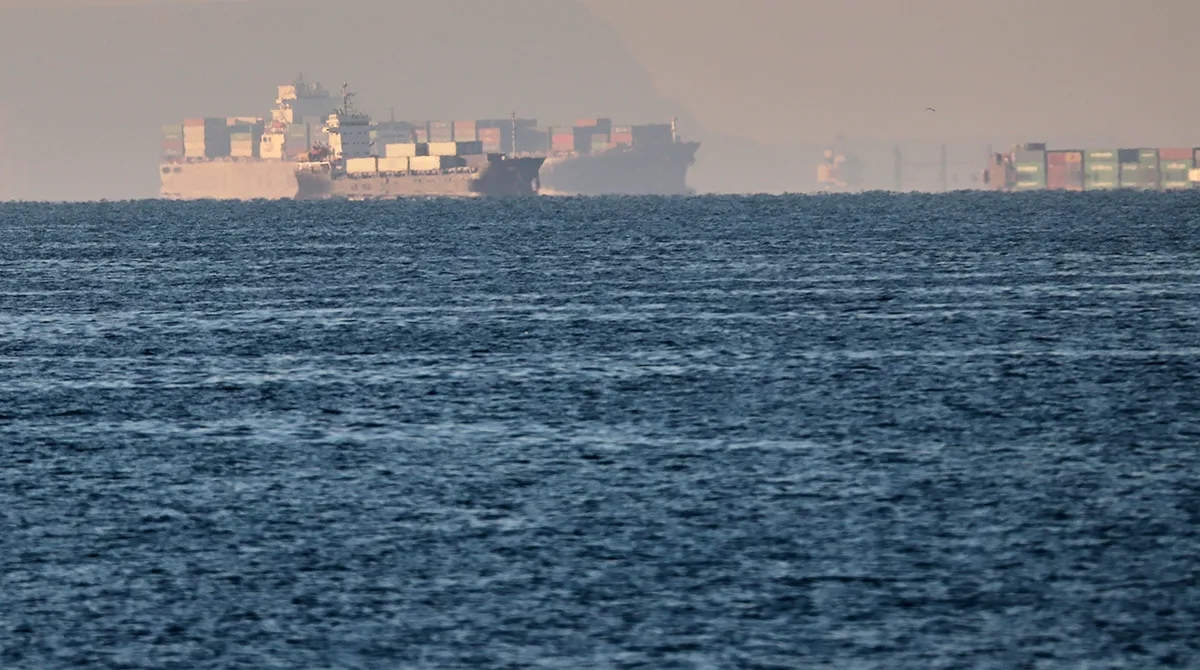 Containerships in the Strait of Hormuz off Bandar Abbas, Iran, on Nov. 14. (Amirhosein Khorgooi/ISNA via AP)
Key Takeaways:
- Oil rose as renewed U.S.-Iran tensions raised concerns about escalating Middle East violence and further disruptions to energy supplies.
- Brent traded near $93 a barrel as Hormuz attacks continued, while China’s crude demand rebounded and Middle Eastern exports faced pressure.
- Traders remained cautious as Trump considered potential Iran strikes, while the International Energy Agency warned prolonged conflict could reshape global energy markets.
Oil moved higher on concern violence in the Middle East could escalate once again despite recent pressure on President Donald Trump to pursue a diplomatic resolution to the nine-month war.
Brent traded near $93 a barrel in a choppy session. The chances of the U.S. launching another round of mass strikes against Iran appear to have grown in recent days, according to Western officials, as the two sides step up skirmishes. An Axios reporter said on X that the White House had asked the Pentagon for assessments of how Iran might respond to various strike scenarios.
Brent for January settlement rose 0.7% to $92.63 a barrel. West Texas Intermediate for December delivery climbed 1.1% to $84.15 a barrel. The contract expires on Nov. 20. The more-active January futures traded up 1.1% at $83.23 a barrel
Prices earlier swung between small gains and losses as Trump met with his Chinese and Russian counterparts in Shenzhen and the three leaders agreed to ramp up global fuel supplies, though they didn’t spell out what that would entail. Crude futures remain down about 3% this week and more than a fifth this month following a recovery in supplies from the Persian Gulf.
“We are not yet at the point where the narrative of improving supply is enough to overshadow the military flare-ups,” said Florence Schmit, a senior energy strategist at Rabobank. “Flows through Hormuz have improved, yet ships are still being attacked and President Trump is yet again considering plans for another round of extensive strikes on Iran.”
There’s been low-level fighting across the region in recent days, including a spate of attacks on vessels transiting the critical Strait of Hormuz.
The International Energy Agency said Nov. 19 that the war could reshape global energy markets for years to come, pushing governments to prioritize reliability and cost after the unprecedented supply shock. It also said that if a resolution were reached soon, both oil and gas could turn into buyers’ markets as volumes rise.
The Hormuz crisis has delivered an unprecedented shock to the system. The longer it lasts, the greater the effects will be. Our new World Energy Outlook 2026 explores the potential pathways ahead & how different policy choices could shape the future👇 https://t.co/4VbkKaOJzA
— International Energy Agency (@IEA) November 19, 2026
For now, traders are wary of betting on the trajectory of the conflict as the end of the year approaches.
“Liquidity is poor across the markets, which is understandable after a big drop, which has created opportunities but also a great deal of losses,” said Ole Sloth Hansen, head of commodity strategy at Saxo Bank.
Fuel prices have begun to pull back from a momentous rally that has fanned inflation fears around the world. European diesel futures slid to a three-month low on Nov. 19, even as prices remain historically high and the market’s still tight. Retail gasoline prices have fallen harder as refineries run at full tilt — principally to produce more diesel but making lots of gasoline in the process.
On the demand front, China’s appetite for crude is rebounding faster than expected as lower prices spur refiners to use up import quotas and rebuild stockpiles. Energy Aspects Ltd., FGE NexantECA and Rystad Energy AS have all raised fourth-quarter import forecasts, ranging from 9.8 million to 10.2 million barrels a day.
“Rising attacks are weighing on Middle Eastern exports just as China ramps up crude imports, reducing oil on water and tightening the market,” said Giovanni Staunovo, an analyst at UBS Group AG.
Meanwhile, U.S. data showed nationwide crude inventories rose by 3.4 million barrels last week, and product stockpiles also expanded.