[Stay on top of transportation news: Get TTNews in your inbox.]
Oil prices hold as market weighs diplomatic efforts on Iran
Brent crude falls 0.1% to $98.28 a barrel
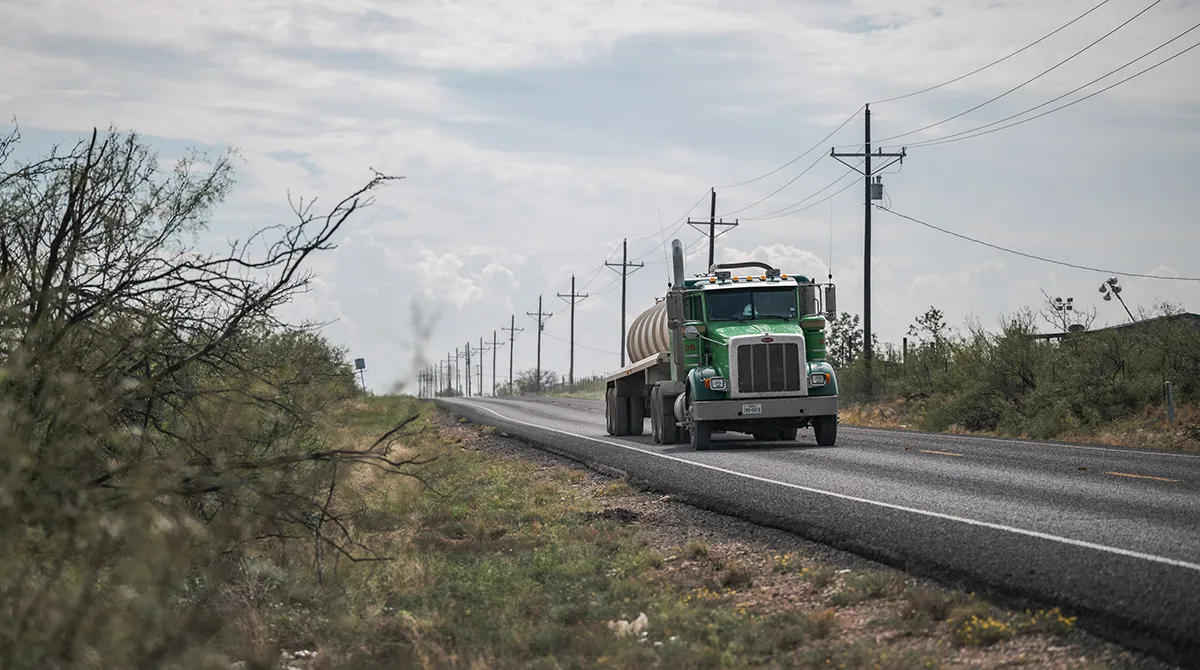 An oil tanker truck drives along a highway outside of Garden City, Texas. (Eli Hartman/Bloomberg)
Key Takeaways:
- Oil swung as traders weighed diplomatic efforts to de-escalate the Iran war and reach a resolution that could support energy flows from the Middle East.
- Global shares tumbled Nov. 6 following a broad selloff on Wall Street of shares related to artificial intelligence .
- Stock markets around the world have been feeling pressure from continued declines for companies that have benefited from the boom in the AI technology industry.
TOKYO — Global shares tumbled Nov. 6 following a broad selloff on Wall Street of shares related to artificial intelligence as the prospect of more regulation in the wake of the U.S. midterm elections compounds fears about high levels of debt and spending in the sector.
Oil swung as traders weighed diplomatic efforts to de-escalate the Iran war and reach a resolution that could support energy flows from the Middle East, Bloomberg reports.
Benchmark U.S. crude rose 0.2% to $90.69 per barrel. Brent crude, the international standard, fell a bare 0.1% to $98.28 per barrel. Uncertainty still reigns about what will happen in the war with Iran and when the global energy industry can return to normal.
France's CAC 40 shed 1.2% in early trading to 8,107.20, while the German DAX lost 1.4% to 25,961.60. Britain's FTSE 100 fell 1.5% to 10,625.40. U.S. shares were set to trade mixed, with Dow futures down 0.9% at 51,075.10. S&P 500 futures edged up 0.1% to 7,362.20.
Tokyo's benchmark Nikkei 225 slipped 6.0% to finish at 57,434.77, falling below 60,000 points for the first time in nearly half a year. Japanese technology shares were among the biggest losers, including SoftBank Group Corp. and Advantest Corp.
Australia's S&P/ASX 200 lost 0.5% to 9,020.80. South Korea's Kospi dropped 6.0% to 5,059.69, as shares in Samsung Electronics and SK Hynix plunged. Hong Kong's Hang Seng fell 1.3% to 24,481.86, while the Shanghai Composite dipped 1.1% to 3,649.18.
oil mkt summary (11/5): Dec WTI +$2.40 to $90.52, Jan Brent +$3.67 to $98.29, snapping a 3-day skid as traders reassessed odds of a quick Iran deal. Dec ULSD +14.6c to $4.35 on a 3.6M bbl US distillate draw, RBOB +3.5c to $2.76. subscribe for more insights on market moves
— Patrick De Haan (@GasBuddyGuy) November 5, 2026
Stock markets around the world have been feeling pressure from continued declines for companies that have benefited from the boom in the AI technology industry. Critics also say AI stock prices shot too high and were in a bubble amid concerns about high levels of borrowing and spending as companies race to build the massive computing capacity needed to train AI applications. What might come next remains uncertain, they say.
The Democrats' win in the U.S. midterm elections also raises the prospect of more regulation, including at the state level where popular resistance to data center construction remains strong.
“Of course, the selloff in companies that have so long whetted investors’ appetite could create buying opportunities at a discount,” said Ipek Ozkardeskaya, senior analyst at Swissquote.
In Tokyo trading, Toyota Motor Corp.'s stock fell sharply after the Japanese automaker reported lackluster profits the day before.

Bob Toews, CEO of TruckDown, discusses winter readiness in the connected fleet era. Tune in above or by going to RoadSigns.ttnews.com.
Nov. 5 was Wall Street's worst day since U.S. President Donald Trump shook markets worldwide in April 2025 with his “Liberation Day” tariffs. The wipeout more than erased the U.S. stock market’s gain from the day before, which was its best in three months. AI chip stocks are some of Wall Street’s most influential.
In currency trading, the U.S. dollar rose to 158.26 Japanese yen from 157.68 yen. The euro cost $1.1172, down from $1.1219.