
[Stay on top of transportation news: Get TTNews in your inbox.]
Most Fed officials back further rate hikes
October minutes show broad support for higher rates but uncertainty over their pace
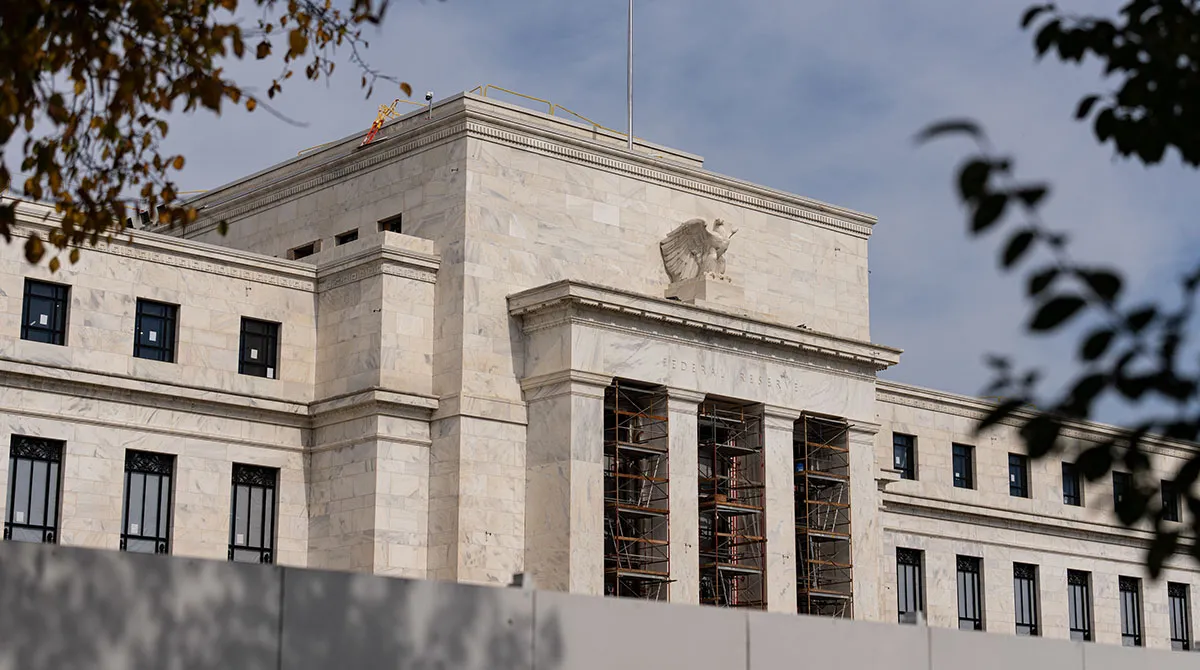 The Federal Reserve's next interest rate decision comes in December. (Al Drago/Bloomberg)
Key Takeaways:
- Nearly all Fed officials agreed in October that further interest rate increases likely would be appropriate in the months ahead.
- Officials voted 10-2 to hold rates at 3.75% to 4%, though some considered the decision a close call.
- Policymakers differed on the pace of tightening, with some favoring a larger December increase and others urging caution.
Nearly all Federal Reserve officials agreed in October they would likely have to raise interest rates “in the months ahead” to return inflation to their 2% target in a timely manner.
Minutes of the Federal Open Market Committee’s Oct. 27-28 meeting released Nov. 18 said that “in the months ahead, almost all participants judged that, under their baseline outlooks for inflation and the labor market, further action to raise the target range for the federal funds rate” would likely be appropriate “in order to ensure a timely return of inflation to the 2% objective.”
The record of the meeting also showed two policymakers said an increase of “more than 25 basis points” could be warranted in December if incoming inflation data proved unfavorable.
Fed officials last month left interest rates unchanged and reiterated their commitment to containing inflation but didn't offer a clear signal on whether they might raise rates at their next meeting in December.
Among officials who backed the decision to hold rates, the minutes showed it was a “close call” for a few. Others in the majority said market expectations for rate increases in December and in 2027 were “broadly consistent” with their assessment of appropriate policy. They also noted that those market expectations reduced the risk of holding rates unchanged in October.
On the other side of the decision, a few of the officials who backed raising rates at the meeting said “they could have supported no change in the federal funds rate provided that it was clearly understood by market participants that further tightening was likely.”
The Federal Open Market Committee voted 10-2 last month to hold its benchmark federal funds rate in a range of 3.75% to 4%. Governor Lisa Cook and Cleveland Fed President Beth Hammack dissented, preferring to raise rates by a quarter percentage point. The committee had raised rates by a quarter percentage point in September for the first time in three years.
Pace uncertain
Fed Chairman Kevin Warsh, in a news conference that followed the decision, said officials had “made clear our readiness to act as circumstances require, and we have shown our willingness to act.”
Bob Toews, CEO of TruckDown, discusses winter readiness in the connected fleet era. Tune in above or by going to RoadSigns.ttnews.com.
Since then, policymakers have voiced broad agreement that rate hikes will be needed, though they’ve offered differing views on the appropriate pace.
Interest-rate futures currently suggest investors expect quarter-point increases in December and January, and another by April. Earlier Nov. 18, Fed Governor Christopher Waller said he favored a 50-basis-point move in December.
In contrast, New York Fed President John Williams on Nov. 17 dismissed the suggestion the Fed needs to consider an large rate hike.
The case for higher rates was given extra weight after October consumer-price data showed inflation broadened across everyday goods and services. Wholesale prices, some of which feed into the Fed’s preferred measure of inflation, climbed in October from a year earlier at their fastest pace since 2022.
Part of the case for caution rests on segments of the economy that are vulnerable to higher borrowing costs, such as the housing market. Economic data this week highlighted how depressed that sector is, with sales of previously owned homes falling last month to a 16-year low.
Policymakers also took their October decision just days before the midterm elections. Warsh told reporters he didn’t hear any reference to the elections during the rate-setting meeting.


