[Stay on top of transportation news: Get TTNews in your inbox.]
Cargill profit undercut by cattle costs, cocoa losses
Fiscal first-quarter net income drops to $927 million from $1.94 billion a year earlier
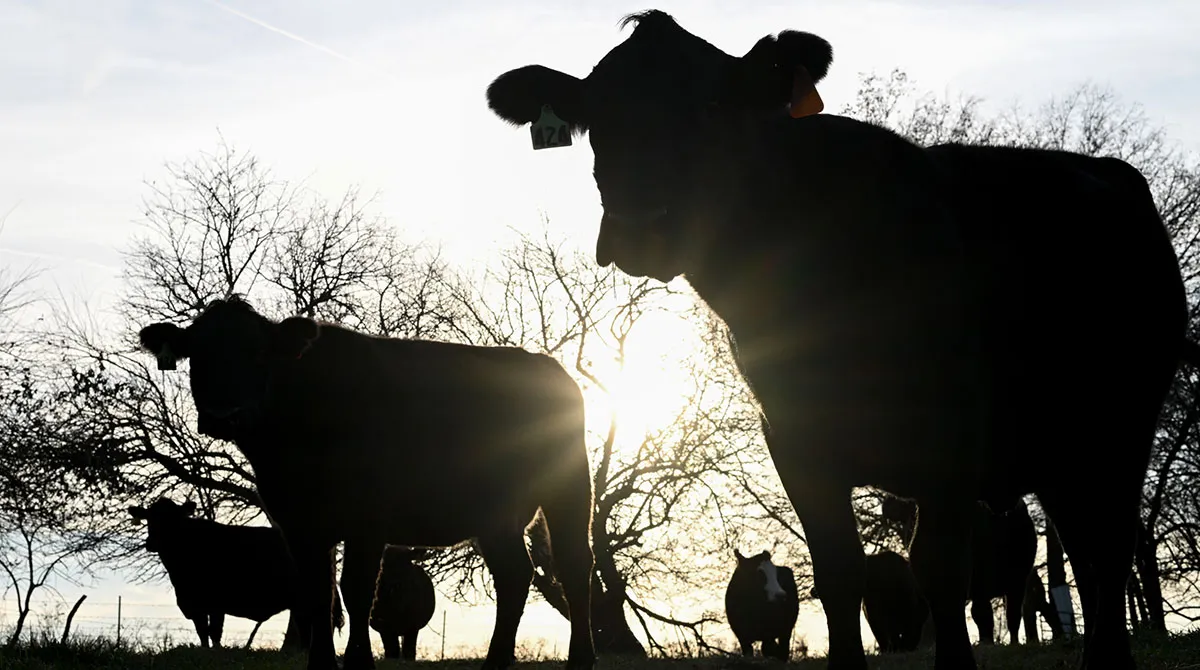 Beef cattle at a farm near Clinton, Mo. (Clayton Steward/Bloomberg)
Key Takeaways:
- Cargill’s fiscal first-quarter net income fell by more than half to $927 million for the quarter ended Aug. 31, from $1.94 billion.
- Higher cattle and cocoa costs pressured earnings, while record soy and canola margins benefited the largest U.S. private company.
- Cargill continued restructuring, having cut business units to three from five and incurred $876 million in before-tax costs since the program began.
Cargill Inc.’s fiscal first-quarter earnings fell by more than half as the largest private company in the U.S. was pressured by higher costs for cattle and cocoa despite also benefiting from stronger results in soybeans.
For the quarter that ended Aug. 31, Cargill had net income of $927 million, down from $1.94 billion a year ago, according to accounts seen Oct. 5 by Bloomberg. The company had a difficult comparison as the year-ago quarter was significantly boosted by a tax provision tied to President Donald Trump’s One Big Beautiful Bill.
Beef packers such as Cargill, one of four that account for more than two-thirds of U.S. processing capacity, have been competing to buy cattle from the smallest American herd in five decades. Only recently has profitability in beef packing started to improve as cattle prices have eased, according to one measure on potential returns.
Cargill ranks No. 26 on the TT sector list of the top agriculture and food processing carriers.
Meanwhile, Cargill pointed to “mark-to-market losses on cocoa” in the quarter. Prices for the beans have swung dramatically this year, surging more than 70% from the beginning of June through the end of August. At the same time, persistently high prices in recent years have destroyed demand that has been slow to recover in key consumer markets.
Mark-to-market losses can occur when the acquisition of materials is out of balance with prices of finished goods.
The world’s largest agricultural commodities trader benefited during the quarter from record profit margins in soy and canola in the wake of increased U.S. targets for biofuel blending. Cargill said better earnings in North America were partly offset by lower results for grain trading and bioenergy in Latin America, Europe, the Middle East and Africa.
Cargill has been restructuring for more than a year, having already cut its business units to three from five. The company has incurred total before-tax expenses of $876 million since the program began.
Cargill declined to comment. The Minneapolis-based company stopped publicly reporting its earnings during the COVID-19 pandemic.