
[Stay on top of transportation news: Get TTNews in your inbox.]
Car dealerships are low on EV models
Interest climbs in step with gas prices
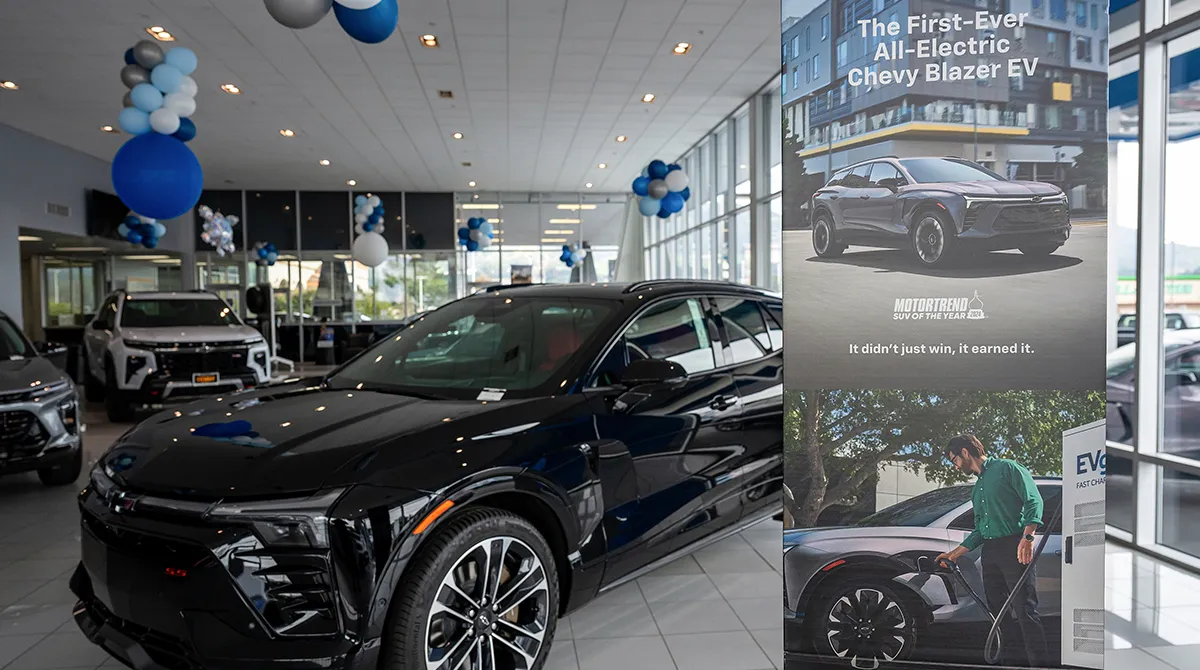 A Chevrolet Blazer electric vehicle at a dealership in Colma, Calif. (David Paul Morris/Bloomberg)
Key Takeaways:
- U.S. EV sales rose 11% in October from a year earlier, but dealer inventories remain sharply constrained after automakers cut production.
- Dealers held about 65,000 EVs last month, 38% fewer than a year earlier, even as electric models recently outsold gas vehicles faster.
- Automakers are weighing higher EV demand against profitability, with Ford planning an affordable electric pickup while GM says it is prepared for increased adoption.
A driver keen on a midsize SUV that costs less than the average car and doesn’t need gas might land on a Chevrolet Blazer EV. That driver might, however, have trouble finding one.
Early this week in Salt Lake City, for example, there were just five of the electric Chevys for sale. Kansas City dealers only had three. And Nashville, Tenn., drivers were out of luck entirely, according to the searchable inventory on General Motors Co.’s site.
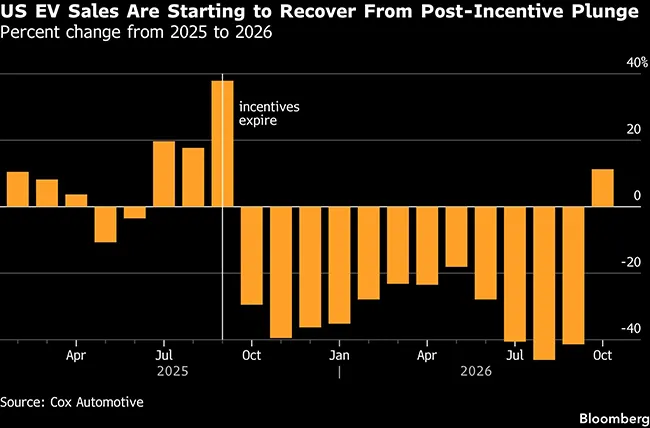
The American electric vehicle market is regaining momentum after federal purchase incentives expired in September of last year. U.S. consumers bought 83,300 new electric cars and trucks in October, an 11% increase over October 2025 and the first such uptick of the year.
However, as interest in electric vehicles climbed in step with gas prices, EV inventory faltered. At a peak last year, American dealers had three times as many electric cars and trucks as they have on offer now. Without any new supply, dealers would run out of EVs in a little less than three months — sooner than gas cars.
Gil Tal, director of The Electric Vehicle Research Center at the University of California at Davis, said American EV appetite is going unmet and remains far higher than sales suggest. “You cannot measure demand for a new product if you’re not stocking the shelf,” Tal said. “In our case, the shelf is empty.”
When federal subsidies disappeared in September of last year, automakers steered away from EVs in the U.S., sending a crowd of models to the scrap heap. For a few months, they had a glut of unsold cars. After the Iran war began and gas prices spiked, they kept production down. Last month, as EV interest continued to climb, there were about 65,000 electric vehicles sitting on dealer lots, 38% fewer than there were a year ago, according to data from S&P Global.
Image
General Motors, for example, has lowered EV production this year to stem losses. As a result, in October, there were roughly half as many EVs for sale at GM dealers as there were 12 months earlier. On an earnings call in late October, Chief Financial Officer Paul Jacobson called its EV pullback “rightsizing.”
Meanwhile, Ford Motor Co. stores no longer have electric pickup trucks, since the company axed its F-150 Lightning in December. Over the past 12 months, about 70% of the company’s EV inventory has disappeared.
The electric cars that are available, however, have been selling more quickly than gas-powered vehicles for the past two months, according to Cox Automotive Inc. Used electric vehicles, meanwhile, are selling faster than any other kind of car in the U.S. auto market.
Legacy carmakers have struggled to make money with electric vehicles. And even as battery prices plummet, Tal said gas-burning vehicles remain more profitable.
“The car companies are looking to maximize their revenue and maximizing their revenue right now means selling old products,” he said. “The U.S. consumer is being put on the back burner.”
Often, the most affordable EVs are the hardest to find, according to Corey Cantor, research director at the Zero Emission Transportation Association, an advocacy group. “Just because a model is announced, doesn’t mean it exists in volume,” Cantor said. “If you’re a carmaker, you don’t want to sell the low, affordable trim, you want to sell the expensive, high trim.”
More cars — the battery-powered variety — could be coming soon. Ford said the dearth of available machines bodes well for the affordable electric pickup it plans to launch next year. “The customer is very limited with their new vehicle options,” Andrew Frick, president of the company’s electric division, told analysts recently.
GM said via email that it is producing EVs in line with customer demand. Jacobson has told investors the company is focused on tuning its lineup for fatter profits. “We think with these oil prices and these fuel prices that EV penetration may continue to go up,” he said on a conference call in late October. “And we want to make sure we’re ready for that.”

Paul Rosa of Penske Truck Leasing breaks down what fleet operators need to know when EPA’s tougher 2027 NOx standard goes into effect in January. Tune in above or by going to RoadSigns.ttnews.com.
Still, other auto executives are seizing on the EV pullback to steal market share. Tesla Inc., which isn’t captured in the S&P inventory data because it sells directly to consumers, controls 58% of the U.S. EV market, up from 54% a year ago. Rivian Automotive Inc., Subaru Corp. and Toyota Motor Corp. have all grabbed a larger chunk by launching new models this year.
Stephanie Valdez Streaty, director of industry insights at Cox, said recent sales show that “natural demand” for EVs is starting to pick up. Where it settles, however, will depend in large part on what machines get made and how many.
“Whether the right mix of affordable EVs is available,” she said, “and not just lower-priced models, will matter as much as incentives.”


