[Stay on top of transportation news: Get TTNews in your inbox.]
California ties electric truck incentives to price disclosure
OEMs must provide suggested retail prices for incentive-eligible trucks by Jan. 1
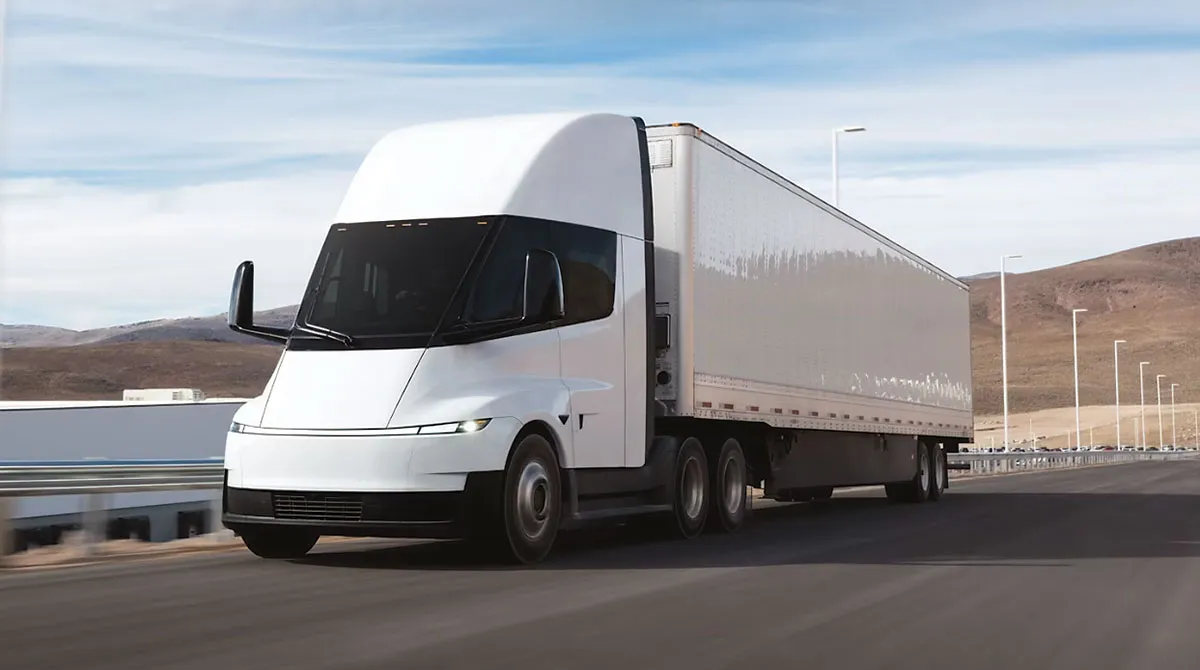 A Tesla Semi electric truck. OEMs must provide the manufacturer’s suggested retail price for all ZEVs that may be funded by California incentives. (Tesla)
Key Takeaways:
- California Gov. Gavin Newsom signed SB 1213 Sept. 20, requiring suggested retail prices for incentive-eligible electric medium- and heavy-duty trucks by Jan. 1.
- The law ties state funding to pricing transparency, aiming to strengthen competition, lower truck costs and protect California’s climate programs.
- OEMs must submit price and purchase order data, while CARB will publish information every six months and may suspend eligibility for noncompliance.
California Gov. Gavin Newsom signed a law aimed at increasing price transparency by requiring manufacturers to provide suggested retail prices for incentive-eligible, electric-only medium- and heavy-duty trucks by Jan. 1.
Newsom enacted pricing requirements contained in Senate Bill 1213 on Sept. 20 within a legislation package promoting zero-emission electric vehicles.
“California is choosing a stronger path: more EVs on the road, more chargers in our communities, and more affordable choices for families and businesses,” he said.
Next year, OEMs must provide the manufacturer’s suggested retail price for all ZEVs that may be funded by California incentives and a final purchase order for each vehicle that contains specified information.
The applicable state incentives are the:
Greenhouse Gas Reduction Fund — directing state funds to pay for public community climate projects
California Clean Fuel Reward — lowering upfront costs of new battery-electric commercial vehicles from Class 2b through Class 8
Clean Transportation Program — paying for EV and hydrogen infrastructure, medium- and heavy-duty and natural gas vehicles, biofuels and workforce development
Working with the California Energy Commission, the California Air Resources Board will be required to compile and publicize price information every six months.
OEMs also must provide relevant data necessary for the state “to effectively track vehicle pricing behavior.”
Image
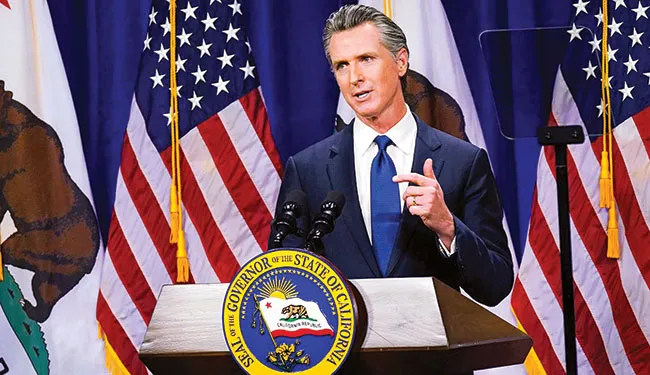
California Gov. Gavin Newsom. (Rich Pedroncelli/Associated Press)
The mandate allows CARB to coordinate investigations with the state attorney general to impose noncompliance penalties, such as the immediate suspension of state incentive program eligibility. Other sanctions could include recovering state funds later detected as “based on false data or through anticompetitive pricing or sales behavior.”
Before the bill became law, the state Senate Rules Committee issued an analysis of SB 1213 about what it described as California’s complicated relationship with truck manufacturers.
“California occupies a unique position as the state with both the most ambitious vehicle emission standards and the state with the largest vehicle fleet. This has been particularly fraught in recent years, as actions taken by the federal government have repeatedly and significantly eroded California’s long-standing authority to set and enforce stricter-than-required vehicle emission standards,” according to the committee.
Image
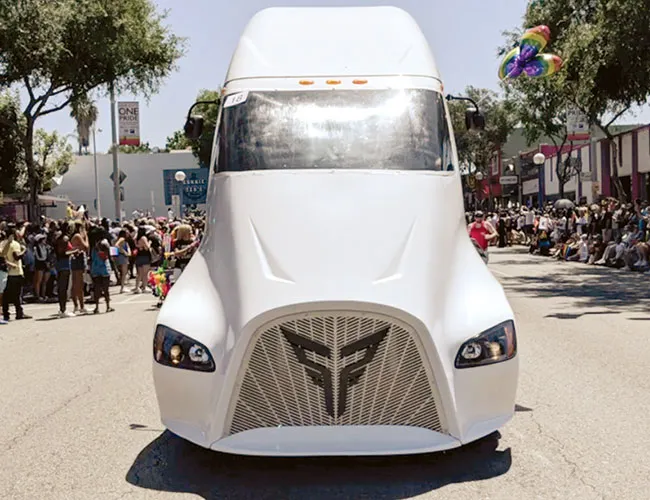
An Xos truck. The electric truck maker is based in Los Angeles. (Xos via YouTube)
SB 1213 says “robust competition and fair pricing” are vital to successful expansion of zero-emission heavy-duty vehicles to meet lawmakers’ “climate and public health goals. To ensure the integrity of the state’s climate programs, the receipt of state funding should be conditioned upon full pricing transparency.”
Bill sponsor state Sen. Eloise Gómez Reyes said the new requirement for original equipment manufacturers would result in more clarity and “accountability to the clean truck market so we can better understand what these vehicles actually cost and help drive those costs down over time. For communities like the Inland Empire, where families have carried the health impacts of goods movement for generations, making cleaner trucks more affordable means cleaner air and healthier neighborhoods.”