[Stay on top of transportation news: Get TTNews in your inbox.]
U.S. tells ships to avoid unnecessary transits through Hormuz
It's unclear what prompted the advisory
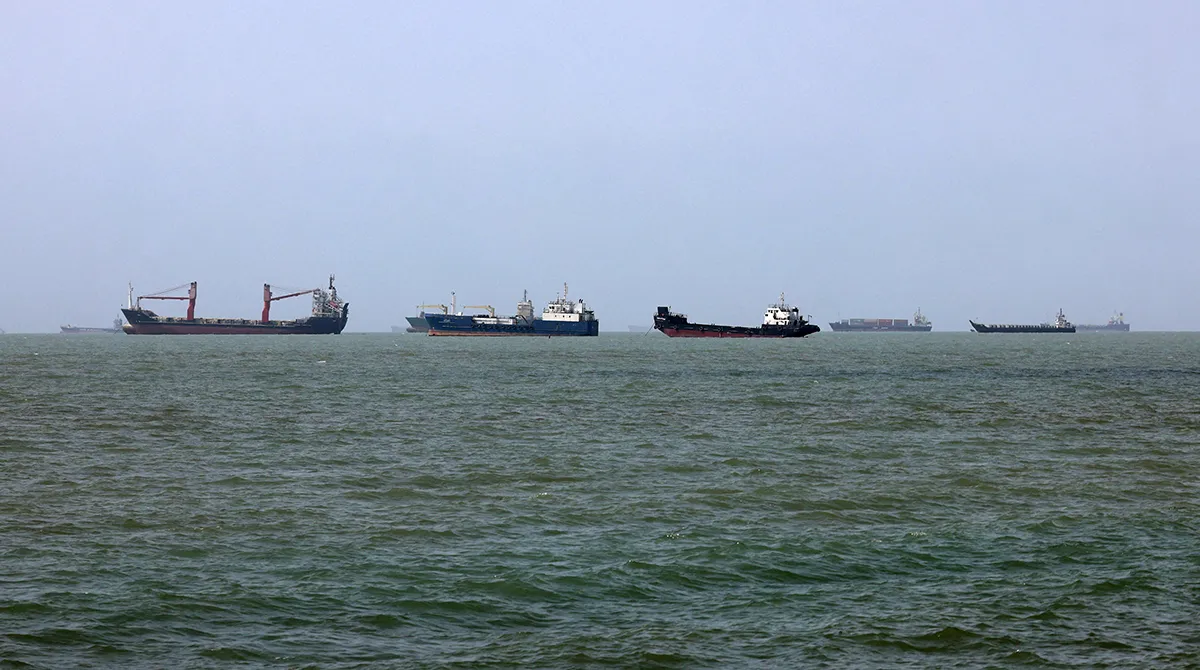 Vessels in the Strait of Hormuz near Bandar Abbas, Iran, in August. (Atta Kenare/AFP/Getty Images)
Key Takeaways:
- The U.S. military advised vessels without a need to transit the Gulf of Oman and Strait of Hormuz to stay clear.
- Persian Gulf oil flows neared prewar levels, while the U.S. blockade pushed Iranian crude exports close to zero and Iranian attacks increased.
- Neutral vessels transiting between neutral ports may face questioning, visits and searches as the U.S. military enforces its blockade.
The U.S. military said vessels that have no need to move between ports in the Gulf of Oman and the Strait of Hormuz should stay away, as tensions ratchet up in the region.
“Due to the current geopolitical situation, vessels which do not need to transit the area are advised to remain well clear to avoid unnecessary delays to their voyage,” the U.S. Naval Forces Central Command said in an advisory on Oct. 28 issued via the Joint Maritime Information Center.
“Vessels transiting this area are advised to plan additional transit time to allow for increased traffic density and military blockade enforcement operations,” the notice said.
It remains unclear what prompted the advisory. The U.S. military last publicly issued a similar notice in mid-July, when it began its blockade of Iranian shipping. Back then, it said that the blockade would not impede neutral passage through Hormuz, though ships should expect to be questioned on their intentions.
Traffic through the chokepoint has recovered in recent months, with shuttle tankers making up a big part of the traffic carrying crude oil. These ships make multiple runs in and out of the Persian Gulf to the Gulf of Oman, where other tankers unwilling to risk the Strait await to receive cargoes.
Dozens of crude tankers willing to take the risk have helped lift oil flows from the Persian Gulf to near prewar levels, while the U.S. blockade has pushed Iranian crude exports close to zero. At the same time, Iran has been ramping up its attacks on ships to a wartime high of almost 30 in October.
JMIC ADVISORY NOTE 016-26 (BLOCKADE ENFORCEMENT) This product is distributed by UKMTO on behalf of the Joint Maritime Information Centre. Click here to view the full product⤵️ https://t.co/wjcCZKY3iS #MaritimeSecurity #MarSec https://t.co/GuoHHfYuou
— UKMTO Operations Centre (@UK_MTO) October 28, 2026
The latest advisory said that neutral vessels with neutral cargo or are in ballast sailing between these neutral ports may be subject to questioning, visit, and search to confirm their intentions regarding the blockade.
The U.S. Central Command and the U.S. Naval Forces Central Command — the naval unit that is part of Centcom and oversees the naval blockade of Iran — did not immediately respond to an emailed request for comment.