[Stay on top of transportation news: Get TTNews in your inbox.]
Saudis seek to resume half of key oil pipeline within days
Traders are closely watching the timeline
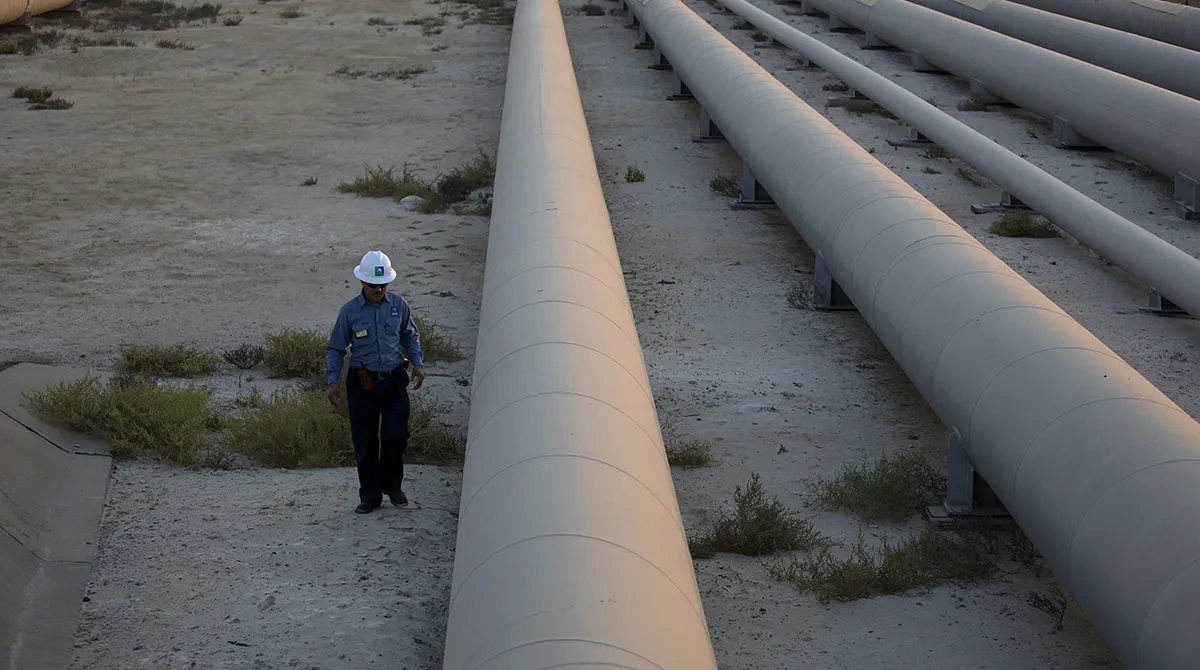 (Simon Dawson/Bloomberg)
Key Takeaways:
- Saudi Arabia aims to restore about half of the East-West oil pipeline’s capacity within days after drone attacks halted the route Sept. 10.
- The outage threatened exports through the 7 million-barrel-a-day pipeline as disrupted Strait of Hormuz traffic kept crude prices above $107 in London.
- State-run Saudi Aramco is bypassing a damaged section and a person familiar with the matter said full capacity could return in about six weeks.
Saudi Arabia is seeking to return about half the capacity of its cross-country oil pipeline within days after the link was halted last week following drone attacks, a person familiar with the matter said.
State-run Saudi Aramco is working to bypass a damaged section on the route that will allow it to resume part of the pipeline’s capacity, the person said, asking not to be identified because the matter is private. The company is looking to return the conduit to its full capability in about six weeks, they said.
READ MORE: Saudis pivot to send more oil through Strait of Hormuz
Aramco and the Saudi energy ministry didn’t respond to requests for comments.
The timelines for the East-West pipeline’s resumption and the volume of oil it can carry for export are being closely watched by traders after the link turned into a lifeline during the Iran war as Saudi Arabia used it to circumnavigate the severely disrupted Strait of Hormuz. Last week’s halt put millions of barrels a day of exports at risk at a time when markets are clamoring for supply, with crude above $107 in London.
Following the shutdown, Aramco has been ramping up oil sales from outside the Strait of Hormuz to partly make up for some of the lost volumes, Bloomberg reported earlier. It has sold about 20 million barrels to Asian refiners, including in China, this week that can be picked up in September and October, according to traders familiar with the matter.
Image
But customers in Europe are facing delays, which has spurred a jump in regional crude prices. At least one refiner in the continent, Poland’s Orlen SA, has been buying millions of barrels of replacement cargoes from other sources following the Saudi disruption, traders familiar with the matter told Bloomberg.
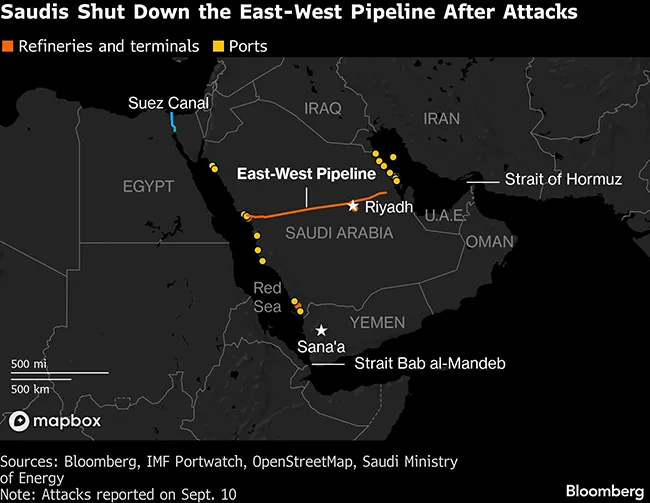
The 1,200-kilometer East-West line that stretches the breadth of the Arabian Peninsula was shut on Sept. 10 after drone attacks launched by militias in Iraq. Saudi Arabia has also faced a series of strikes on energy and civilian infrastructure from the Yemen-based Houthi militants this month on its western Red Sea coast. The Iran-backed group has threatened Saudi shipping in the Red Sea, helping drive oil prices in London to above $100 a barrel earlier this month.

Arpan Podduturi of Samsara examines how AI, telematics and onboard cameras are converging to protect drivers and reduce risk. Tune in above or by going to RoadSigns.ttnews.com.
The shutdown of the pipeline, however, was a major blow for the oil market. Saudi Arabia was using the 7 million barrel-a-day link at its full capacity earlier this year after traffic through the Strait of Hormuz came to a near standstill following Iranian attacks on ships. While the kingdom’s oil exports slumped to just about 3 million barrels a day in August, the lowest in at least nine years, shipments through Yanbu, where the East-West terminates, still made up a bulk of the sales.
The East-West link has been attacked previously during the war. A pumping station was targeted in April as part of a wave of attacks on production, refining and petrochemical facilities. The link had suffered only limited damage and flows had continued, people familiar with the matter said at the time. Supplies returned to normal levels within days.