
[Stay on top of transportation news: Get TTNews in your inbox.]
Russia boosts oil flows as war sends prices soaring
Oil prices rise after drone strikes shut down Saudi Arabia’s East-West pipeline
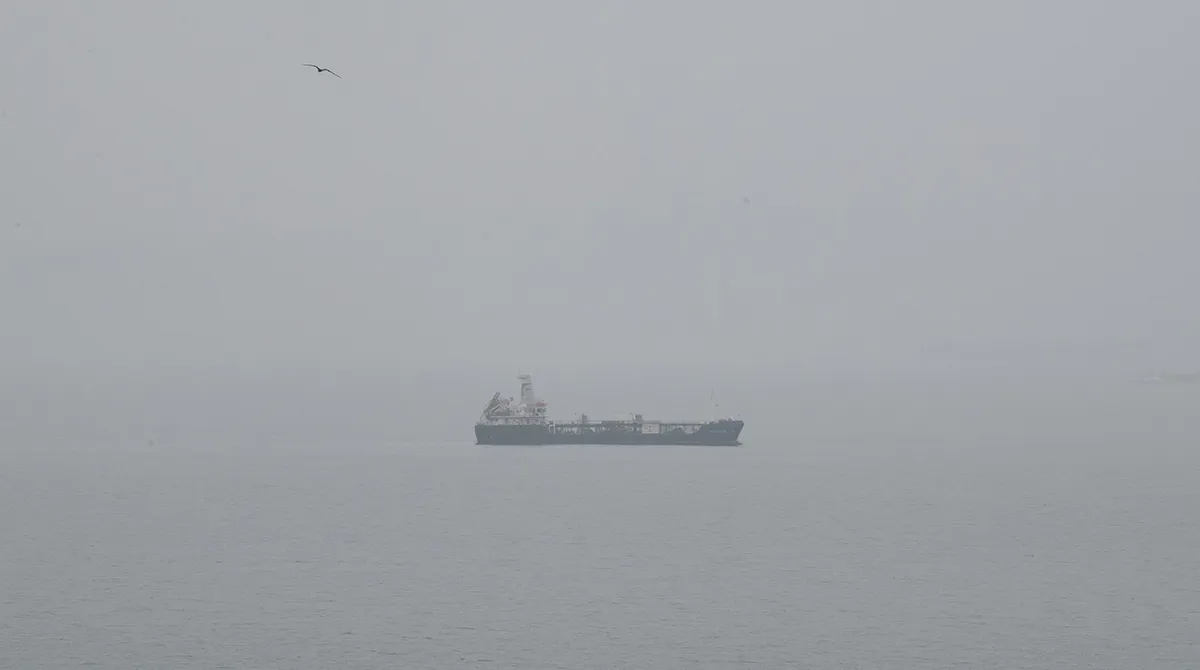 Russia shipped 3.54 million barrels a day of crude in the four weeks to Sept. 13, following the biggest jump in weekly flows since May. (Carolina Cabral/Bloomberg)
Key Takeaways:
- Russia’s seaborne crude exports rose to 3.54 million barrels a day in the four weeks through Sept. 13, boosted by higher shipments from key ports.
- Rising oil prices after attacks on Saudi energy infrastructure increased the value of Russian exports, lifting weekly export revenue to its highest level since May.
- China and India remained the largest buyers of Russian crude as Moscow shifted shipments through Ust-Luga while production continued to decline.
Russia’s crude shipments jumped by the most since May last week, just as an attack on a key pipeline crossing Saudi Arabia sent oil prices soaring, providing a big boost to the Kremlin’s war chest.
In the four weeks through Sept. 13, overseas crude flows rose to 3.54 million barrels a day, tanker-movements data compiled by Bloomberg shows, following the biggest advance in weekly shipments since mid-May.
Fortuitously for Moscow, the jump in flows comes just as oil prices are soaring again after drone strikes shut down Saudi Arabia’s East-West pipeline, on which the kingdom has relied to continue getting its oil to market in the face of Iran’s effective blockade of the Strait of Hormuz. The attack has sent Brent crude to the highest since May, and pulled up Russian grades.
The higher Russian exports will be welcomed by refiners in China and India, who face disruption to their Middle Eastern supplies from a resurgence of fighting in the region. In addition to the pipeline halt, the flare-up has also seen attacks on tankers by Iran-backed Houthi rebels that have blocked the kingdom’s oil flows via the southern Red Sea. Separately, a U.S. blockade of Iran-linked ships has stopped about 1.5 million barrels a day of crude that flowed to China.
Moscow has boosted shipments of its crude through the Baltic port of Ust-Luga, diverting Kazakh cargoes to the more vulnerable Novorossiysk terminal on the Black Sea. That move has allowed Russia to lift its own Ust-Luga crude shipments by about one-third, or 160,000 barrels a day, so far this month, compared with August.
Still, strikes on Russian oil and gas-condensate processing plants continue to be an almost nightly occurrence, despite mounting pressure on Kyiv from President Donald Trump, who blames them, rather than the war in the Middle East, for rising diesel prices.
Higher international crude prices are boosting Russia’s war chest. Moscow’s barrels delivered to India earned the most since early May last week, according to data from Argus Media, helping to drive the value of weekly exports to a near-four-month high. Prices paid by Chinese refiners are also soaring, with Pacific benchmark ESPO offered at more than $20 a barrel above Brent futures, on a delivered basis.
Amid these soaring prices, Russia is diverting some of the crude that can’t be processed domestically into the export stream, but not enough to allow it to maintain production levels.
Output fell to 8.72 million barrels a day last month, dropping for a ninth straight month, according to secondary source estimates published by the Organization of the Petroleum Exporting Countries. That was more than 1 million barrels a day below the country’s permitted production level under a long-running agreement with its OPEC+ allies.
Crude shipments
In the week to Sept. 13, some 38 tankers loaded 27.06 million barrels of Russian crude, vessel-tracking data and port-agent reports show. The volume compared with 23.88 million barrels on 33 ships the previous week.
Loading operations have accelerated at Novorossiysk after resuming in late August following Ukrainian drone strikes on the port.
Weekly shipments can be volatile, affected by weather, maintenance work, sanctions, military activity and the timing of departures.
There were two shipments of Kazakhstan’s Kebco grade from Novorossiysk during the week. Moscow has diverted all shipments of Kazakh crude this month through the Black Sea port, freeing up more capacity for its own barrels at Ust-Luga on the Baltic, which is seen as safer.
The amount of Russian crude on the water has edged higher in the past two weeks, reflecting the recovery in shipments from a 16-week low seen in the final seven days of August, even as refiners in India took more than 2 million barrels a day of Moscow’s oil for a third straight month in August.
Export value
On a four-week average basis, the gross value of Moscow’s exports rose to $1.9 billion a week in the 28 days to Sept. 13, up by $180 million a week from the figure for the period to Sept. 6 and the highest since the period to June 28. The increase was driven by a combination of higher prices for Russia’s key crudes and a modest increase in flows.
On a weekly basis, the value of exports jumped by about $620 million, driven by a combination of higher shipments and soaring prices, which rose in line with global benchmarks. At $2.42 billion, the weekly value was the highest since the seven-day period to May 24.
Flows by destination
China and India remain the biggest buyers of Russian crude by a considerable margin. But it’s not always possible to assign a final destination to individual cargoes until well into their voyage, leaving many of the more recent shipments on tankers showing interim destinations, such as Suez or Port Sudan, marked as “Unknown Asia.”
Observed shipments to Russia’s Asian customers, including those showing no final destination, rose to 3.41 million barrels a day in the 28 days to Sept. 13, up from 3.35 million in the period to Sept. 6.

Arpan Podduturi of Samsara examines how AI, telematics and onboard cameras are converging to protect drivers and reduce risk. Tune in above or by going to RoadSigns.ttnews.com.
Flows to Turkey, Russia’s biggest buyer west of Suez, in the period to Sept. 13 slipped to about 50,000 barrels a day, down from 80,000 barrels a day for the period to Sept. 6.
Flows to Syria have fallen to zero since August after the Mediterranean nation agreed to “drastically” reduce Russian oil imports in negotiations with the US on lifting remaining sanctions. Separately, shipments to Egypt, Russia’s newest east Mediterranean customer, rose to about 80,000 barrels a day in the four-week period, up from about 30,000 barrels a day seen during the 28 days to Sept. 6.


