
[Stay on top of transportation news: Get TTNews in your inbox.]
Oil prices steady as Saudi pipeline closure pressures supply
Brent crude falls 3.1% to $105.39 a barrel
| Updated:
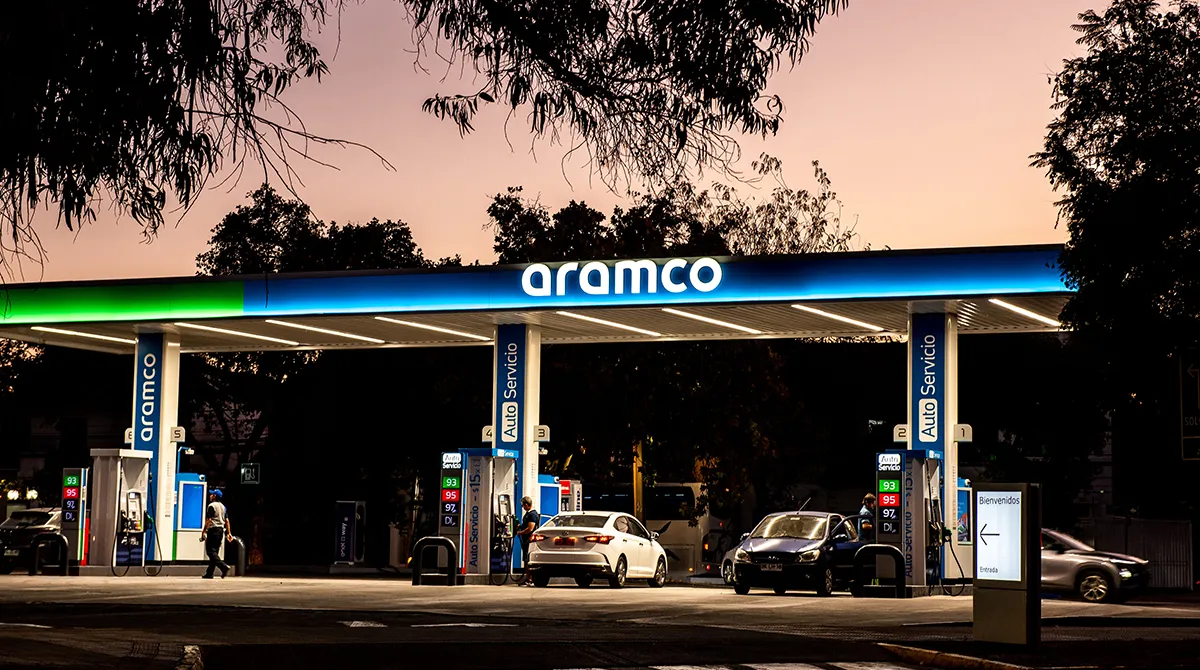 Customers fill up at a Saudi Aramco gas station in Santiago, Chile. (Cristobal Olivares/Bloomberg)
Key Takeaways:
- Oil prices declined for the first time this week with Saudi Arabia’s crucial oil pipeline closure adding to pressure on global oil supply.
- A gallon of gasoline in the U.S. rose again overnight, hitting $4.37 on average, according to motor club AAA.
- Iran is still targeting ships in the Strait of Hormuz.
NEW YORK — Wall Street is holding steady Sept. 16 as it waits to hear from the Federal Reserve, which traders expect will announce a hike to interest rates later in the day to help get the nation’s high inflation under control.
The S&P 500 rose 0.2% and was on track for just its second gain in the last eight days. The Dow Jones Industrial Average was down 42 points, or 0.1%, as of 9:35 a.m. Eastern time, and the Nasdaq composite was 0.5% higher.
Oil prices declined for the first time this week with Saudi Arabia’s crucial oil pipeline closure adding to pressure on global oil supply. Yemen's Iran-backed Houthi rebels have been targeting infrastructure in the kingdom as well as its shipping on the Red Sea, where they have seized several islands on the Bab el-Mandeb Strait. And Iran is still targeting ships in the Strait of Hormuz.
Stocks got help from some easing for oil prices and pressure from the bond market. The price for a barrel of Brent crude, the international standard, fell 3.1% to $105.39.. It got to nearly $110 earlier this week on worries that the war with Iran will continue to clog the global flow of oil.
That helped send the yield on the 10-year Treasury, which is the centerpiece of the bond market and dictates where rates for mortgages and other loans go, down to 4.97% from 5.00% late Sept. 15. Earlier this week was the first time since 2023 that the 10-year yield topped 5%.
Even with slight easing on Sept. 16, the pressure remains high. Brent oil is still well above its $72 price from before the war with Iran, when the 10-year yield was at just 3.97%. Worries about inflation staying high are so strong that Wall Street sees it as nearly a certainty that Fed officials will announce their first hike to interest rates since 2023 later in the day.
Overnight US prices advance to $4.37/gal for gasoline and $6.31/gal for diesel. Despite slightly lower futures' prices today, you'll see these numbers rise at the pump as marketers struggle to catch up to epic wholesale increases.
— Tom Kloza (@TomKloza) September 16, 2026
That’s the typical move for the Fed to combat inflation, and it works by making it more expensive for everyone to borrow money, which slows the overall economy and hopefully removes fuel for prices to rise further. It also tends to undercut prices for stocks and other investments, though President Donald Trump has been lobbying for lower interest rates instead of higher.
Inflation is a worldwide problem, and the European Central Bank hiked rates across the Atlantic last week to help diminish it.
Traders are still betting on a slight chance the Fed may hold off on raising rates. If it does, the market could swing because investors may see it as a sign that the Fed is less committed to getting inflation lower.
Fed officials will also release forecasts for where they see interest rates heading in upcoming years, providing another opportunity to inject uncertainty into the market.
A report on Sept. 16 showing that shoppers spent much more at U.S. retailers last month than economists expected could help embolden the Fed. It could be a signal that the economy remains strong enough to withstand higher rates, though the growth could also simply show that shoppers are having to spend more because of higher prices.

Arpan Podduturi of Samsara examines how AI, telematics and onboard cameras are converging to protect drivers and reduce risk. Tune in above or by going to RoadSigns.ttnews.com.
On Wall Street, stocks in the artificial intelligence industry held steadier following their worldwide slide earlier in the week, after leaders of the AI industry called for a slowdown in development to address safety issues for humanity.
Nvidia rose 0.8%, and Advanced Micro Devices climbed 2.6%.
In stock markets abroad, indexes rose across much of Europe and Asia. South Korea’s Kospi climbed 1.4% for one of the world’s biggest gains.
AP Business Writers Chan Ho-him and Michelle Chapman contributed to this report.


