
[Stay on top of transportation news: Get TTNews in your inbox.]
Knight-Swift CEO sees contract rates up mid-teens in 2027
Adam Miller expects truckload rates to rise further as capacity exits and margins stay pressured
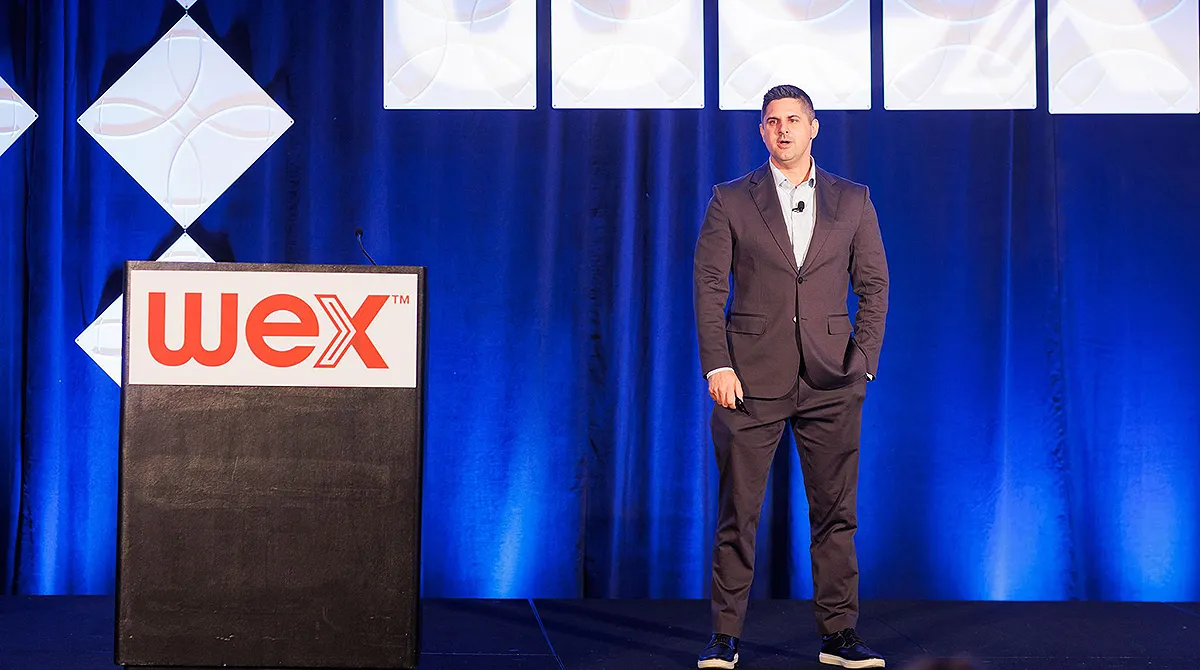 Adam Miller sees "a fairly strong peak season for the first time in many years.” (McLendon Photography)
Key Takeaways:
- Knight-Swift CEO Adam Miller said Oct. 27 that contract truckload rates are set to increase by at least the mid-teens in 2027.
- Miller said capacity reductions are driving elevated tender rejections, while Knight-Swift’s third-quarter truckload revenue rose 14% and operating income more than tripled.
- Miller expects steady fourth-quarter demand and a strong peak season as capacity exits, with shippers and carriers increasingly turning to mini-bids.
PONTE VEDRA, Fla. — Contract truckload freight rates are set to see a percentage increase of no less than the mid-teens in 2027 on top of 2026’s escalation, according to the top executive at the largest carrier in the segment.
“When you look at the margin profile of the big truckers, it’s still not exceeding your weighted average cost of capital. There’s still not reasonable margins. And so we’re going to have to push that further,” Knight-Swift Transportation CEO Adam Miller said Oct. 27.
Knight-Swift ranks No. 8 on the Transport Topics Top 100 list of the largest for-hire carriers in North America and No. 1 in the truckload/dedicated carrier rankings.
In addition to rising at a steeper rate than in a number of years, contract rates are set to change more often than shippers are used to, Miller told the 2026 WEX OTR Summit.
As a result of rates rising, though, shippers are going to walk away from carriers’ proposals, but fleets will also step back and insist the deal does not make sense at a lower rate.
Consequently, according to Miller, what will happen is “two weeks later, you get a mini-bid with that same lane and you’re able to bid it again. And they make decisions really quick on the mini-bids.”
Image
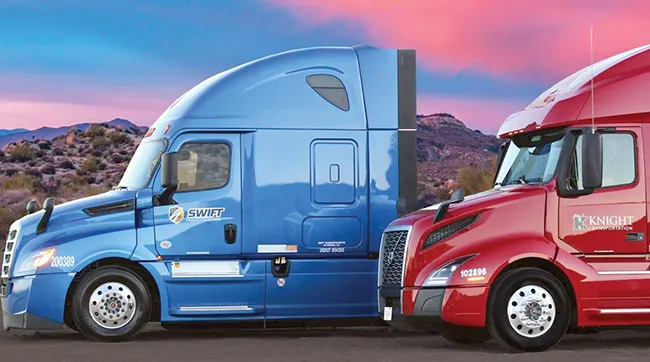
Knight-Swift’s truckload division saw its third-quarter 2026 revenue increase 14% year over year to $1.41 billion from $1.24 billion a year earlier as rates climbed. (Knight-Swift Transportation Holdings)
“If you really track that, it tells you what is happening in the market. It’s kind of like in basketball, you see guys, they dribble, you just stare at the belly button, that’s how you know where they’re going,” he quipped.
Knight-Swift’s truckload division already saw its third-quarter 2026 revenue increase 14% year over year to $1.41 billion from $1.24 billion a year earlier as rates climbed. Meanwhile, the unit’s operating income soared to $123.1 million from $35.9 million, the company said Oct. 21.
Phoenix-based Knight-Swift also benefited from progress in its integration of U.S. Xpress. The $808 million acquisition closed in July 2023.
“It’s been a long road to make progress in that business. But I think this last quarter, we saw some real meaningful progress in what they’ve been able to do to reset rates and manage their cost per mile,” Miller said. Margins at U.S. Xpress in 2027 will be close to those at fellow truckload brands Knight and Swift, he added.
Looking forward, demand in the fourth quarter will remain steady, even as more capacity exits the market, Miller told WEX OTR Summit attendees.
The number of cargo containers expected to arrive at U.S. ports in the fourth quarter is on the rise, with no pull forward ahead of peak season as might have been expected, the executive said.
“That was always [part of] our thinking. Are we going to see a dip in freight in the fourth quarter? And that does not seem to be the case. And clearly what we’re seeing right now certainly supports what we think will be a fairly strong peak season for the first time in many years,” Miller said.

►Freight Upturn Bodes Well
►The Market Has Finally Turned
►Business Optimism Growing
►Fleets Investing in AI, Efficiency
►Carriers See Diesel Enduring
►Interactive Map
►2025 Yielded Mixed Results
Sector Rankings
LTL | TL/Dedicated
Intermodal/Drayage
Package/Courier | Air/Expedited
Refrigerated | Flatbed/Heavy
Tank/Bulk | Household/Commercial
Third-party data supports this observation. The National Retail Federation Annual Holiday Forecast predicted retail sales would increase 4.2% year over year in November and December despite inflationary pressures, especially diesel prices.
Rates are also likely to continue to rise because of atypical tender rejection levels, Miller said.
“Tender rejections are very elevated relative to where they were the last three years, but demand is not. It’s not been driven by demand. It’s very unique because most upcycles are largely driven by demand improvements,” the executive told Transport Topics in an interview on the sidelines of the conference.
The most recent upturn in freight market fortunes is being driven by capacity reductions, largely as a result of federal enforcement initiatives and the Supreme Court’s Montgomery v. Caribe Transport II ruling, which has also weaned out noncompliant and the cheapest carriers.
“If demand picks up with capacity coming out, we could be in a period where you see rejections elevate even to levels that you saw during the pandemic,” Miller told conference attendees.


