
[Stay on top of transportation news: Get TTNews in your inbox.]
CEOs, ex-military chiefs back Chinese connected car ban
SAFE coalition says proposed restrictions would protect U.S. data and key industrial capacity
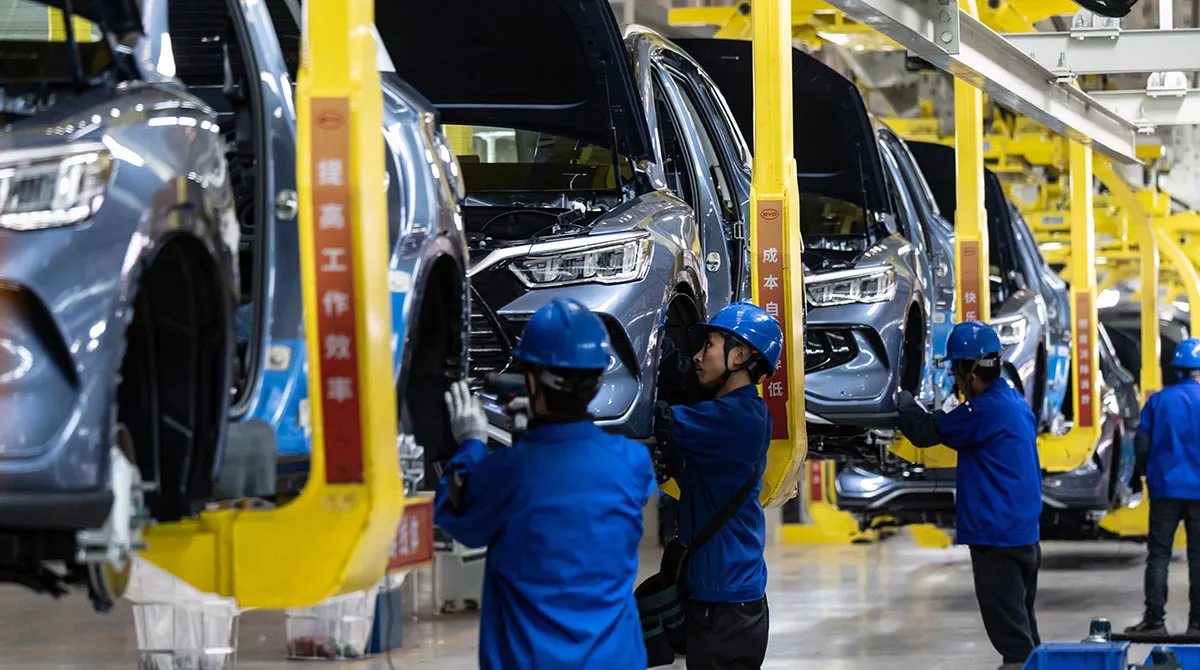 Workers on the assembly line for electric vehicle maker BYD in Zhengzhou, China. (Qilai Shen/Bloomberg)
Key Takeaways:
- SAFE urged Congress to pass the Connected Vehicle Security Act this year, banning Chinese connected vehicle technologies before the session ends in January.
- The coalition said the ban would protect sensitive U.S. data, military readiness and domestic manufacturing from vehicles entering through Canada or Mexico.
- SAFE asked House and Senate leaders to enact the bill before adjournment, adding to auto industry and lawmaker appeals for restrictions.
A group of retired military commanders and leading business executives are calling on Congress to keep Chinese connected vehicle technologies from entering the U.S.
In a letter to House of Representatives and Senate leadership, the Energy Security Leadership Council of SAFE said lawmakers should pass a bill banning Chinese connected cars and related vehicle software and hardware this year, before the legislative session ends in January.
The so-called Connected Vehicle Security Act “would protect sensitive U.S. data and preserve industrial capacity important to U.S. military readiness,” the nonprofit coalition of admirals, generals and Fortune 500 CEOs said in the letter dated Sept. 15 that was seen by Bloomberg. SAFE advocates for economic and national security through supply chain, energy and transportation policies.
The letter is the latest in a string of pleas from auto industry associations, companies and select lawmakers regarding the threat posed by China’s automobile makers.
Companies such as BYD Co. and Geely Automobile Holdings are rapidly gaining market share around the world, churning out exports as they contend with sluggish demand and cutthroat pricing in their domestic market. Cheap, tech-laden Chinese electric vehicles are also appearing in Canada and Mexico, amplifying concerns that they could soon seek inroads into the U.S.
The coalition noted that without legal restrictions, foreign adversary-linked vehicles could enter the U.S. market via Canada and Mexico. The ban also protects American auto manufacturing. The industry creates critical domestic demand for steel, aluminum, batteries, semiconductors and other advanced components, which military readiness depends upon, the letter said.


