[Stay on top of transportation news: Get TTNews in your inbox.]
China, U.S. discuss cutting tariffs on agriculture, energy
Xi is expected to visit White House on Sept. 24
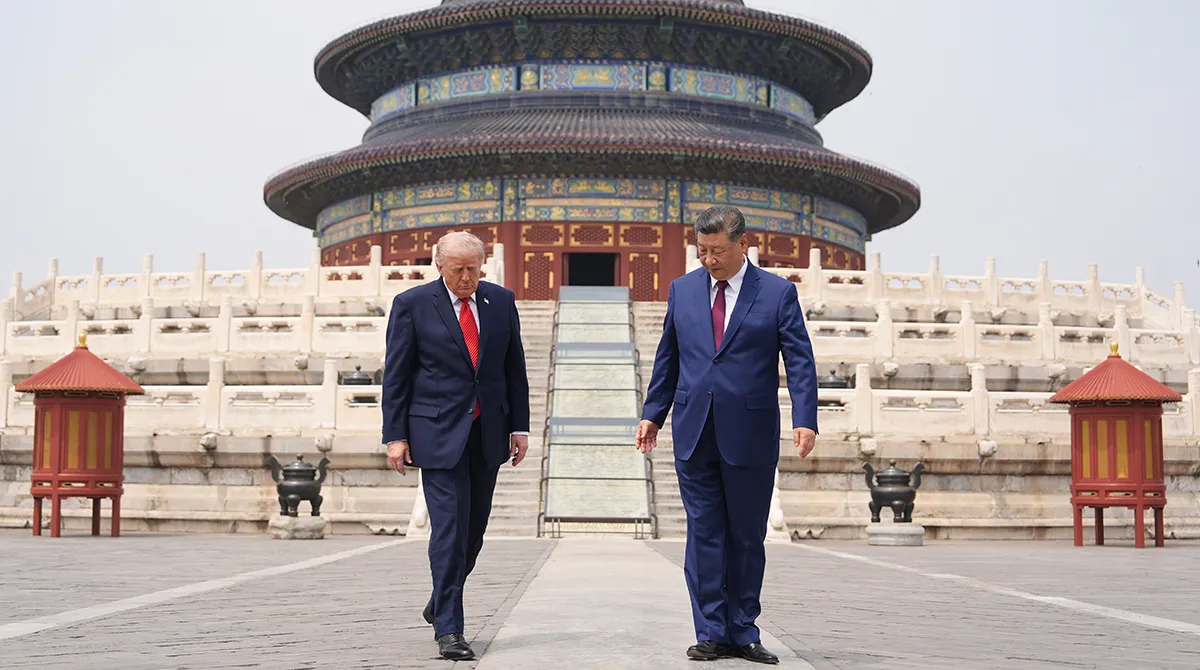 Trump visited Xi in Beijing in May. (Mark Schiefelbein/AP)
Key Takeaways:
- The U.S. and China are discussing tariff cuts on selected goods including American energy and agricultural exports ahead of a summit between Presidents Donald Trump and Xi Jinping.
- The talks could extend a 2025 trade truce and cover about $30 billion in trade while China continues progress toward pledged U.S. soybean purchases.
- Officials expect announcements on agriculture and some manufacturing inputs during Xi’s visit, though final agreements and delegation details remain under discussion.
The U.S. and China are discussing slashing tariffs on certain goods, including on American energy and agricultural shipments — a potential sign the leaders’ summit next week will lead to an extension of the one-year trade truce.
The meetings between the two sides are also likely to result in an agreement to lower duties on Chinese inputs for manufacturers, according to people familiar with the matter. The moves are expected to be carried out under an earlier plan for reciprocal tariff cuts on roughly $30 billion in trade.
Most-favored-nation rates would be applied to some items from China, said the people, who requested anonymity in order to discuss private conversations.
Highlighting the central role that agriculture is likely to play in the talks, representatives from state-owned food trading firm Cofco may join Chinese President Xi Jinping when he travels to the U.S. to meet with counterpart Donald Trump, according to two people familiar with the matter. More than a dozen firms are also being considered for a CEO delegation, though a final decision has not been reached, according to the people.
While such a deal would be limited — bilateral trade hit more than $400 billion in the first eight months of the year — it would signal that the sides are engaging enough to maintain the tariff truce reached in October 2025.
An agreement would also show that Washington and Beijing can keep ties on track despite an expanding divide on how to handle artificial intelligence, export controls and the status of Taiwan. And it would signal that the Board of Trade, announced when Trump met Xi in Beijing in May, is able to produce some results.
Image
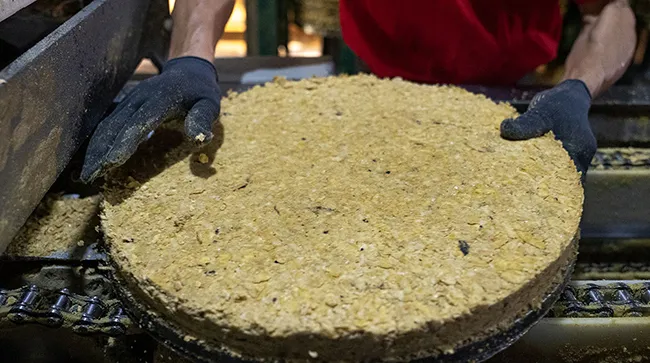
A worker handles soybean meal at a crushing factory in Harbin, China. China is making steady progress on its pledge to buy 25 million tons of U.S. soybeans annually through 2028. (Andrea Verdelli/Bloomberg)
China is making steady progress on its pledge to buy 25 million tons of U.S. soybeans annually through 2028, recently passing the halfway mark for this year — a bright spot in trade relations between the world’s two largest economies. Beijing has also committed to buy at least $17 billion of U.S. agricultural products annually on top of the soybean purchases, with the target prorated for 2026, the White House said in May.
The Office of the U.S. Trade Representative, China’s Ministry of Commerce and Cofco did not respond to requests for comment.
Trump has said Xi would visit the White House on Sept. 24, an event that would also include a state dinner. China hasn’t confirmed dates for Xi’s travel yet, something it tends to do only days in advance.

Arpan Podduturi of Samsara examines how AI, telematics and onboard cameras are converging to protect drivers and reduce risk. Tune in above or by going to RoadSigns.ttnews.com.
For his state visit in May, Trump brought more than a dozen CEOs to China, including Nvidia Corp.’s Jensen Huang and Tesla Inc.’s Elon Musk. The executives met with Li Qiang, and Xi told them that U.S. enterprises “are deeply involved in China’s reform and opening up, a process from which both sides have benefited.”
U.S. Trade Representative Jamieson Greer told Fox News this month that he expected to see “announcements on agriculture and nontariff barriers related to agriculture” during Xi’s visit.
Greer also said he expected the Board of Trade to make other announcements on toys, games and fireworks that might protect them from future tariffs or other trade measures.