[Stay on top of transportation news: Get TTNews in your inbox.]
BP profit hits 18-year high on refinery boom
Net debt falls by more than $8 billion as CEO O’Neill prioritizes balance-sheet repair
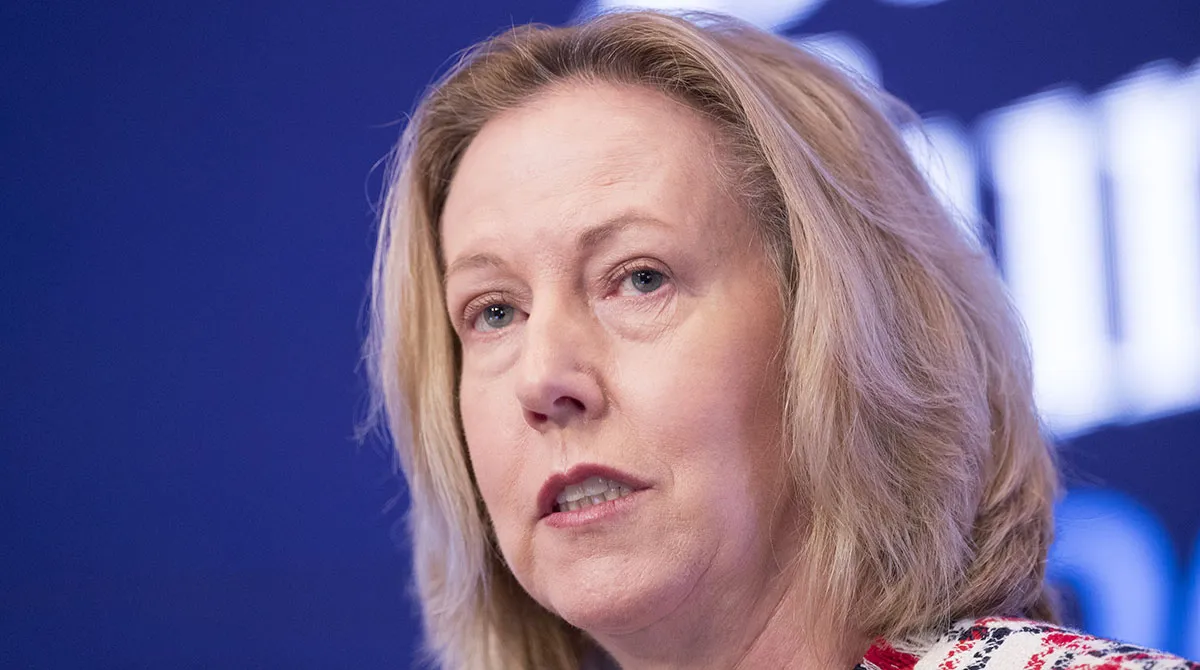 BP CEO Meg O'Neill, who took over this year. (Brent Lewin/Bloomberg)
Key Takeaways:
- BP’s adjusted net income jumped to $8.46 billion in the third quarter, its highest since 2008, as refining margins surged.
- Refining and trading contributed more than half of profit, while net debt fell to $13.87 billion from $22.3 billion.
- BP plans to address its remaining Deepwater Horizon liabilities and outline CEO Meg O’Neill’s longer-term strategy in December.
BP Plc said profit jumped to the highest in 18 years as soaring refining margins boosted earnings, speeding up the energy giant’s efforts to fix its balance sheet and pay down debt.
Adjusted net income was $8.46 billion in the third quarter, up from $2.21 billion a year earlier, the London-based major said in a an Oct. 30 statement. More than half that profit came from the unit that includes oil refining and trading.
The results are CEO Meg O’Neill’s second full quarter at the helm and offer a fresh look at the operational performance that she’s identified as a priority. BP’s first outsider CEO is cutting costs, selling assets and paying down debt while preparing to lay out her longer-term strategy in December.
“It really was a banner quarter for the refining business,” O’Neill said told Bloomberg Television. “We had very strong margins from the BP-operated refineries; we also had very strong underlying performance. We were able to capture the opportunity provided by the market.”
Net debt tumbled to $13.87 billion from $22.3 billion just three months earlier, surpassing the company’s target a year ahead of schedule.
The rapid improvement in the balance sheet gives O’Neill more room to restore shareholder returns after the company suspended buybacks earlier this year. But she resisted pressure to follow rivals with large payouts and is instead channeling the windfall toward further balance-sheet repair.
That includes paying down remaining liabilities from the deadly Deepwater Horizon disaster earlier than scheduled. The company still owes about $6.8 billion by 2033 in settlement payments.
“We will use the cash flow we’re generating this year to address all of the remaining liabilities,” Chief Financial Officer Kate Thomson said on a call.
Industry buybacks
This year’s refining boom has spurred several of BP’s European competitors to announce jumbo investor payouts.

Bob Toews, CEO of TruckDown, discusses winter readiness in the connected fleet era. Tune in above or by going to RoadSigns.ttnews.com.
On Oct. 29, Shell Plc said it was increasing its quarterly share buyback to $5 billion from $3 billion after earnings climbed to their highest since 2022. TotalEnergies SE pledged as much as $2.5 billion of repurchases this quarter, while Repsol SA and Eni SpA also boosted their buybacks.
“It’s very easy to get caught up in high prices and think that’s an opportunity to distribute cash,” O’Neill said, adding that BP still has “more debt and more leverage than we really can afford in a low-price scenario.”
The CEO noted that BP’s broader financial obligations — including conventional debt, hybrid bonds, leases and payments for the Deepwater disaster — amount to about $44 billion, and said that’s still too high.
The company’s adjusted net income beat the $7.3 billion average analyst estimate and was the highest since the third quarter of 2008. BP’s refining margin indicator ballooned to $46.70 a barrel from $29.60 in the previous quarter. Its refineries also ran harder, with availability rising above 96%.
The refining bonanza comes as wars involving Iran and Russia have knocked out or disrupted oil refineries and trade routes, squeezing the world’s capacity to turn crude into diesel, gasoline and jet fuel. That’s driving up prices for consumers while handing outsized profits to plants that remain operational.
Impairment charges
BP booked about $4 billion of impairments, primarily related to transition investments including solar arm Lightsource and offshore wind. O’Neill said Oct. 30 that the company is working closely with its offshore wind partner, Japan’s Jera Co., to “help the business be as successful as possible.”
Oil and gas trading operations both performed strongly. The company’s Customer and Products unit, which includes oil trading and refining, earned $4.8 billion in the quarter, compared with $5.3 billion for all of 2025.
“Every division came in ahead of consensus expectations, supported by some solid operational indicators in the upstream and downstream, as well as another strong quarter for the trading business,” RBC analyst Biraj Borkhataria said in a note.
BP expects oil and gas production to fall slightly in the fourth quarter, in part due to continued disruption in the Middle East.
O’Neill also categorically denied a media report this week that BP’s board had talked about breaking up the company. She said discussions with directors had instead reaffirmed the importance of BP’s integrated model.
Discussions on strategy confirm the need to have “value generation from upstream, downstream and trading,” she said on a call with analysts. “The results this quarter illustrate the impact and the opportunity that provides.”